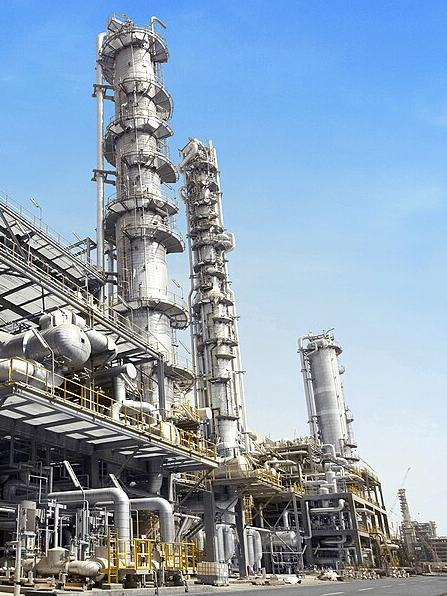
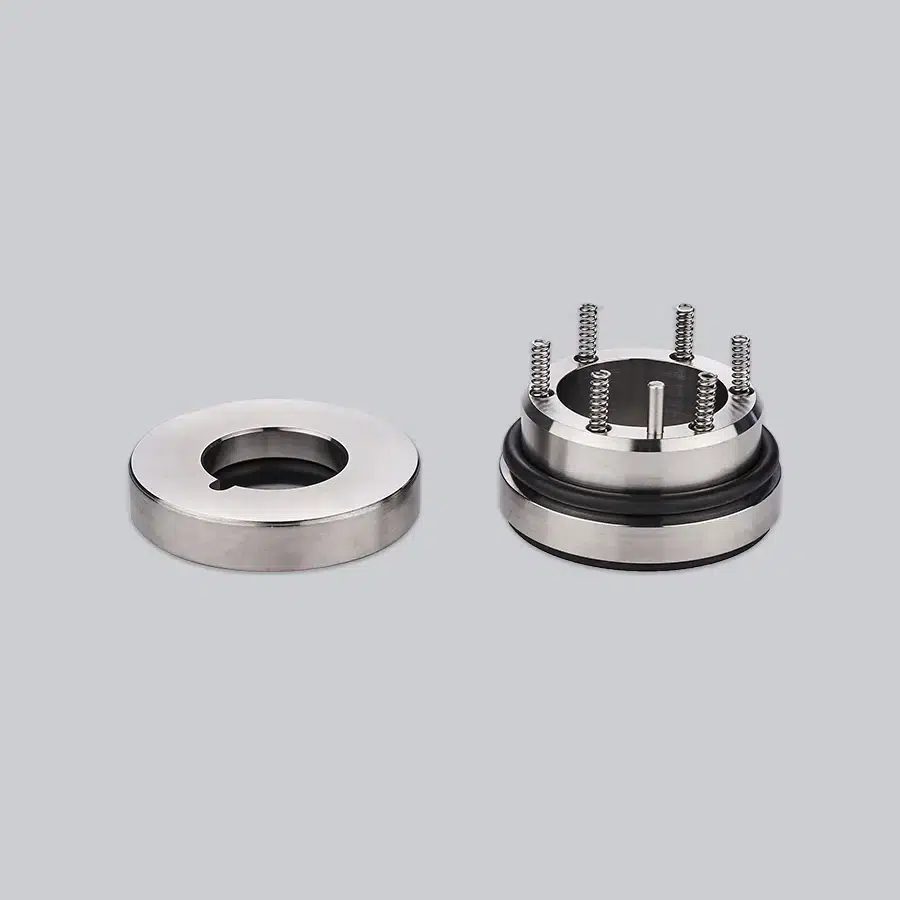
A balanced mechanical seal features an advanced design that effectively prevents leaks in pumps by maintaining a secure connection between the rotary and stationary faces. With over 27 years of expertise, Victor delivers robust mechanical seals for demanding applications such as medicine and water treatment. The balanced mechanical seal design conserves fluid and enhances pump efficiency, while also meeting strict environmental standards. Selecting the right cartridge mechanical seal is crucial, especially for tasks like grundfos pump seal replacement, where safety and optimal performance are essential.
| Component | Function |
|---|---|
| Rotary Seal Face | Rotates with the pump shaft and maintains a tight seal against the stationary face to prevent leaks. |
| Stationary Seal Face | Interfaces with the rotary face, providing a reliable sealing surface to stop leaks. |
| Tension Assembly | Utilizes springs or metal bellows to keep the rotary face pressed firmly against the stationary face. |
| Static Sealing Gaskets | Completes the seal assembly, preventing contamination and leaks when the pump is not in operation. |
Key Takeaways
- A balanced mechanical seal stops leaks in pumps. It keeps a tight connection between moving and still faces. This helps the pump work better. The right balance ratio is very important. It changes how the seal deals with pressure. It also lowers damage, so the seal lasts longer. Balanced seals make less heat and friction. This makes them good for high-pressure jobs. It also saves energy and cuts down on repair costs. Multi-spring designs spread pressure out evenly. This makes the seal work better and last longer in tough places. Picking the right seal depends on the liquid, pressure, and temperature. This keeps the seal working well and safe in many uses.
Balanced Mechanical Seal Basics
What Is a Balanced Mechanical Seal?
A balanced mechanical seal is a special seal for pumps and mixers. It stops fluids from leaking out. The seal spreads pressure evenly on the sealing faces. Its main job is to keep the seal faces together when the shaft spins. This works even if the pump has high pressure.
A balanced mechanical seal has many important parts:
- The seat is a stationary part that stays in one place.
- The rotating part moves with the shaft.
- Sealing members like o-rings or gaskets stop leaks between metal parts.
- A spring or bellows pushes the seal faces together.
- The gland plate and clamp ring hold all the parts in place.
The seal works by pressing two flat surfaces together. These surfaces are very smooth, so only a tiny bit of fluid can get through. The spring keeps the faces touching, even if they wear down a little. Some advanced designs use hydraulic balance to control pressure on the seal faces.
Note: The balanced mechanical seal helps pumps last longer and need less fixing because it cuts down on wear and heat.
How Balance Ratio Works
The balance ratio is important for how a balanced mechanical seal works. This ratio shows how much of the seal face feels the fluid’s pressure. For example, a 70/30 balance ratio means 70% of the seal face is under pressure, and 30% is not. This controls how hard the seal faces are pushed together.
Engineers use math formulas to find the balance ratio. Here is a simple table that shows these formulas:
| Description | Formula |
|---|---|
| Balance Ratio for seals pressurized at the outside diameter | B = ( Do² – Db² ) / ( Do² – Di² ) |
| Balance Ratio for seals pressurized at the inner diameter | B = ( Db² – Di² ) / ( Do² – Di² ) |
The right balance ratio is very important. Most balanced seals use a ratio of about 0.75 for water and liquids that do not flash. For special fluids, like flashing hydrocarbons, the ratio is higher, between 0.80 and 0.85. Unbalanced seals usually have a higher ratio, around 1.25 to 1.35.
A balanced mechanical seal with the right balance can handle higher pressures. It lasts longer and makes less heat. This makes it good for tough jobs where you need the seal to work well. The balanced design also helps the seal faces stay slippery, which stops damage.
Tip: Picking a balanced mechanical seal with the right balance ratio helps pumps work better and leak less.
Force Balancing Mechanical Seals in Action

Pressure Handling and Seal Face Design
Engineers use force balancing mechanical seals to control pressure. These seals help pumps work safely. Victor uses smart engineering to make balanced seals. These seals spread pressure evenly on the seal faces. This design lets the seal handle high pressure without bending. Springs push the seal faces together. This lowers the chance of leaks. The gap between the seal faces is very small. This stops most fluids from leaking out.
The table below explains how different features help with pressure:
| Design Feature | Description | Impact on Pressure Management |
|---|---|---|
| Balance Ratio | Ratio of hydraulically loaded area to sliding surface area. | Affects lubrication, heat generation, and sealing gap stability. |
| Monolithic Seal Faces | Made from a single material, providing better stability and lower deformation. | More reliable and lower emissions compared to inserted designs. |
| Balanced Design | Reduces the seal ring area on which hydraulic pressure acts. | Allows for better lubrication, reducing heat generation and wear. |
Victor’s balanced seals use these features to keep seal faces cool. This helps the seals last longer. The seals also work better in tough jobs.
Benefits for High-Pressure Applications
Balanced mechanical seals have many good points in high-pressure places. They spread pressure evenly. This lowers friction and heat. The seal faces do not wear out as fast. The balanced design helps the seal handle pressure changes. This stops leaks.
Some main benefits are:
- The seal lasts longer because it wears less.
- The seal works better at high heat and pressure.
- There is less risk of leaks, so equipment stays safe.
- The seal uses less force, so energy is saved.
Modern balanced seals use dynamic seal faces. These faces move smoothly and change with pressure. This keeps the seal tight. Victor’s team works hard to balance every seal. This makes sure the seals work well, even in hard jobs.
Tip: Picking a balanced seal with the right design can stop damage and save time.
Types of Mechanical Seals by Victor
Victor makes many kinds of mechanical seals for different jobs. The company mostly uses balanced designs. These designs stop leaks and help pumps work better. The table below shows which seals are made for balanced use:
| Type of Mechanical Seal | Designed for Balanced Applications |
|---|---|
| Balanced Mechanical Seal | Yes |
| Other Types of Mechanical Seals | No |
Victor’s balanced mechanical seals work in pumps, mixers, and dry gas seals for compressors. The company checks every seal to make sure it is strong and works well. Each seal must pass tough tests before it leaves the factory.
Single Spring and Multi-Spring Seals
Single spring seals have one coiled spring. This helps the seal move if the shaft is not straight. These seals fit many pumps and do not clog easily. Multi-spring seals have many small springs around the seal. This spreads pressure evenly and helps in fast or high-pressure jobs, like dry gas seals in refineries.
| Feature | Single Spring Seals | Multi-Spring Seals |
|---|---|---|
| Spring Design | Single coiled spring | Several small springs |
| Misalignment Handling | Yes | Yes, with balanced pressure |
| High-Speed Performance | Moderate | Enhanced |
| Common Applications | General pumps | Oil refineries, chemical plants, water treatment |
| Wear Distribution | Less uniform | Uniform due to balanced pressure |
Tip: Multi-spring seals last longer and wear out less because they keep pressure even on the seal faces.
Metal Bellow and Cartridge Seals
Metal bellow seals use a bendy metal part instead of a spring. This means there are fewer sealing rings and less chance of leaks. Metal bellows can handle many fluids, like acids and chemicals. This makes them good for dry gas seals in hard places. The strong metal does not rust and lasts a long time. Cartridge seals come as one piece, so they are easy to put in and take out. They work well in balanced jobs but may not last as long as metal bellows in very tough places.
- Metal bellow seals work with water, oil, acids, and chemicals.
- The special bellow spring design helps the seal last longer.
- Easy to install and remove, which saves time when fixing pumps.
Victor checks every balanced seal to make sure it can handle pressure and does not leak. The company also gives good prices, so customers get strong seals without spending too much.
Balanced vs. Unbalanced Mechanical Seals
Key Differences
Balanced and unbalanced mechanical seals are not the same. They have different designs and are used for different jobs. Engineers pick one based on how much pressure the pump needs to handle. They also look at what kind of liquid is in the pump. The table below shows how these seals are different:
| Feature | Unbalanced Seals | Balanced Seals |
|---|---|---|
| Heat Generation | More heat generated | Less heat generated |
| Seal Life | Shorter seal life | Longer seal life |
| Vibration and Stability | Less stable and misaligned | More stable and aligned |
| Liquid Handling Capacity | Handles high lubricity fluids | Best for poor lubricity fluids |
| Seal Face Loading | High loading on seal faces | Low loading on seal faces |
A balanced seal pushes less on the seal faces. This means it makes less heat and wears out slower. The faces stay cool and last longer. Unbalanced seals push harder on the faces. This makes more friction and heat. The faces wear out faster.
How well each seal works also depends on the pressure. The table below shows how each seal handles pressure and where they work best:
| Seal Type | Pressure Handling | Applications | Advantages |
|---|---|---|---|
| Balanced Seals | High Pressure | Chemical processing, refineries, offshore drilling | Minimized leakage, stable seal face position, extended lifespan |
| Unbalanced Seals | Lower Pressure | General applications with lower pressure differentials | Simpler design, effective within operating limits |
Balanced seals are good for tough jobs. They keep the seal faces in place, even if the pressure changes. Unbalanced seals are simple. They work best when the pressure is not high.
The table below shows how balanced and unbalanced seals do in real jobs:
| Metric | Balanced Seals | Unbalanced Seals |
|---|---|---|
| Leakage Rate | 0-5 drops/min | 10-50 drops/min |
| Power Consumption | 60-80% reduction in friction | N/A |
| Seal Life | 300-500% increase in MTBF | N/A |
| Pressure Capability | 10-50 bar | 2-10 bar |
Balanced seals leak less and last longer. They use less energy because there is less friction. Unbalanced seals may leak more and need to be changed sooner.
Note: Balanced seals cost more at first, but they last longer and save money later.
| Aspect | Balanced Seals | Unbalanced Seals |
|---|---|---|
| Cost | Higher | Lower |
| Seal Life | Longer | Shorter |
Application Suitability
Picking the right seal depends on the job. Engineers look at the liquid, the pressure, and the temperature. They also check if the seal must follow special safety or emission rules. The list below shows what to think about when choosing a seal:
- Liquid: The seal must match the liquid to stop leaks and damage.
- Pressure: High pressure needs a balanced seal. Low pressure can use an unbalanced seal.
- Temperature: The seal must handle the heat of the liquid.
- Liquid Characteristics: Thick or gritty liquids need a strong seal.
- Reliability & Emission Concerns: Some jobs need seals that meet strict rules.
The table below shows which seal is best for each job:
| Seal Type | Characteristics | Suitable Applications |
|---|---|---|
| Balanced Seals | Reduce axial load, suitable for high-pressure | High-pressure applications |
| Unbalanced Seals | Simpler design, typically used in low-pressure | Low-pressure applications |
Balanced seals are best for pumps that move chemicals, oil, or gas. They are also good where leaks must be very low. Unbalanced seals are used in simple pumps that move water or other easy liquids.
Seal balance helps engineers pick the right seal for each job. They look at how the seal will handle pressure, heat, and the type of liquid. This helps the pump work well and last longer.
Tip: Always check what the job needs before picking a seal. The right seal keeps equipment safe and saves money.
Balanced mechanical seals help pumps and mixers in many ways. The table below shows the main good points:
| Advantage | Explanation |
|---|---|
| Energy Savings | Less heat means the seal lasts longer. |
| Extended Seal Life | Less wearing out makes the seal more reliable. |
| Uniform Pressure | Multi-spring types work better. |
| Fluid Suitability | Works well with fluids that are not slippery. |
| Easy Maintenance | Parts can be swapped, so fixing costs less. |
Victor’s seals use strong materials and smart designs. People who use them say the seals last longer and pumps stop less. Experts say you should pick the right seal balance and type for the job, the fluid, and how often you fix things.