A gasket creates a tight seal between two stationary flat surfaces in industrial equipment, while a mechanical seal prevents fluid leakage in machinery with moving components, such as pumps and mixers. Understanding this core distinction is critical for selecting the right sealing solution, reducing operational costs, minimizing leaks, and extending equipment service life in manufacturing and industrial settings.
Key Takeaways
- Gaskets seal stationary flat surfaces, while mechanical seals prevent leaks in rotating/moving parts like pump shafts.
- Selecting the correct sealing type cuts fluid loss, lowers repair costs, and improves industrial equipment efficiency.
- Material compatibility with operating fluids, temperature, and pressure directly impacts the lifespan and performance of gaskets and mechanical seals.
- Proper installation and routine maintenance are essential to avoid leaks and keep machinery running reliably.
Gasket Basics
What Is a Gasket?
A gasket is a flat, compressible component placed between two stationary surfaces to block the escape of fluids or gases. It fills microscopic gaps between flanges, joints, or fixed equipment housings, creating a reliable static seal. Gaskets are manufactured from diverse materials, each engineered for specific operating conditions.
| Material Type | Performance Characteristics |
|---|---|
| Plastic Gaskets | Cost-effective, non-conductive, corrosion-resistant, ideal for low-pressure systems |
| Flexible Graphite Gaskets | Excellent sealing, high-temperature resistance, chemical tolerance, and low friction |
| Phyllosilicate Gaskets | Fire-resistant, stable under thermal fluctuations, and chemically inert |
| Elastomer (Rubber) Gaskets | Highly flexible, conformable, and compatible with most industrial chemicals |
| Compressed Fiber Gaskets | Resists water and mild chemicals, safe for general industrial use |
| Cork Gaskets | Lightweight, shock-absorbent, oil-resistant, suitable for low-temperature applications |
| Semi-metallic Gaskets | Combines metal strength with soft sealing, ideal for high-pressure/high-temperature systems |
How Gaskets Work
Gaskets rely on compression from bolted joints to fill gaps between stationary surfaces, sealing out fluids, gases, pressure, and temperature-related damage. Their service life varies by material:
- Rubber gaskets: 5–10 years
- Silicone gaskets: Up to 20 years
- Nitrile rubber gaskets: 5–10 years (oil/fuel applications)
Common Applications of Gaskets
Gaskets are foundational sealing components across nearly all industrial sectors, supporting static equipment sealing:
- Automotive: Engines, transmissions, exhaust systems
- Oil & Gas: Pipelines, valves, pressure vessels
- Chemical & Petrochemical: Reactors, pipeline flanges
- Food & Beverage: Sanitary processing equipment
- HVAC & Power Generation: Steam turbines, cooling systems
- Water Treatment: Pipes, valves, filtration units
Mechanical Seal Overview

What Is a Mechanical Seal?
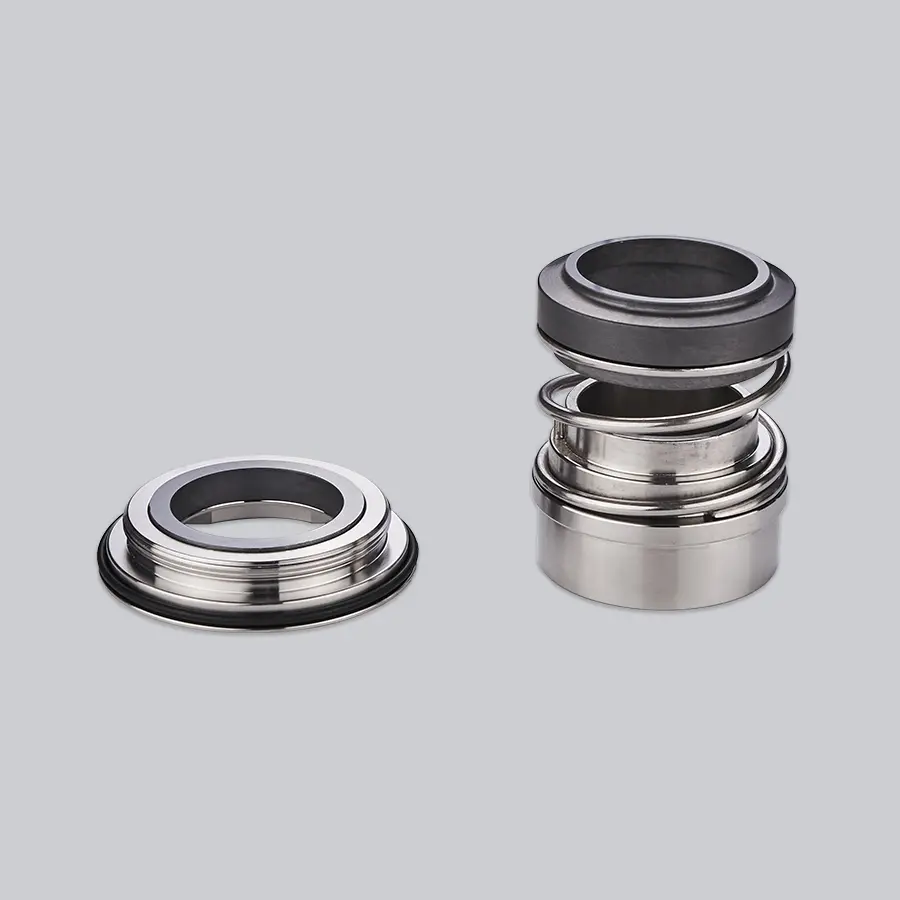
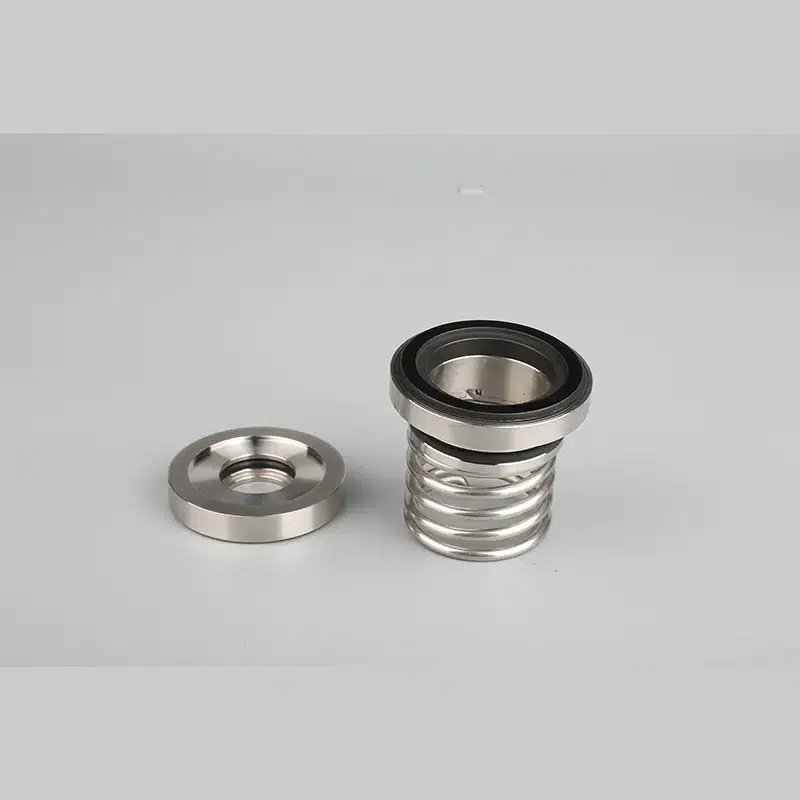
A mechanical seal is a precision sealing device designed to contain fluids in machinery with rotating or reciprocating shafts, such as pumps, mixers, and centrifugal equipment. It forms a barrier between a spinning shaft and a fixed housing, preventing leakage even under high speed, pressure, or harsh chemical conditions.
Component mechanical seals use high-performance materials like silicon carbide and tungsten carbide, complying with industrial standards including DIN24960, EN12756, and ISO3069.
How Mechanical Seals Function
Mechanical seals use two precision-machined faces (one rotating, one stationary) and elastomer components to create a dynamic seal. They withstand high shaft speeds, extreme temperatures, and aggressive chemicals while protecting internal pump components.
Improper material matching or operating conditions can lead to common failures: dry running (heat/wear), elastomer degradation, face contamination, and overheating.
Typical Applications for Mechanical Seals
Mechanical seals are essential for dynamic industrial equipment, including:
- Water, oil, and slurry pumps
- Chemical mixing equipment
- Marine and power generation machinery
- Hydraulic systems and industrial compressors
Core Differences Between Gaskets and Mechanical Seals
Static vs. Dynamic Operation
The defining difference is their operating environment: gaskets serve static sealing (non-moving surfaces), while mechanical seals handle dynamic sealing (moving/rotating parts).
| Feature | Gaskets | Mechanical Seals |
|---|---|---|
| Operating Condition | Static, stationary surfaces only | Dynamic, rotating/reciprocating parts |
| Key Applications | Pipe flanges, fixed housings, non-moving joints | Pumps, mixers, rotary shafts |
| Pressure Performance | Limited under extreme high pressure | Reliable under high pressure and speed |
| Design | Simple flat compressible material | Complex two-face precision assembly |
Materials & Construction
Gaskets use flexible, cost-effective materials (rubber, fiber, cork) for static gap-filling. Mechanical seals use rigid, high-performance materials (silicon carbide, tungsten carbide) to withstand dynamic friction and harsh conditions.
Installation & Maintenance
Gaskets are low-cost, easy to install, and replaceable with minimal downtime but require more frequent replacement. Mechanical seals need skilled installation and have a higher upfront cost, but offer longer service life (1–5 years for standard designs) and less frequent maintenance.
How to Choose the Right Sealing Solution
Selecting between a gasket and mechanical seal depends on key operational factors:
- Application Type: Static equipment → gasket; rotating/moving parts → mechanical seal
- Fluid Compatibility: Match materials to chemicals, oils, or water in the system
- Pressure & Temperature: Mechanical seals perform better under extreme conditions
- Maintenance & Cost: Gaskets for low-budget, easy replacement; mechanical seals for long-term, low-downtime operations
Always align sealing materials with operating conditions to prevent leaks and equipment failure.
Conclusion
Gaskets seal static, non-moving surfaces, while mechanical seals prevent leaks in rotating or moving parts like pumps. Gaskets are low-cost and easy to install for fixed equipment; mechanical seals offer better durability under high pressure, speed, and harsh conditions. Choosing the right type prevents leaks, cuts downtime, and extends equipment life.
FAQ
What is the main difference between a gasket and a mechanical seal?
A gasket seals stationary flat surfaces, while a mechanical seal prevents fluid leakage in machinery with rotating or moving shafts like pumps and mixers.
Can a gasket replace a mechanical seal in a pump?
No. Gaskets cannot withstand the dynamic movement of pump shafts and will fail to prevent leaks; only mechanical seals are designed for this application.
How often should someone replace a mechanical seal?
Most mechanical seals last 1–5 years, depending on operating conditions, with routine inspections to catch issues early.
What materials are used in industrial mechanical seals?
High-performance mechanical seals use silicon carbide, tungsten carbide, and chemical-resistant elastomers to handle extreme pressure, temperature, and fluids.