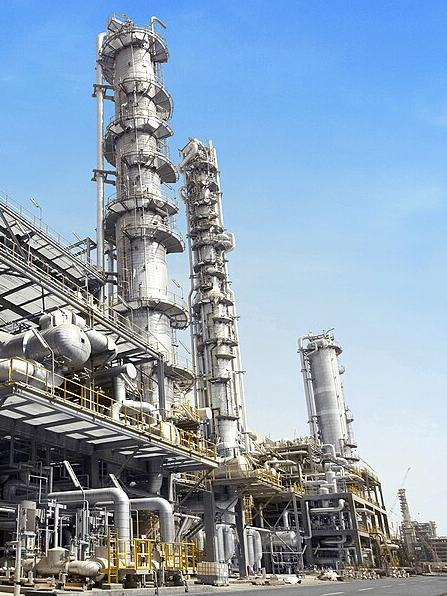
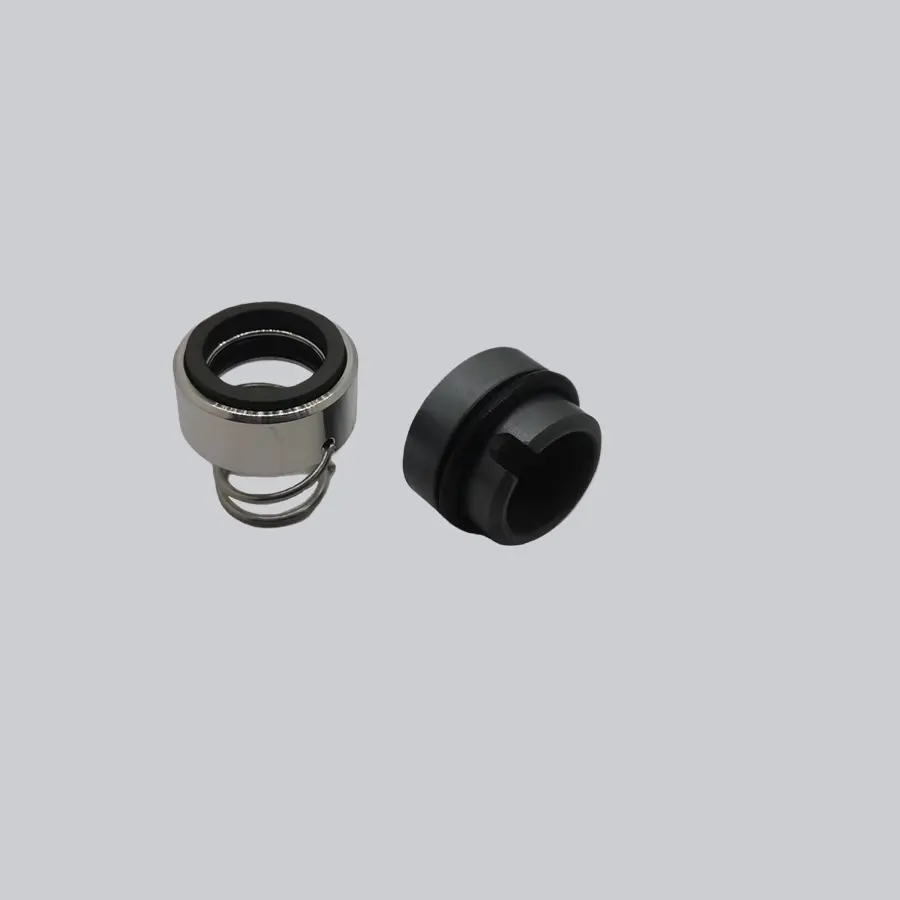
A centrifugal pump mechanical seal prevents process fluid and gas leakage at the penetration point where the rotating pump shaft passes through the pump housing. Its core assembly consists of one stationary sealing face and one rotating sealing face fixed to the shaft; preloaded springs push the two faces tightly together to form a reliable sealing barrier for safe and stable pump operation.
Key Takeaways
- Centrifugal pump seals block leakage via closely mated stationary and rotating seal faces with spring preload.
- A micro liquid film between mating faces delivers continuous lubrication and cooling to reduce friction wear.
- Proper model selection plus standardized installation and routine maintenance cut unplanned downtime and repair expenses.
- Different seal constructions (single spring, metal bellows, cartridge) cater to varied temperature, pressure and chemical medium conditions.
- Core auxiliary parts include springs, secondary elastomer seals, shaft sleeves and gland plates, all critical to long-term sealing performance.
Components of a Centrifugal Pump Seal
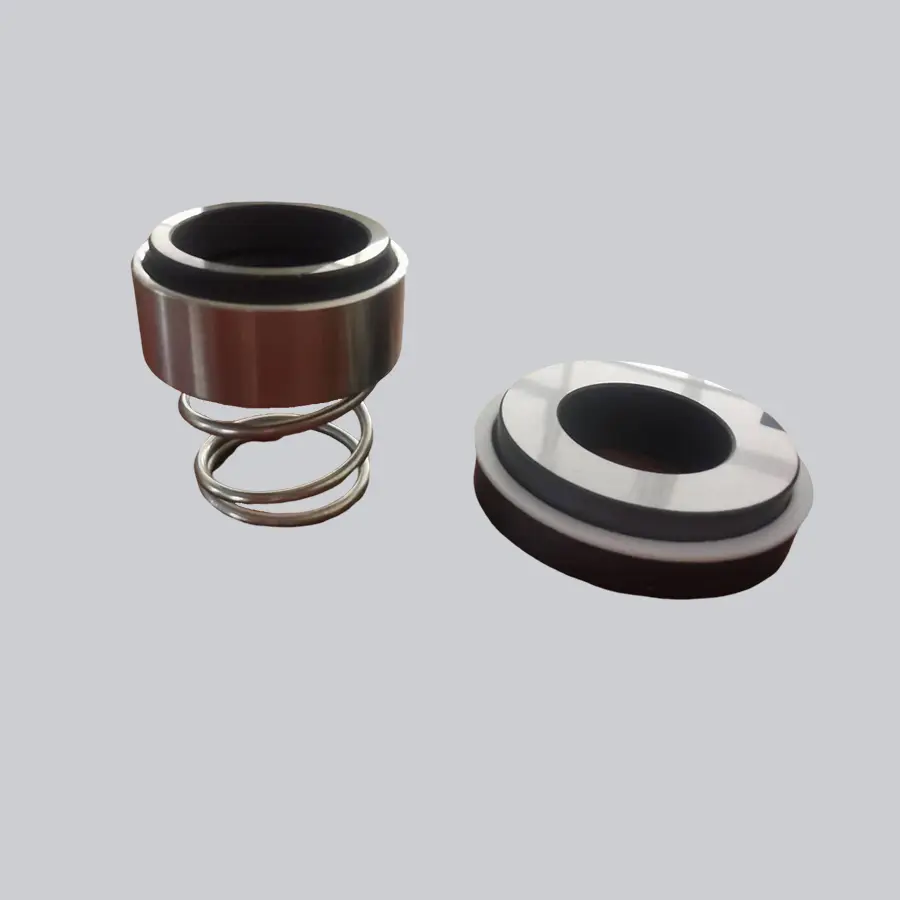
Every functional mechanical seal relies on coordinated core components to contain fluid and isolate external contaminants.
Seal Faces
Seal faces are the core sealing element: one remains fixed inside the pump housing while the other rotates synchronously with the pump shaft. Precision-ground mating surfaces are commonly made of carbon graphite, silicon carbide or ceramic, materials selected for outstanding wear resistance against long-running friction.
Springs & Secondary Seals
Springs supply consistent preload to keep seal faces tightly attached, compensating for minor face wear or tiny shaft deflection during operation. Secondary seals such as O-rings or formed bellows fill assembly gaps to eliminate peripheral leakage paths.
Shaft Sleeve & Gland Plate
A replaceable shaft sleeve wraps around the pump shaft to protect the original shaft from abrasion and chemical corrosion; the gland plate locks the seal assembly in place and assists with partial fluid circulation for face cooling and lubrication.
The table below lists the different types of mechanical seals and their functions:
| Seal Type | Core Application Scope |
|---|---|
| Single Mechanical Seal | Low-to-medium pressure & temperature, regular viscosity clean media |
| Double Mechanical Seal | High pressure, extreme temperature, toxic/flammable fluids requiring near-zero leakage |
| Cartridge Mechanical Seal | High-speed pumps and harsh working conditions with complicated medium |
How a Centrifugal Pump Seal Works
Dynamic Sealing Formation
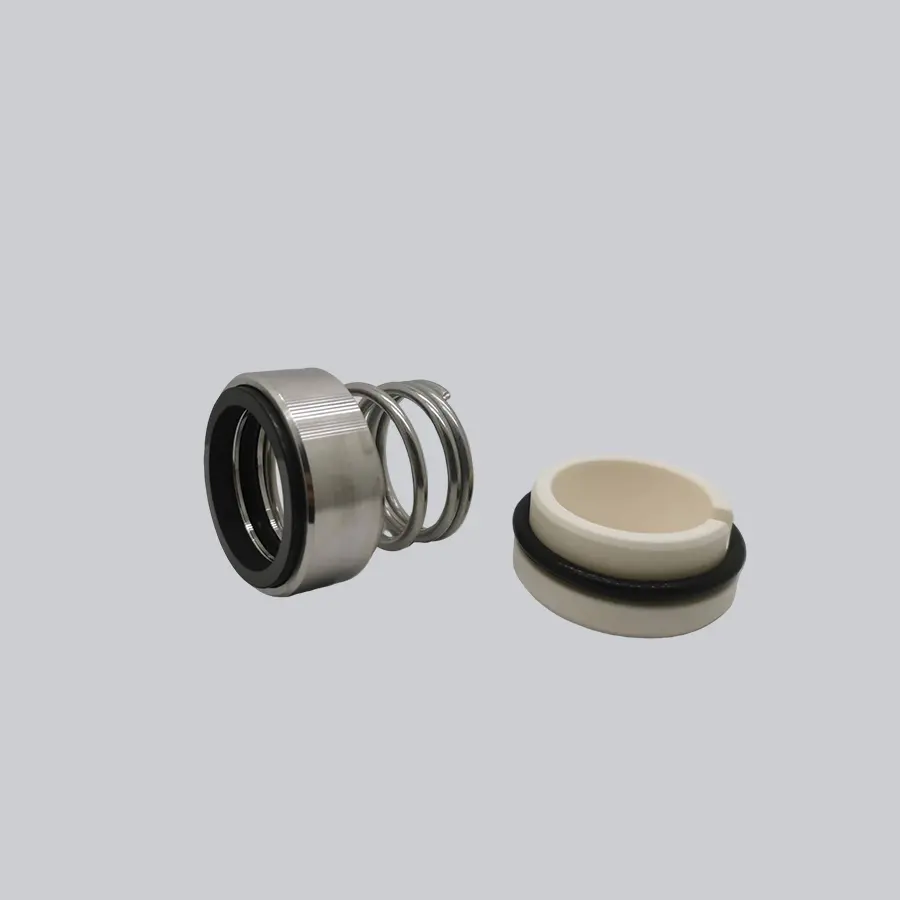
The rotating face spins along with the pump shaft against the fixed stationary face. A micron-thin liquid film naturally generates between the two polished contact surfaces during rotation, building the core dynamic sealing boundary that stops internal fluid outflow and external dirt ingress.
Material pairing follows working conditions: soft carbon graphite commonly mates with hard silicon carbide or ceramic; bellows-type structures are preferred for ultra-high or ultra-low temperature working scenarios.
Spring Preload for Continuous Tight Sealing
Installed springs maintain constant compressive force on seal faces. As sealing surfaces gradually wear after long service, spring preload automatically offsets wear clearance to sustain face contact, adapting to minor fluctuations of system pressure and operating temperature and avoiding unexpected leakage.
Face Cooling & Lubrication Mechanism
The thin interfacial liquid film serves dual functions: lubricating mating faces to lower dry friction and carrying away frictional heat to prevent overheating damage or face cracking. Four mainstream maintenance methods extend seal service life significantly:
| Cooling & Protection Method | Details | Benefit |
|---|---|---|
| Optimized Material Matching | Select fluoropolymer elastomers, ceramic or silicon carbide for high-temperature service | Avoid thermal deformation and excessive abrasive wear |
| Auxiliary Cooling Circuit | Fit cooling jackets or external heat exchangers | Stabilize seal chamber working temperature |
| System Pressure Control | Regulate seal chamber backpressure | Prevent vaporization of process fluid at seal faces |
| Periodic Routine Inspection | Check leakage and component wear regularly | Spot early defects to avoid sudden seal breakdown |
Common Mechanical Seal Types for Centrifugal Pumps
Three mainstream constructions dominate industrial centrifugal pump applications, differentiated by internal structure and applicable working parameters:
| Seal Style | Key Features | Typical Working Limits |
|---|---|---|
| Single Spring Seal | Simple assembly, convenient maintenance | Up to 800°F, 1200 PSI, 10,000 SFPM |
| Metal Bellows Seal | No auxiliary rubber components, balanced structure, self-cleaning | Up to 800°F, 300 PSI, 10,000 SFPM |
| Cartridge Seal | Pre-assembled as a complete unit at factory | Wide compatibility across diverse elastomer and face material options |
Single Spring Seals
Featuring a single coil spring for uniform face preloading, this cost-effective design fits clean water and mild chemical service, widely applied in agricultural and conventional water supply pumps with easy field installation and maintenance.
Metal Bellows Seals
Flexible formed metal bellows replace traditional coil springs to provide preload; free of vulnerable rubber parts, they resist strong chemicals and extreme temperature swings, ideal for chemical processing facilities.
Cartridge Seals
Factory pre-set assembly eliminates on-site adjustment errors during installation. Its plug-and-play characteristic shortens pump downtime drastically: statistics show cartridge-style seals reduce seal-related downtime by 40%–60% and cut maintenance workload by roughly 30% versus conventional split seals.
Why Mechanical Seals Matter
Equipment & Environmental Protection
Well-functioning mechanical seals fully contain hazardous or corrosive process fluid inside pump casings, preventing ground/water contamination and helping enterprises comply with industrial environmental and safety regulations while avoiding costly spill-related equipment damage.
Lower Maintenance & Unplanned Downtime
Premium mechanical seals extend continuous pump runtime and slash frequent overhaul costs. Reduced unexpected breakdowns translate into higher effective production time and lower overall operating expenditure for processing plants.
| Design Advantage | Practical Benefit |
|---|---|
| Optimized sealing construction | Less unplanned shutdown, improved production efficiency |
| Reliable leak-tight performance | Minimize fluid waste and raw material loss |
| Stable long-term operation | Reduce emergency maintenance cost |
Closing Summary
Mechanical seals are indispensable core components for normal centrifugal pump operation, relying on precision-matched faces, spring preload and interfacial liquid film to realize leak-free dynamic sealing. Proper structural selection, standardized fitting and regular inspection deliver longer equipment lifespan, fewer maintenance fees and better environmental compliance.
For durable, cost-effective aftermarket and OEM-replacement centrifugal pump mechanical seals matching various pump models across industries, turn to Victor. Our products adopt premium silicon carbide, tungsten carbide and high-performance elastomer raw materials to withstand harsh high-temperature, high-pressure and corrosive working conditions.
FAQ
What core function does a mechanical seal perform on centrifugal pumps?
It seals the clearance between rotating pump shaft and stationary pump housing to block medium leakage from inside the pump.
How frequently should mechanical seals receive routine inspection?
Follow regular pump maintenance cycles with visual inspection every several months; early detection of minor leakage prevents catastrophic seal failure.
What’s the core difference between single and double mechanical seals?
Single seals suit ordinary non-hazardous media under mild working conditions; double seals with a barrier fluid cavity are designed for toxic, volatile or high-risk fluids to achieve near-zero emission.
Typical warning signs indicating a worn seal needing replacement?
Persistent fluid dripping at the shaft penetration, abnormal pump noise or excessive shaft vibration all point to degraded sealing performance requiring timely replacement.