
Mechanical seals are designed to prevent fluid leakage in rotating equipment such as pumps and compressors. While designs may vary, most mechanical seals consist of three essential components: primary seal faces, secondary seals, and a spring mechanism.
Each component plays a distinct role in maintaining sealing performance, reliability, and service life.
Key Takeaways
- All mechanical seals consist of three core components: primary seal faces, secondary seals, and a spring mechanism
- Primary seal faces form the main sealing interface and control leakage
- Secondary seals prevent leakage along shafts and housing connections
- Springs maintain consistent contact pressure between seal faces to compensate for wear
- Proper material selection and installation are critical for performance and service life
Primary Seal Faces (Sealing Interface)
What Are Primary Seal Faces?
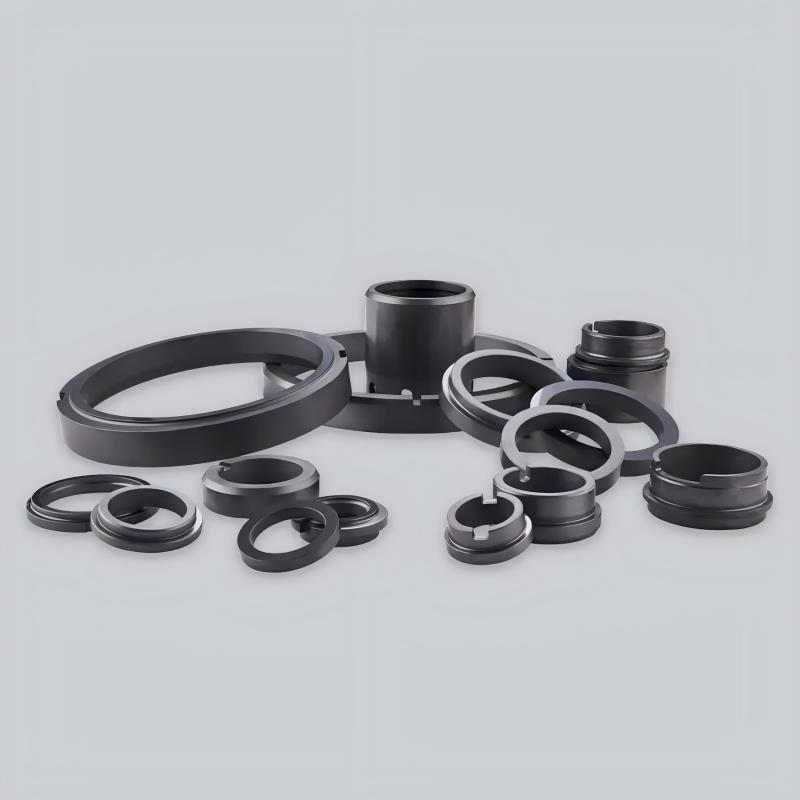
Primary seal faces form the main sealing interface of a mechanical seal. They consist of:
- A rotating face (primary ring) attached to the shaft
- A stationary face (mating ring) fixed within the housing
These two precision-lapped surfaces operate in close contact to create a controlled sealing gap.
Function of Primary Seal Faces
Primary seal faces are responsible for controlling leakage at the sealing interface. A thin fluid film—typically at the micron level—forms between the faces, providing:
- Lubrication to reduce friction
- Heat dissipation during operation
- A controlled balance between sealing performance and wear
Surface flatness and finish are critical. Even minor deviations can significantly impact leakage rates and seal life.
Importance of Material Selection
Material selection for primary seal faces directly impacts performance. Common materials include:
- Carbon graphite – self-lubricating, widely used
- Silicon carbide – high hardness, excellent corrosion resistance
- Tungsten carbide – strong wear resistance and toughness
Proper material pairing ensures durability under varying pressure, temperature, and chemical conditions.
Secondary Seals (O-Rings and Gaskets)
What Are Secondary Seals?
Secondary seals provide additional sealing beyond the primary faces. Typical types include:
- O-rings
- Gaskets
- Elastomer or metal bellows
They seal the gaps between the shaft, sleeve, and housing components.
Function of Secondary Seals
Secondary seals prevent leakage along secondary sealing paths by:
- Accommodating shaft movement and vibration
- Maintaining sealing under pressure and temperature changes
- Providing flexibility for dynamic and static sealing interfaces
They also compensate for minor misalignment and thermal expansion within the system.
Material Selection and Application Considerations
Selecting the right material is essential for reliability:
- EPDM – suitable for water and mild chemicals
- Viton (FKM) – resistant to oils and high temperatures
- FFKM – designed for aggressive chemical environments
Incorrect material selection can lead to swelling, cracking, or rapid degradation, which are common causes of seal failure.
Spring Mechanism (Maintaining Contact Pressure)
What Is the Spring Mechanism?
The spring mechanism provides the axial force required to keep the seal faces in contact. Common configurations include:
- Single coil spring
- Multi-spring designs
- Wave springs
- Metal bellows (integrated spring function)
Function of the Spring in Mechanical Seals
The spring ensures stable sealing performance by:
- Maintaining face contact during startup and shutdown
- Compensating for wear and axial movement
- Supporting consistent operation under fluctuating pressure conditions
It works together with hydraulic forces to stabilize the sealing interface.
Importance of Spring Design and Force Control
Proper spring design is critical:
- Insufficient force → inadequate face contact and leakage
- Excessive force → increased friction, heat, and wear
Material selection (e.g., stainless steel, Inconel) must also account for corrosion resistance and fatigue life.
How the Three Components Work Together
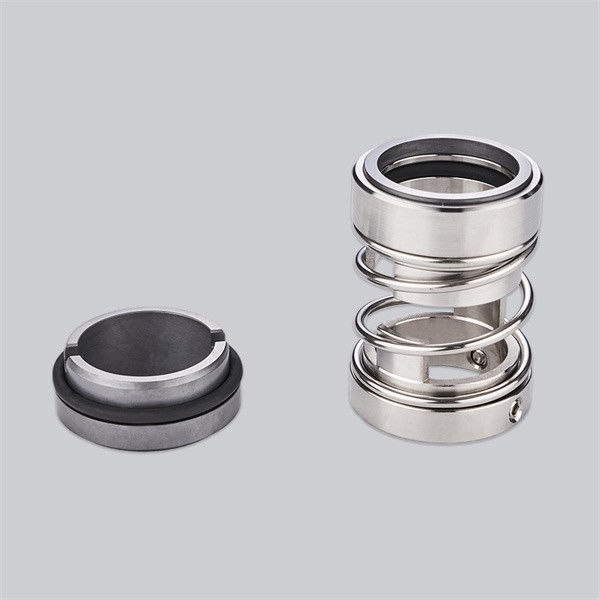
The effectiveness of a mechanical seal depends on the interaction of all three components:
- Primary seal faces provide the main sealing interface
- Secondary seals prevent leakage through auxiliary paths
- Spring mechanisms maintain consistent contact pressure
Together, they create a dynamic sealing system that adapts to changes in pressure, temperature, and shaft movement. If any one component fails or is improperly selected, overall sealing performance can be compromised.
Conclusion
Mechanical seals rely on three essential components: primary seal faces, secondary seals, and springs. Each plays a specific role in ensuring effective sealing and operational stability.
By understanding how these components function and interact, engineers can make better decisions in seal selection, installation, and maintenance—ultimately improving equipment reliability and reducing downtime.
FAQ
What are the three basic parts of mechanical seals?
The three main components are primary seal faces, secondary seals, and the spring mechanism. Together, they prevent leakage and maintain sealing performance.
Which part is most important in a mechanical seal?
The primary seal faces are the most critical, as they directly control leakage and are most affected by friction and wear.
What causes mechanical seal failure?
Common causes include:
- Dry running (lack of lubrication)
- Improper installation or misalignment
- Incorrect material selection
- Excessive temperature or pressure
Can mechanical seals operate without lubrication?
Most mechanical seals require a fluid film for lubrication and cooling. Only specialized dry-running seals are designed to operate without it.
How can mechanical seal life be extended?
- Ensure proper installation and alignment
- Use appropriate materials for the application
- Maintain adequate lubrication conditions
- Perform regular inspection and monitoring