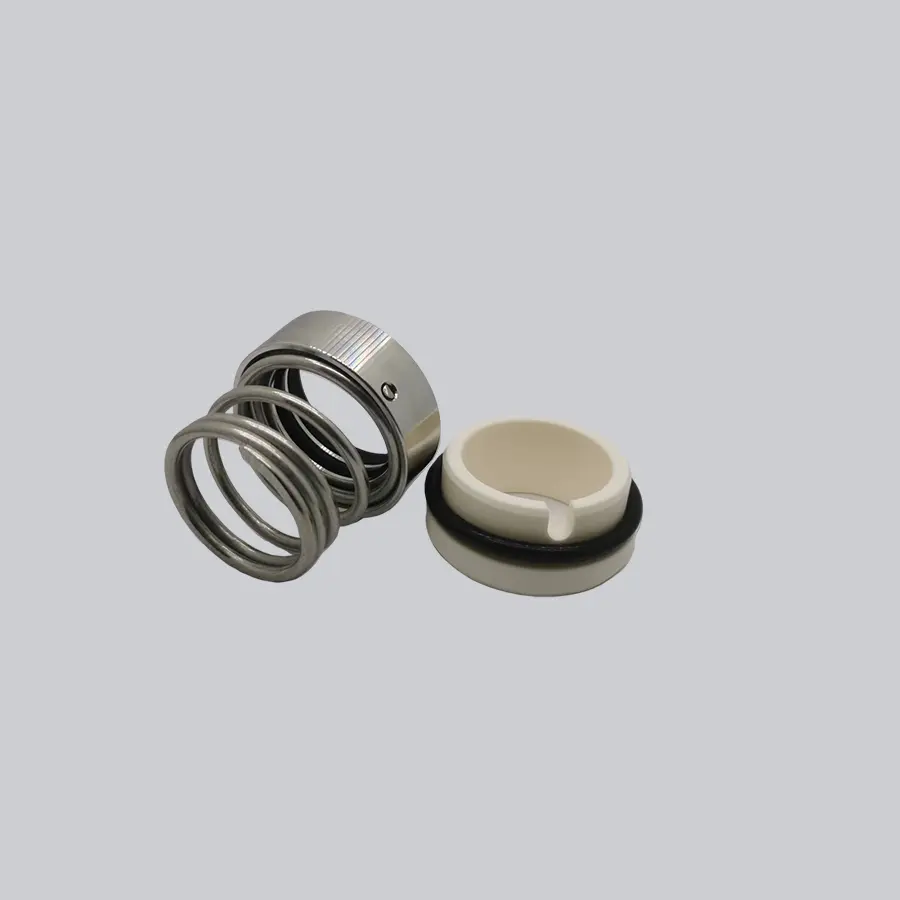
In most cases, mechanical seals should not be reused once removed from service. Standard industry practice recommends installing a new seal during every pump disassembly and maintenance, as even visually intact used seals carry high risk of premature leakage and failure. In very limited scenarios, a carefully removed, undamaged seal may be returned to service after professional relapping, but this is only acceptable for non-critical, low-pressure applications and should always be confirmed with the seal manufacturer.
Key Takeaways
- Standard industry guidance does not recommend reusing mechanical seals, as worn or misaligned sealing faces will cause leaks and premature failure.
- A seal may only be considered for reuse if it is removed without damage, passes full inspection, and undergoes professional face relapping to restore a flat, smooth sealing surface.
- Reused seals carry higher failure risk, which can lead to unplanned downtime, pump damage and higher total costs than installing a new seal.
- For mission-critical pumps or applications handling hazardous fluids, always install a new seal during maintenance to ensure reliability and safety.
- Always follow the original seal manufacturer’s guidance, as seal design and material compatibility will determine if refurbishment is possible.
When Can a Mechanical Seal Potentially Be Reused?
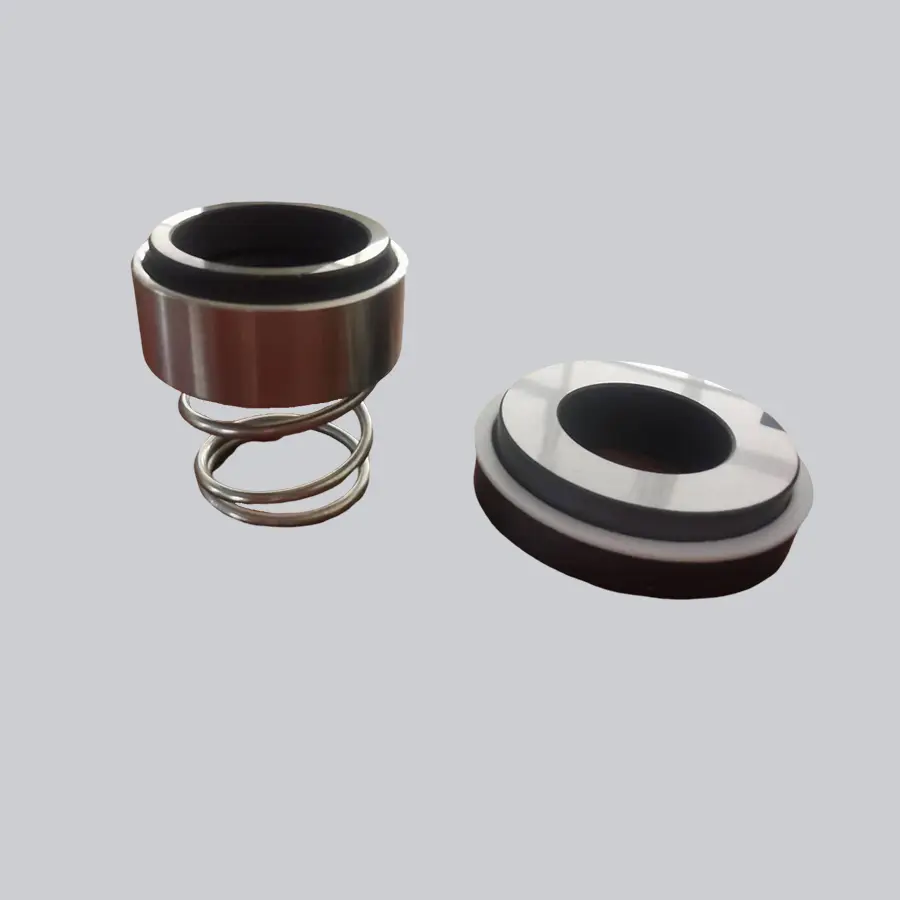
Direct on-site reuse of an unrefurbished used seal is never considered best practice. For a seal to have any chance of reliable secondary service, it must meet all of the following strict conditions:
- Careful, damage-free removal: The seal must be extracted without scratching, chipping or bending the sealing faces, elastomers or metal components.
- Full visual and dimensional inspection: No cracks, chips, wear grooves or corrosion on the sealing faces; elastomers must show no compression set, brittleness or swelling.
- Professional face relapping: The primary sealing faces must be resurfaced on a precision lapping machine with abrasive slurry to restore optical flatness. This removes micro-defects from the original service life and re-establishes a leak-tight mating surface.
- Replacement of elastomeric components: Secondary seals, gaskets and O-rings must always be replaced with new parts, as these materials degrade with heat, pressure and fluid exposure and cannot be reliably reused.
- Non-critical application: Only consider reuse for low-pressure, non-hazardous, non-essential pumps where a seal failure will not cause safety hazards, environmental damage or costly production downtime.
Important: Cartridge seals can sometimes be professionally refurbished by the original manufacturer or a certified repair shop with new faces, springs and elastomers. This is a controlled factory refurbishment process, not the same as reinstalling a used seal on-site.
Core Risks of Reusing Mechanical Seals
Even seals that appear undamaged can have invisible wear that leads to early failure. Reusing mechanical seals carries these well-documented risks:
Premature Leakage & Seal Failure
The ultra-flat mating faces of a mechanical seal wear in to match each other during operation. Once disassembled, the original alignment is lost, and the faces will not seat perfectly when reinstalled. This causes increased leakage, faster wear and shortened service life.
Unplanned Downtime
A reused seal is far more likely to fail unexpectedly between scheduled maintenance cycles. For industrial processes, unplanned pump downtime can cost far more per hour than the price of a new mechanical seal.
Secondary Equipment Damage
Leakage from a failed seal can damage pump bearings, motor windings and surrounding equipment. In severe cases, fluid leaks can cause safety hazards, environmental contamination and regulatory compliance issues.
Hidden Wear Modes
Many common seal failure causes are not visible to the naked eye, including:
- Face misalignment from pipe strain or shaft runout
- Micro-cracks from thermal shock or vibration
- Elastomer compression set and material degradation
- Spring fatigue from cyclic operation
Clear Signs a Mechanical Seal Must Be Replaced
Replace a seal immediately if any of the following conditions are present during inspection:
- Visible dripping, spraying or steady fluid leakage from the seal chamber
- Scratches, chips, wear grooves or pitting on either sealing face
- Cracked, brittle, swollen or permanently deformed elastomers/O-rings
- Increased seal chamber temperature or abnormal vibration during operation
- Rising power draw from the pump motor
- Contamination of bearing lubrication oil from process fluid
- Crystalline buildup or product caking around the seal face
- Drop in system pressure or flow rate with no other identifiable cause
How to Decide Between Reusing and Replacing a Mechanical Seal
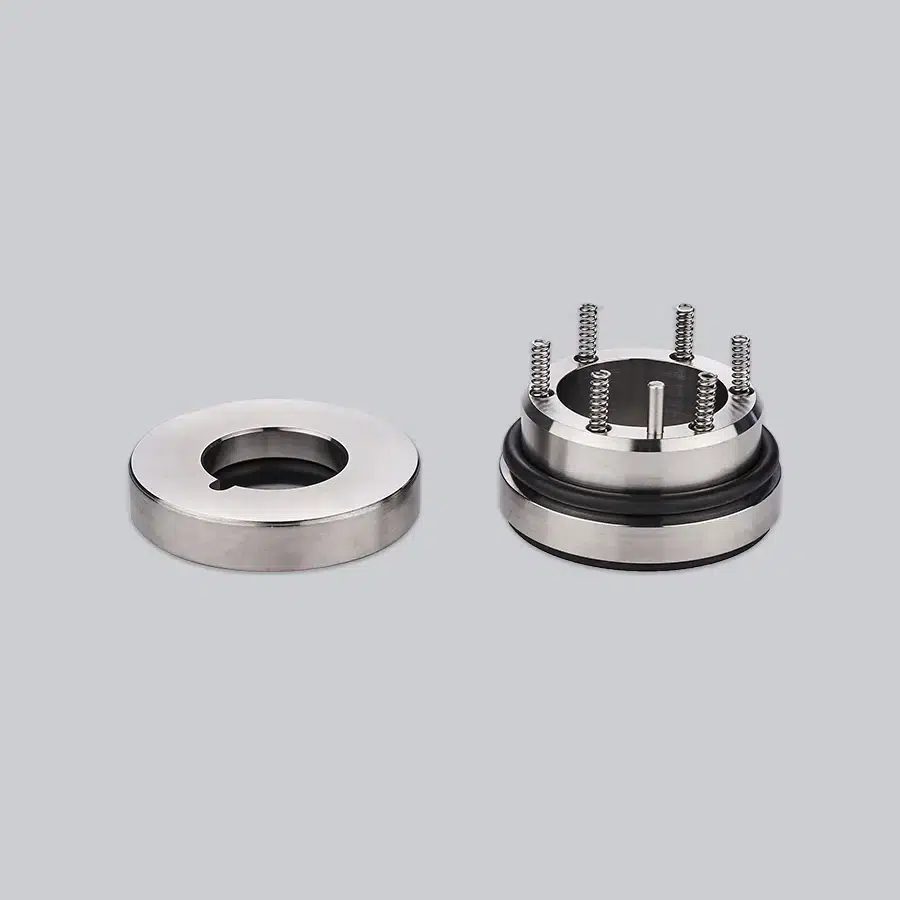
When weighing reuse vs. replacement, evaluate these four core factors to make the lowest-risk, most cost-effective choice:
Application criticality
For mission-critical pumps, hazardous fluid service or processes where downtime is extremely expensive, always install a new seal. The cost of failure far outweighs the savings from reuse. For non-essential, low-pressure utility pumps, refurbishment may be a cost-saving option.
Total cost comparison
Compare the cost of a new seal against the cost of refurbishment plus the estimated risk of unplanned downtime. For most standard cartridge seals, the low cost of a new seal makes replacement the more economical choice overall.
Seal condition
Any visible damage to faces, elastomers or springs means replacement is mandatory. Only seals in like-new condition after careful removal are even candidates for refurbishment.
Manufacturer guidance
Always consult the seal manufacturer’s official maintenance recommendations. Most seal makers explicitly advise against on-site reuse, and many warranties are voided if a used seal is reinstalled.
FAQ
Can you reuse a mechanical seal after removing it?
Direct on-site reuse is not recommended. A seal may only be returned to service if it is undamaged, professionally relapped, fitted with new elastomers, and used in a non-critical application. Always follow manufacturer guidance.
How many times can a mechanical seal be refurbished?
Most mechanical seal faces can be professionally relapped 1–2 times before there is insufficient material remaining. Elastomers and springs must be replaced with new parts at every refurbishment.
Can cartridge mechanical seals be rebuilt?
Yes, most cartridge seals can be professionally refurbished by the manufacturer or a certified repair shop with new sealing faces, elastomers and springs. This is a factory-level process, not a field reuse of the used seal.
What happens if you reuse a worn mechanical seal?
A worn or damaged reused seal will almost always leak prematurely, leading to unplanned downtime, potential pump damage and safety or environmental risks from fluid escape.
When should you always replace a mechanical seal?
Always replace a seal if it shows visible wear, cracks or leakage, if it was removed from a critical service pump, or if the manufacturer does not approve reuse.
Conclusion
While it is technically possible to refurbish and reuse some mechanical seals under very controlled conditions, standard industry best practice is to install a new seal during every pump maintenance event.
Reusing a seal saves a small amount on parts cost upfront, but it introduces significant risk of premature failure, leaks and unplanned downtime that almost always results in higher total costs. For critical applications, new seals are always the safest, most reliable choice.