
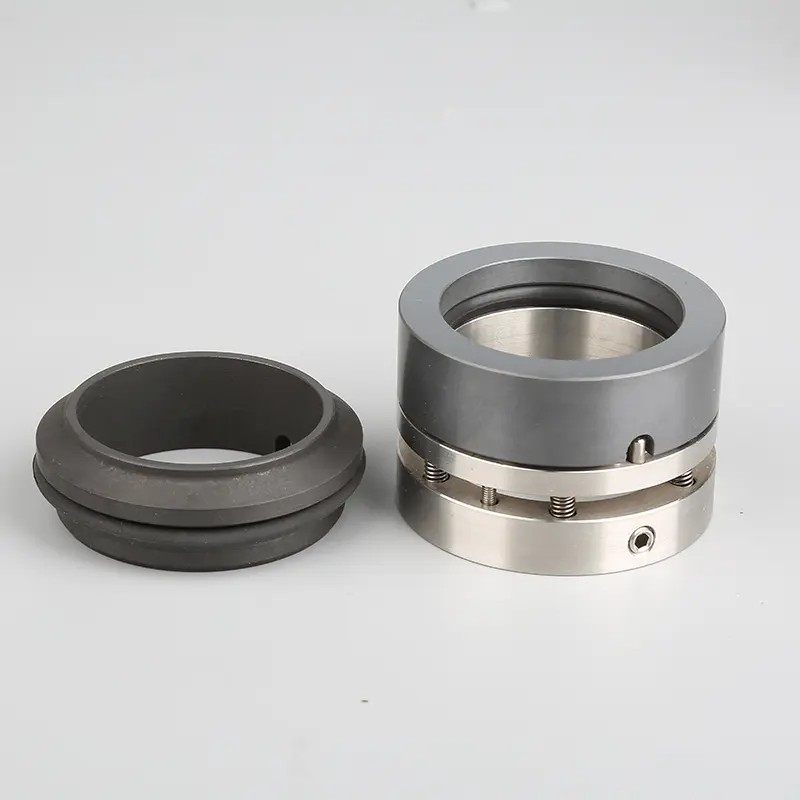
Choosing between cartridge and component mechanical seals is an important decision for plant engineers designing fluid handling systems. The right seal can affect pump reliability, maintenance requirements, installation time, and overall production uptime. Cartridge seals are often preferred when fast installation, consistent assembly, and reduced maintenance downtime are priorities. Component seals, meanwhile, can be a practical choice for cost-sensitive applications, compact pump designs, or facilities with experienced maintenance teams.
Key Takeaways
- Cartridge seals arrive fully pre-assembled from the factory, enabling fast, low-error installation.
- Component seals have a lower upfront cost, but require piece-by-piece manual assembly by experienced technicians.
- Pre-built cartridge seals eliminate alignment errors and drastically reduce costly equipment downtime.
- Compact component seals fit in tight pump stuffing boxes where larger cartridge assemblies cannot fit.
- Cartridge seals deliver the best value for high-downtime operations; component seals work best for budget-limited sites with skilled maintenance teams.
Cartridge vs. Component Mechanical Seals: Core Design Differences
The fundamental difference between the two seal types lies in how parts are delivered and assembled onto the pump shaft.
Cartridge Mechanical Seal Design
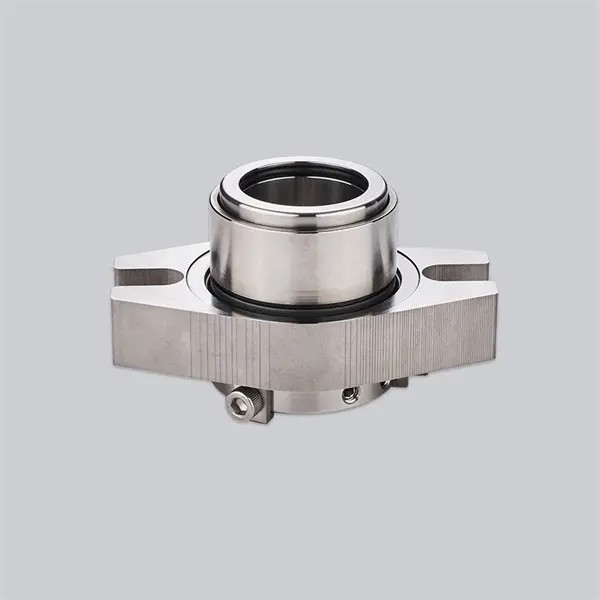
Cartridge seals are self-contained, fully pre-assembled units that slide directly onto the pump shaft as a single piece. Every required component is integrated into one package at the factory:
- Gland plate, shaft sleeve, rotary and stationary seal faces
- Secondary seals (O-rings or metal bellows), drive collar, and spring assembly
Spring compression and working length are preset at the factory using setting clips. Technicians simply mount the unit and remove the clips — no manual measurement or calibration is required. This factory tuning eliminates human alignment error and ensures consistent seal performance from the start.
Component Mechanical Seal Design
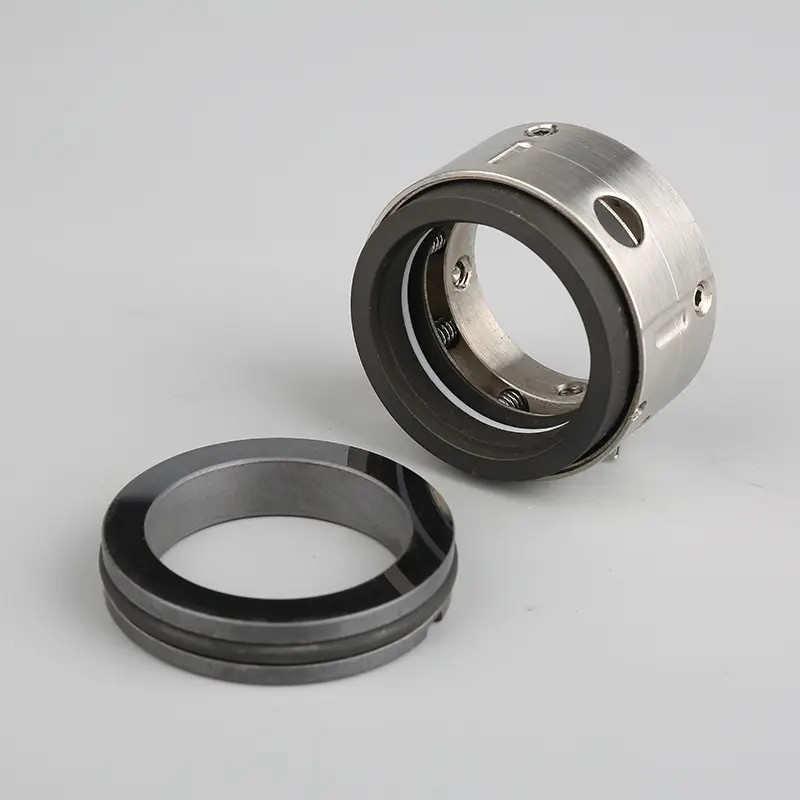
Component seals are delivered as individual loose parts, which must be assembled piece by piece directly inside the pump stuffing box. The full set includes:
- Rotating and stationary seal faces (the primary fluid barrier)
- O-rings, gaskets, or bellows for static sealing and axial movement
- Springs to provide closing force and compensate for wear
- Gland plate / seal housing to hold stationary components
- Shaft sleeve to protect the pump shaft, plus set screws and fasteners
Technicians must manually adjust spring tension, align seal faces, and set working length during installation. Incorrect spring pressure causes face warping or separation, and even small measurement errors can lead to immediate leaks on startup.
Cartridge Mechanical Seals: Pros and Cons
Advantages
- Fast, error-proof installation: Factory pre-assembly eliminates manual measuring, alignment, and spring adjustment. Installation takes roughly 85% less time than component seals.
- Lower startup failure rate: Precise factory calibration eliminates the most common cause of early seal leaks, reducing unplanned downtime.
- Shaft protection: The integrated shaft sleeve prevents O-ring wear on the bare pump shaft, extending equipment service life.
- Consistent performance: Every unit is built to identical factory specifications, delivering reliable, repeatable performance across multiple pumps.
- Fast ROI: For critical production equipment, the combination of reduced labor and lower downtime typically delivers full payback in 12–18 months.
Disadvantages
- Higher upfront cost: Initial purchase price is significantly higher than component seals.
- Larger physical size: The integrated design requires more axial space in the pump stuffing box, making it incompatible with some compact pump housings.
- Higher replacement cost for full units: Full cartridge replacement costs more than swapping only worn individual parts.
Component Mechanical Seals: Pros and Cons
Advantages
- Low initial cost: Upfront part cost is 2–3 times lower than an equivalent cartridge seal.
- Compact footprint: Fits easily into small, tight pump stuffing boxes where cartridge assemblies cannot fit.
- Flexible part replacement: Only worn components (such as seal faces or O-rings) need to be replaced during overhauls, reducing spare parts expense.
- Customizable: Individual parts can be swapped or adjusted for custom pump housings or unique process requirements.
Disadvantages
- Complex, labor-intensive installation: Requires skilled technicians to assemble parts by hand, with careful adjustment of spring compression and alignment.
- Higher failure risk: Uneven gland tightening, incorrect spring tension, or misalignment all cause premature seal wear and leaks.
- Longer downtime: Installation and repairs take significantly longer, increasing equipment idle time for critical pumps.
How to Choose the Right Seal Type
Select the seal design that best matches your operational priorities, available labor, and equipment constraints, with guidance from an experienced mechanical seal manufacturer.
Choose Cartridge Seals If:
- You operate high-value, critical process pumps where downtime carries very high costs (chemical processing, marine ballast systems, water treatment).
- Your maintenance team has limited specialized seal assembly experience.
- You want to minimize startup failures and ensure consistent, repeatable seal performance.
- Your pump housings have sufficient space to accommodate the larger cartridge envelope.
Cartridge seals are the standard choice for demanding industrial applications, where the cost of a leak or shutdown far outweighs the higher upfront equipment price.
Choose Component Seals If:
- You have a team of experienced, trained maintenance technicians who can perform precise manual assembly.
- You are working with compact, small-footprint pumps where cartridge seals will not fit.
- Budget is the primary priority and equipment downtime carries low operational costs.
- You need customizable sealing for non-standard or custom-built pump systems.
Component seals remain a practical choice for light-duty pumps, small fluid systems, and facilities with in-house mechanical expertise.
Frequently Asked Questions
What are the main advantages of cartridge mechanical seals?
Cartridge mechanical seals deliver fast, mistake-free installation, reduced startup failure rates, and consistent factory-calibrated performance. They cut installation labor dramatically and lower unplanned downtime for critical pump equipment.
What are the disadvantages of component mechanical seals?
Component seals require full manual assembly, including spring tension adjustment and face alignment. They demand skilled labor, have a higher risk of early failure from installation errors, and take much longer to install and service.
How much faster is a cartridge seal to install?
A cartridge seal can typically be installed in 30–45 minutes by general maintenance staff. A component seal requires 3–5 hours of work by a trained, experienced technician.
Can I replace a component seal with a cartridge seal?
In most cases, yes — as long as the pump stuffing box has enough axial space to accommodate the cartridge assembly. Always verify dimensional clearances before upgrading from a component to a cartridge design.
How long do mechanical seals typically last?
Service life depends on process fluid, pressure, temperature, and alignment. With proper installation and operation, industrial mechanical seals typically last 2–5 years in standard service. Poor installation or off-spec operating conditions can drastically shorten service life.
Final Thoughts
There is no universal “better” seal — the right choice depends on your facility’s downtime costs, available maintenance expertise, pump size constraints, and budget. Cartridge seals deliver superior reliability and lower total cost of ownership for critical, high-value equipment. Component seals remain a cost-effective solution for smaller pumps and operations with skilled in-house teams.
By weighing upfront purchase cost against long-term labor and downtime expenses, you can select the seal type that delivers the best overall value for your fluid handling system.