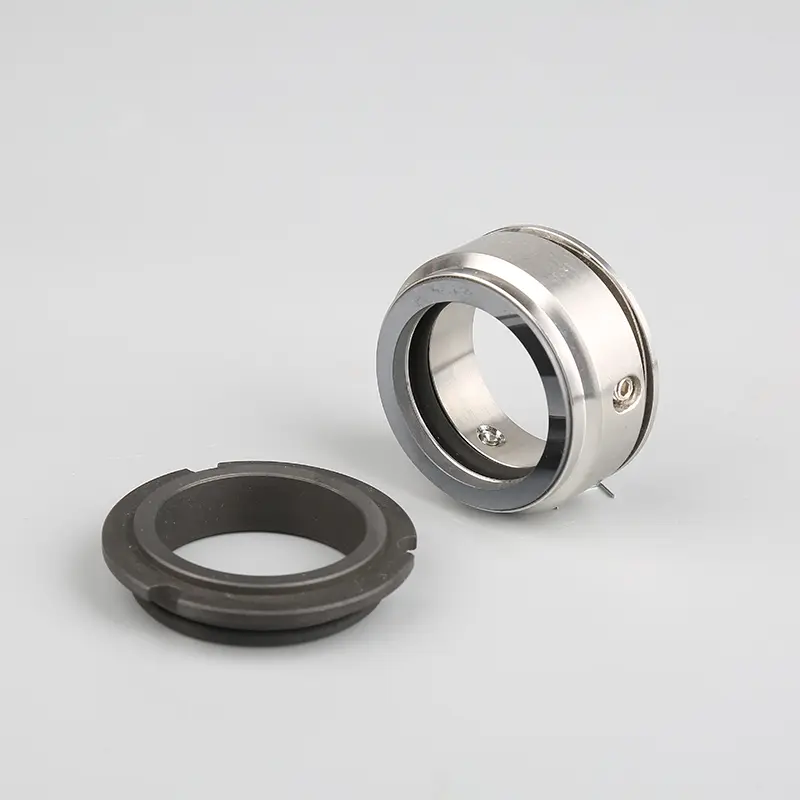
Silicon carbide (SiC) and tungsten carbide (WC) are both widely used as hard-face materials in mechanical seals, but they have different material structures and performance characteristics. SiC is a ceramic material known for its hardness, wear resistance, chemical resistance, and thermal performance, while WC generally offers higher toughness and impact resistance.
The main difference is not that one material is universally better than the other. Instead, each offers a different balance of hardness, toughness, chemical resistance, thermal behavior, and cost. The right choice depends on the fluid, pressure, temperature, speed, solids content, lubrication, and overall seal design.
Key Takeaways
- Silicon carbide (SiC) offers very high hardness, excellent wear resistance, strong chemical resistance, and good thermal performance.
- Tungsten carbide (WC) combines high hardness and wear resistance with generally higher toughness and impact resistance.
- SiC and WC differ in chemical and thermal behavior, with SiC often favored for highly corrosive or abrasive conditions and WC offering advantages where mechanical impact is a greater concern.
Silicon Carbide vs. Tungsten Carbide Seal Composition
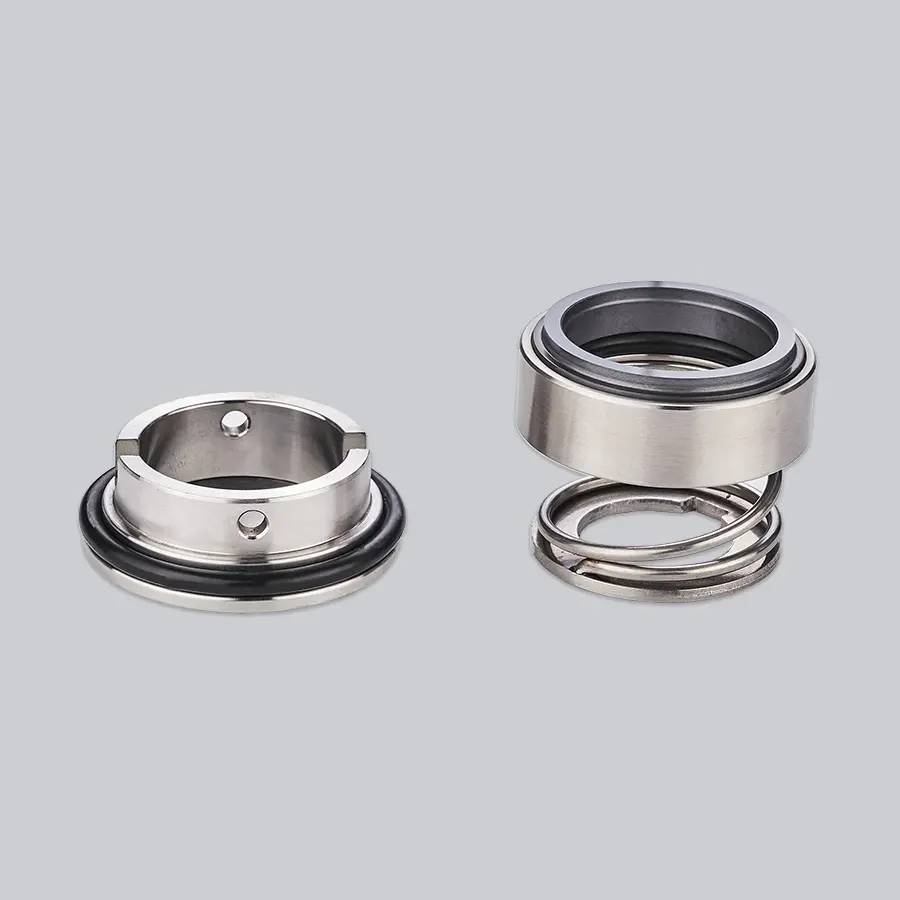
The performance differences between silicon carbide and tungsten carbide seals begin with their material composition and microstructure.
What Silicon Carbide Seals Are Made Of
Silicon carbide is a ceramic compound made from silicon and carbon. In mechanical seals, different SiC grades and manufacturing processes are used to achieve specific combinations of hardness, density, chemical resistance, and thermal performance.
Two common types include:
- Pressureless-sintered SiC (SSiC): A dense SiC material commonly used where high wear resistance, chemical resistance, and dimensional stability are required.
- Reaction-bonded SiC (RBSC): A SiC-based material produced through a reaction-bonding process and containing a silicon phase. Its properties differ from those of pressureless-sintered SiC, particularly in chemical resistance and material composition.
The specific SiC grade matters when selecting a seal because manufacturing method and material formulation can affect performance.
What Tungsten Carbide Seals Are Made Of
Tungsten carbide seal faces are commonly produced as cemented carbide, in which hard WC grains are bonded with a metallic binder such as cobalt or nickel.
The properties of WC can vary with:
- Grain size: Finer WC grains can increase hardness and wear resistance.
- Binder type: Cobalt, nickel, and other binder systems provide different combinations of toughness and chemical resistance.
- Binder content: The amount of metallic binder affects hardness, toughness, and corrosion behavior.
- Binderless grades: WC without a conventional metallic binder can provide different chemical and wear characteristics for demanding applications.
Because WC properties vary significantly by grade and binder system, material specifications should be checked rather than treating all tungsten carbide seals as identical.
Silicon Carbide vs. Tungsten Carbide Hardness and Wear Resistance
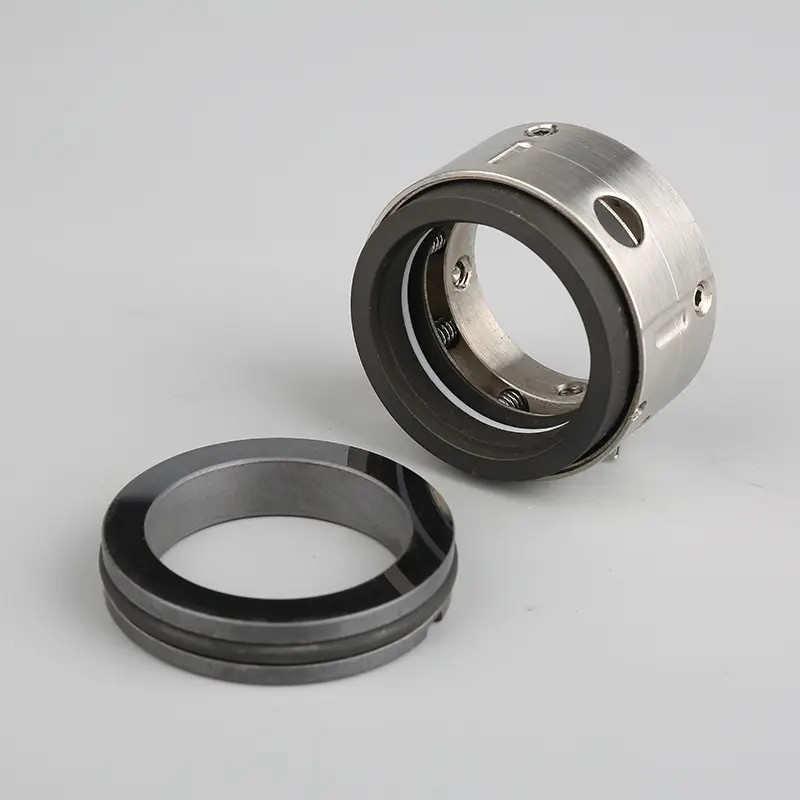
Hardness is important for mechanical seal wear resistance, but it is not the only factor that determines performance. Fracture toughness and resistance to mechanical shock also influence how a seal face performs under demanding operating conditions.
| Property | Silicon Carbide (SiC) | Tungsten Carbide (WC) |
|---|---|---|
| Hardness | Very high | Very high; varies by grade and binder |
| Fracture Toughness | Generally lower | Generally higher |
| Wear Resistance | Excellent | Excellent |
| Impact Resistance | Lower | Generally higher |
Hardness and Wear Resistance of Silicon Carbide
Silicon carbide has very high hardness and is widely used as a hard seal-face material where abrasive wear is a major concern. Its wear resistance makes it suitable for many applications involving contaminated fluids, suspended solids, and abrasive media.
SiC can be particularly useful when maintaining a hard, wear-resistant sealing surface is a priority. However, its relatively low fracture toughness means that excessive mechanical shock or impact can increase the risk of cracking.
Toughness and Impact Resistance of Tungsten Carbide
Tungsten carbide generally has higher fracture toughness than silicon carbide. This gives WC an advantage in applications where seal faces may be exposed to mechanical impact, pressure fluctuations, or hard particles.
WC also provides high hardness and good wear resistance, so it is not simply an alternative for impact-prone applications. Its combination of hardness and toughness makes it useful in demanding sealing conditions where both wear and mechanical loading need to be considered.
The practical choice therefore depends on the type of wear and mechanical stress present in the application rather than hardness alone.
Silicon Carbide vs. Tungsten Carbide Chemical and Thermal Performance
Chemical compatibility and thermal behavior are important when selecting a mechanical seal material. The performance of both SiC and WC depends on the material grade, seal design, operating medium, and service conditions.
Chemical and Corrosion Resistance
Silicon carbide generally provides excellent chemical resistance and is widely used in applications involving corrosive, abrasive, or chemically aggressive fluids. Certain SiC grades are particularly suitable for chemical-processing applications where resistance to the process medium is critical.
Tungsten carbide also provides good chemical resistance, but its performance can depend strongly on the metallic binder. Cobalt- or nickel-bonded WC can behave differently in aggressive chemical environments, so the binder system should be considered when evaluating corrosion resistance.
For highly corrosive service, SiC may offer an advantage, but the final selection should be based on the specific fluid, concentration, temperature, and material grade rather than a general SiC-versus-WC rule.
Thermal Conductivity and Thermal Shock Resistance
SiC is known for high thermal conductivity and a relatively low coefficient of thermal expansion. These characteristics can help it dissipate heat and withstand rapid temperature changes.
Tungsten carbide also has good thermal stability, but its thermal properties vary with grade and binder composition. Its higher toughness can be beneficial where thermal cycling occurs together with mechanical stress.
| Property | Silicon Carbide (SiC) | Tungsten Carbide (WC) |
|---|---|---|
| Thermal Conductivity | High | High; generally lower than SiC |
| Thermal Expansion | Low | Generally higher than SiC |
| Thermal Shock Resistance | Excellent | Good; depends on grade and design |
| High-Temperature Performance | Excellent in suitable applications | Good in suitable applications |
The actual operating temperature of a mechanical seal should not be determined from the seal-face material alone. Secondary seals, lubricating conditions, pressure, speed, process fluid, and seal construction can all limit the usable operating range.
Silicon Carbide vs. Tungsten Carbide Cost and Applications
Cost and application requirements often determine which material provides the better overall value for a specific mechanical seal.
Manufacturing and Cost Differences
Tungsten carbide and silicon carbide have different manufacturing processes and raw-material requirements, so their costs can vary significantly by grade, geometry, production volume, and binder system.
WC may offer a practical balance of hardness and toughness, while higher-performance SiC grades can carry a higher material or manufacturing cost. However, purchase price alone does not determine the economic value of a seal.
Service life, replacement frequency, downtime, process conditions, and compatibility with the sealing medium can all affect total operating cost. A material with a higher initial price may be economically preferable if it provides the required performance and reduces premature seal replacement.
Typical Applications of Silicon Carbide and Tungsten Carbide Seals
Silicon carbide and tungsten carbide are both used across a wide range of mechanical sealing applications.
Silicon carbide seals are commonly considered for:
- Chemical processing equipment
- Water and wastewater pumps
- Corrosive fluid handling
- Abrasive and solid-containing media
- High-wear sealing applications
- Applications requiring strong thermal performance
Tungsten carbide seals are commonly considered for:
- Process pumps
- Mining and mineral-processing equipment
- High-pressure pumping applications
- Oil and gas equipment
- Slurry and solid-containing services
- Applications where impact resistance and toughness are important
The distinction should not be treated as a fixed application rule. Commercial mechanical seal manufacturers offer both SiC and WC for overlapping industries and seal designs, with the final material combination selected according to the actual operating conditions.
FAQ
Which seal face material handles abrasive slurries better?
Silicon carbide offers superior steady-state abrasion wear resistance. Tungsten carbide performs better in slurries with large debris or sudden pressure spikes, where impact resistance is critical.
Can tungsten carbide seals withstand high operating temperatures?
Tungsten carbide handles thermal cycling and high pressure well, but oxidizes rapidly above 500°C in air. For continuous extreme heat up to 1,600°C, silicon carbide delivers far better thermal stability.
Which material offers a lower overall cost?
Tungsten carbide typically has a lower upfront price. In corrosive or high-abrasion environments, however, silicon carbide lasts longer and reduces maintenance costs, often delivering a lower total cost of ownership.
What is the main trade-off between the two materials?
The core tradeoff is corrosion resistance vs. toughness. Silicon carbide resists harsh chemicals and thermal shock; tungsten carbide withstands high pressure, impact, and debris without fracturing.