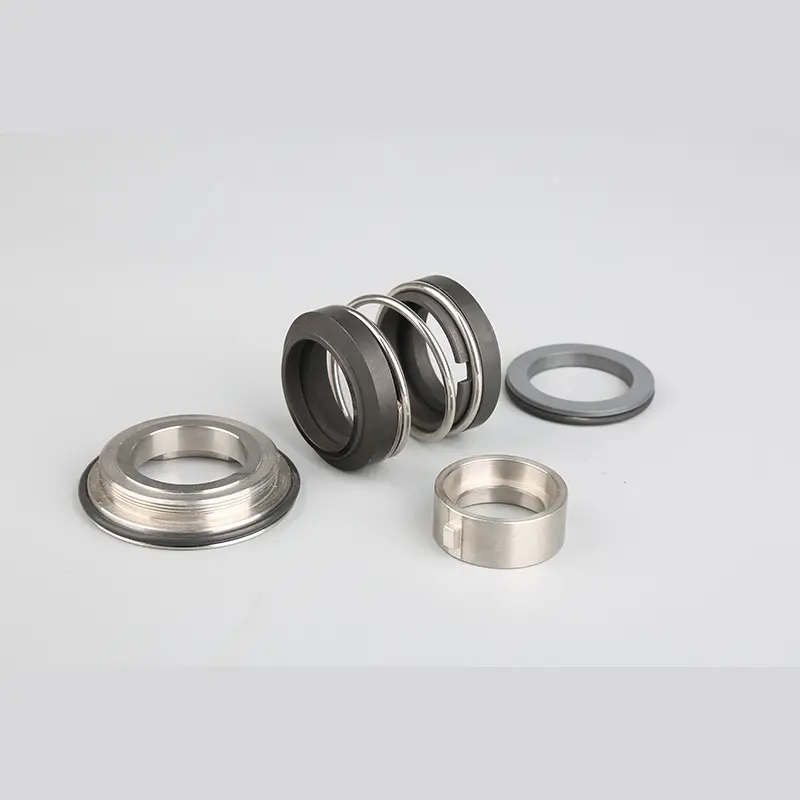
Centrifugal pumps are typically sealed using two main methods: mechanical seals and gland packing. Mechanical seals are widely used in modern industrial systems because they offer low leakage, reduced maintenance requirements, and longer service life. Gland packing is still applied in lower-pressure or cost-sensitive systems where simplicity and easy replacement are more important.
Pump sealing plays an important role in preventing leakage, protecting equipment, and maintaining safe and stable operation under different working conditions.
Key Takeaways
- Mechanical seals offer near-zero leakage, lower long-term costs and better performance in high-speed/high-pressure applications
- Gland packing is simple and low-cost but requires regular maintenance and allows controlled leakage
- Inspect mechanical seals every 3-6 months to identify issues early and prevent unplanned downtime
- Victor provides a full range of mechanical seals fully interchangeable with leading international brands
- Correct installation and proactive maintenance can double the service life of mechanical seals
Common Sealing Solutions for Centrifugal Pumps

Main Sealing Methods
The two most common sealing methods for centrifugal pumps are mechanical seals and gland packing. Specialized options like magnetic seals and labyrinth seals are used in niche applications but are far less common.
| Sealing Method | Global Market Adoption | Primary Use Case |
|---|---|---|
| Mechanical Seals | ~85% | Oil and gas, chemical, water treatment, HVAC |
| Gland Packing | ~12% | Low-pressure, non-hazardous fluids, simple systems |
| Other (Magnetic/Labyrinth) | ~3% | Ultra-high purity, toxic or explosive fluids |
Mechanical seals can be categorized into several types based on their design and application requirements:
- Cartridge Seals – Widely used due to easy installation and reduced alignment errors
- Component Seals – Flexible configuration for customized industrial applications
- Pusher Seals – Common spring-loaded design for general-purpose use
- Non-pusher (Bellows) Seals – Suitable for high-temperature and corrosive environments
Cartridge seals are widely adopted in modern pump systems because of their simplified installation and improved reliability, especially in large-scale industrial applications.
Mechanical Seals vs Gland Packing: Detailed Comparison
The choice between mechanical seals and gland packing depends on your operating conditions, budget and maintenance capabilities:
| Feature | Mechanical Seals | Gland Packing |
|---|---|---|
| Leakage Rate | Minimal to zero | Continuous controlled leakage |
| Maintenance Frequency | Every 1-3 years | Every 1-3 months |
| Power Consumption | Low | High (due to friction) |
| Shaft Wear | None | Significant |
| Initial Cost | Higher | Lower |
| Total Cost of Ownership | Lower | Higher |
| Best For | High pressure, high speed, hazardous fluids | Low pressure, non-hazardous fluids, temporary use |
⚠️ Critical Note: Never use gland packing for toxic, flammable or corrosive fluids. The continuous leakage poses significant safety and environmental risks.
How Mechanical Seals Work in Centrifugal Pumps
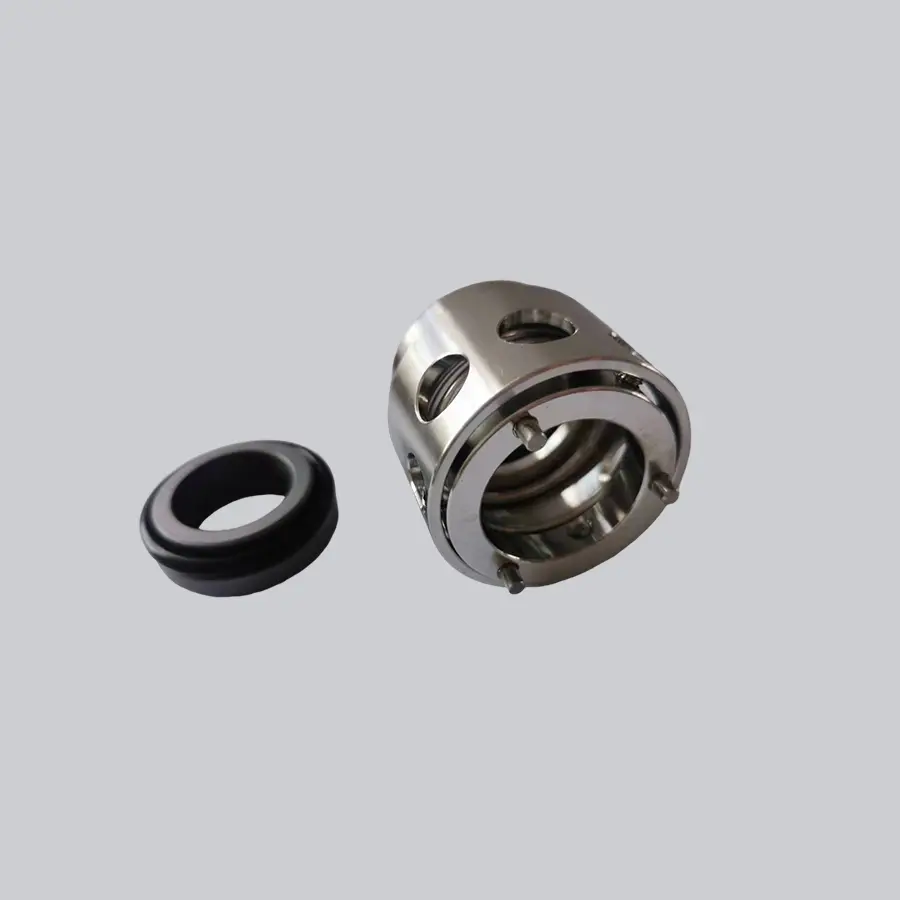
Basic Structure and Working Principle
A mechanical seal creates a tight barrier between the rotating pump shaft and the stationary pump housing. It consists of four core components:
- Rotary Seal Ring: Attaches to the shaft and rotates with it
- Stationary Seal Ring: Mounted in the pump housing and remains fixed
- Spring Assembly: Maintains constant pressure between the two seal faces
- Elastomers (O-rings/Gaskets): Seal any gaps between components and absorb vibrations
During operation, a thin film of process fluid forms between the two precision-lapped seal faces. This film lubricates the faces, reduces friction and prevents wear. The spring assembly compensates for minor shaft movement and wear, ensuring the faces remain in contact at all times.
All Victor mechanical seals undergo rigorous quality testing, including the CTB (Cyclic Thermal Barrier) test, which validates their performance under extreme temperature and pressure cycles common in power generation, petrochemical and chemical processing.
How Mechanical Seals Prevent Leakage
Mechanical seals block leakage through three separate mechanisms:
- Primary Seal: The precision-mated faces of the rotary and stationary rings
- Secondary Seals: Elastomers that seal gaps between components
- Spring Force: Maintains consistent contact between the seal faces even during pump vibration
This multi-layered design ensures near-zero leakage, even under the most demanding operating conditions.
Common Causes of Mechanical Seal Failure
Over 80% of mechanical seal failures are caused by improper installation, poor maintenance or incorrect material selection, not manufacturing defects. The most common causes are:
- Dry Running: No fluid lubrication causes the seal faces to overheat and fail
- Shaft Misalignment: Uneven pressure leads to premature wear and leakage
- Improper Installation: Incorrect torque or damaged components during assembly
- Material Incompatibility: Seal materials degrade when exposed to incompatible fluids
- Abrasive Particles: Dirt or debris scratches the seal faces and destroys the sealing surface
Victor’s engineering team can help you select the correct seal material and design for your specific application, significantly reducing failure rates.
Best Practices for Mechanical Seal Installation and Maintenance
Step-by-Step Seal Replacement
- Isolate the pump: Lock out and tag out the power supply, close all valves and depressurize the system
- Disassemble the pump: Remove the pump casing and access the seal chamber
- Remove the old seal: Inspect the shaft and seal chamber for damage or wear
- Clean all components: Remove any dirt, debris or old seal material
- Install the new seal: Follow the manufacturer’s instructions carefully
- Reassemble the pump: Check alignment and torque all bolts to specification
- Test the pump: Run the pump at low speed and check for leaks before full operation
Routine Maintenance Schedule
Follow this schedule to maximize seal life and prevent unplanned downtime:
| Frequency | Maintenance Task |
|---|---|
| Monthly | Visual inspection for leaks, unusual noise or vibration |
| Every 3-6 Months | Detailed inspection of seal condition and shaft alignment |
| Annually | Full pump overhaul including seal replacement |
Pro Tips for Long-Term Reliability
- Always use the correct seal material for your process fluid
- Ensure proper shaft alignment before installing a new seal
- Flush the seal chamber according to manufacturer recommendations
- Keep spare seals on hand for critical pumps to minimize downtime
- Train maintenance personnel on proper seal installation techniques
Conclusion
Mechanical seals are widely used in centrifugal pump systems due to their ability to provide stable sealing performance, reduce leakage, and support long service life under demanding industrial conditions. Selecting the appropriate seal type, ensuring correct installation, and following regular maintenance practices are key factors in achieving reliable and leak-free operation.
As a mechanical seal manufacturer with over 27 years of experience, Victor supplies sealing solutions for a wide range of industrial applications, including pumps, compressors, and rotating equipment. Our products are engineered to meet the requirements of global industrial standards and are supported by responsive technical service and fast delivery.
FAQ
What is the main purpose of a mechanical seal in a centrifugal pump?
A mechanical seal prevents fluid leakage from the pump shaft where it passes through the pump housing. It protects equipment, ensures operational safety and reduces environmental impact.
How often should mechanical seals be replaced?
Under proper operating conditions and maintenance, mechanical seals typically last 1-3 years. Seals in harsh environments may need replacement more frequently.
Can Victor mechanical seals replace seals from other brands?
Yes. Victor manufactures mechanical seals fully interchangeable with John Crane, EagleBurgmann, AES, Vulcan and all major international brands. Our seals are designed for direct drop-in replacement with no modifications required.
What materials are used in Victor mechanical seals?
Victor offers a wide range of materials including silicon carbide, tungsten carbide, carbon graphite, stainless steel and various elastomers (EPDM, Viton, Kalrez). We can recommend the best material combination for your specific application.
How do I know if my mechanical seal is failing?
Common signs of seal failure include visible leakage around the pump shaft, unusual noise or vibration, increased power consumption and contaminated process fluid.