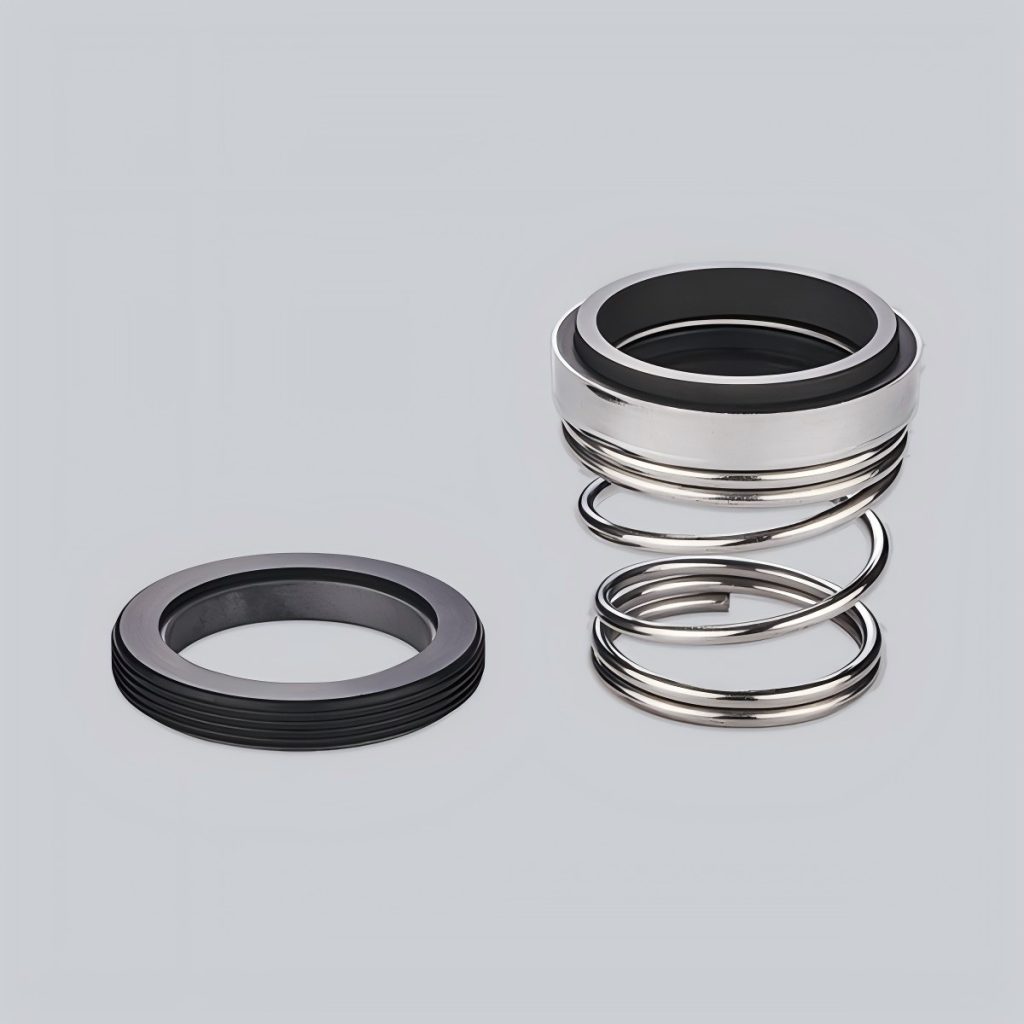
A single spring mechanical seal is a heavy-duty shaft sealing device designed to prevent fluid leakage in pumps, compressors, and other rotating equipment. It uses a single large coil spring to generate closing force between the rotating and stationary seal faces, creating a reliable sealing barrier around the rotating shaft.
Compared with multi-spring mechanical seals, single spring designs feature a simpler and more open structure that is less likely to trap solids or clog when handling dirty, viscous, or slurry-containing fluids. Their robust construction, easy maintenance, and reliable performance make them widely used in wastewater treatment, chemical processing, mining, and other demanding industrial applications.
Key Takeaways
- Single spring mechanical seals use a spring-loaded rotating face and stationary seat to create a reliable sealing interface and prevent fluid leakage.
- The open coil spring design provides excellent clog resistance, making single spring seals ideal for wastewater, slurry, viscous fluids, and other demanding applications.
- Compared with multi-spring seals, single spring designs offer simpler construction, lower maintenance costs, and better resistance to solids buildup.
- Choosing the right seal depends on operating pressure, fluid characteristics, shaft rotation direction, installation space, and pump standards.
How Single Spring Mechanical Seals Work
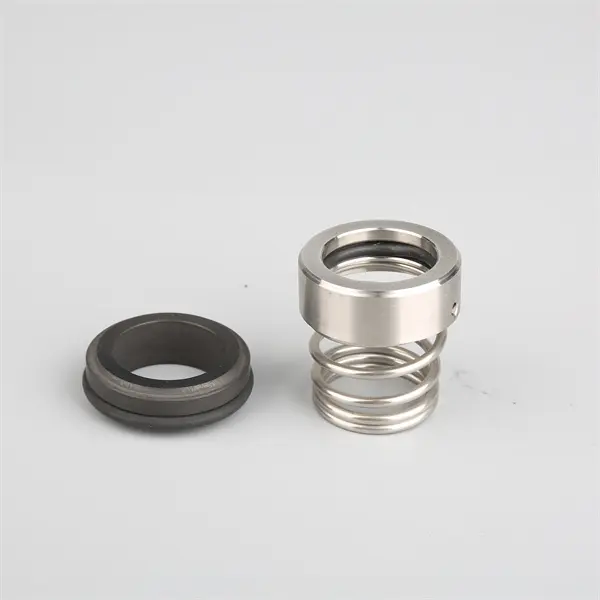
All single spring mechanical seals operate on the same fundamental principle: a spring-loaded rotating face presses against a stationary seat to form a micro-thin, leak-tight sealing interface.
Primary Components
A standard assembly consists of four core functional groups:
- Rotary head assembly: Mounts to and spins with the shaft; houses the spring, rotating seal face, and drive mechanism.
- Stationary seat: Fixed inside the pump gland or stuffing box; forms the mating sealing surface.
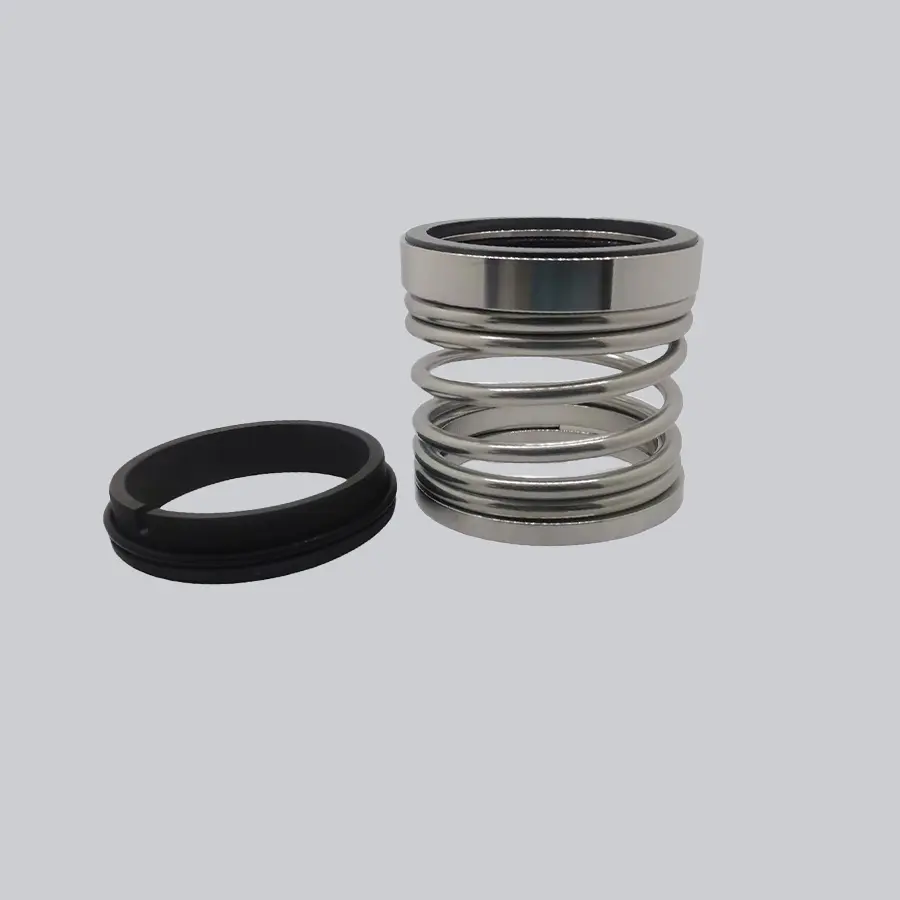
- Single coil spring: Applies axial force to keep the faces in constant contact, compensating for wear and shaft runout.
- Secondary seals (O-rings / elastomer bellows): Seal static gaps between the seal and shaft, and between the seat and gland.
How the Single Spring Maintains Seal Performance
The single spring design provides three key performance benefits:
- Uniform face loading: Distributed evenly across the seal face via the spring and bellows, preventing uneven wear.
- Shaft movement compensation: Absorbs radial and axial shaft play (up to ~2 mm for bellows designs) without breaking the sealing barrier.
- Automatic wear adjustment: Extends gradually as seal faces wear down, maintaining consistent contact pressure over the seal’s service life.
Key Advantages vs. Multi-Spring Mechanical Seals
The biggest functional difference lies in clog resistance and robustness in harsh fluids.
| Feature | Single Spring Design | Multi-Spring Design |
|---|---|---|
| Spring geometry | Single heavy-gauge coil with open spacing | Multiple small, closely spaced thin wires |
| Clog risk | Very low; open coil self-cleans as fluid flows past | High; small gaps trap solids and seize up in slurries |
| Structure complexity | Simple, fewer components | More complex, more failure points |
| Torque handling | High; thick spring resists torsional stress | Lower; thin springs are prone to fatigue breakage |
| Cost | Lower upfront and maintenance cost | Higher |
Premium mechanical seal manufacturers like Victor produce single spring seals with 304 and 316 stainless steel components, delivering excellent corrosion resistance and long-term durability for heavy industrial applications.
Typical Industrial Applications of Single Spring Mechanical Seals
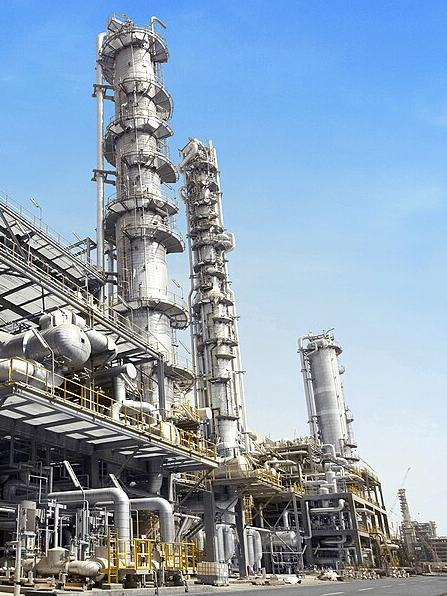
Single spring mechanical seals are selected for applications where clog resistance and simplicity are priorities. Common uses include:
- Viscous fluids & light slurries: Heavy oils, syrups, pulp stock, and wastewater with suspended solids. The open spring allows fluid to flow through and flush away particles.
- Water & wastewater treatment: Sewage pumps, lift stations, and chemical dosing systems, where debris would quickly disable multi-spring seals.
- HVAC & chillers: Circulating pumps and compressor applications, where reliable, low-maintenance sealing is required.
- General industrial pumps: Agricultural irrigation, food processing, and mining dewatering applications.
How to Select the Right Single Spring Mechanical Seal
Use these criteria to narrow down the correct seal for your pump:
- Operating parameters: First confirm system pressure, shaft speed, and fluid temperature. Use unbalanced seals for low pressure, balanced seals for high pressure.
- Fluid properties: Match face and elastomer materials to the fluid’s chemical makeup, solids content, and viscosity. For slurries, prioritize elastomer bellows designs for maximum clog resistance.
- Shaft rotation direction: For conical spring models, confirm rotation direction and select the correct left-hand or right-hand spring.
- Installation space: Verify stuffing box depth and shaft diameter to ensure the seal fits correctly. Compact short-spring designs are available for tight pump housings.
- Industry standards: Choose seals dimensionally compatible with ISO, DIN, or ANSI pump standards for interchangeability.
💡 Pro Tip: For custom or hard-to-fit equipment, work with a manufacturer like Victor that offers engineered custom seal configurations and fast lead times to minimize downtime.
FAQ
What are the main types of single spring mechanical seals?
Single spring seals are most commonly categorized by spring shape (conical/tapered and cylindrical/straight), by pressure design (balanced and unbalanced), and by secondary seal type (elastomer bellows and pusher-style).
How does a conical spring mechanical seal work with shaft rotation?
A conical spring uses a tapered coil that grips the shaft sleeve to transmit torque. The spring’s hand direction must match the shaft’s rotation direction; a mismatch will cause the coil to unwind, lose spring force, and cause the seal to leak.
Why choose a cylindrical spring over a conical spring seal?
Cylindrical springs are rotation-direction independent, meaning there is no risk of unwinding. They are driven by set screws or drive keys rather than friction grip, making them more forgiving to install and more reliable for reversing-duty equipment.
What is the main advantage of a single spring seal over a multi-spring seal?
The biggest advantage is clog resistance. A single large open coil allows process fluid to pass through and flush away solids, while the small, tight gaps in multi-spring seals trap particles, seize up, and fail quickly in dirty or slurry fluids. Single spring seals are also simpler, lower cost, and easier to install.
Final Thoughts
Single spring mechanical seals are a workhorse sealing solution for heavy industrial and dirty-fluid applications. Their simple, robust design, self-cleaning open geometry, and low maintenance requirements make them the preferred choice for wastewater, mining, pulp, and general process pumps where multi-spring seals would quickly clog and fail.
For optimal service life, always match spring compression, rotation direction, and face materials to your specific operating conditions, and follow proper installation procedures.