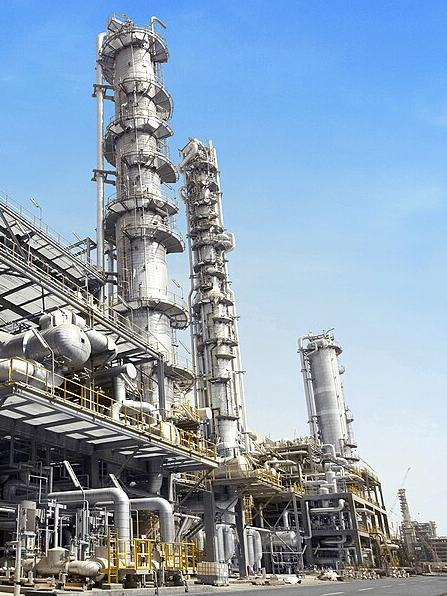

A Type 1 mechanical seal is a widely used sealing component for rotating equipment such as centrifugal pumps, mixers, and other industrial machinery. It creates a controlled sealing interface between the rotating shaft and stationary housing to prevent process fluid from leaking.
Type 1 mechanical seals are valued for their relatively simple construction, reliable sealing performance, and broad range of applications. Their performance depends on factors such as seal-face and secondary-seal materials, operating temperature and pressure, shaft speed, and the properties of the process fluid.
Key Takeaways
- Type 1 mechanical seals use rotating and stationary seal faces with a spring and secondary sealing element to control leakage around a rotating shaft.
- Type 1 mechanical seal designs are available with different seal-face, metal, and elastomer materials to suit different fluids and operating conditions.
- The compact and relatively standardized construction makes Type 1 mechanical seals suitable for many centrifugal pumps and general-purpose rotating equipment.
- Type 1 mechanical seals can provide lower leakage and reduced maintenance compared with traditional packing systems.
- Standard Type 1 mechanical seals are most suitable for moderate operating conditions and commonly handled fluids, while specialized applications may require other seal designs.
What Defines a Type 1 Mechanical Seal?
Basic Construction and Sealing Design
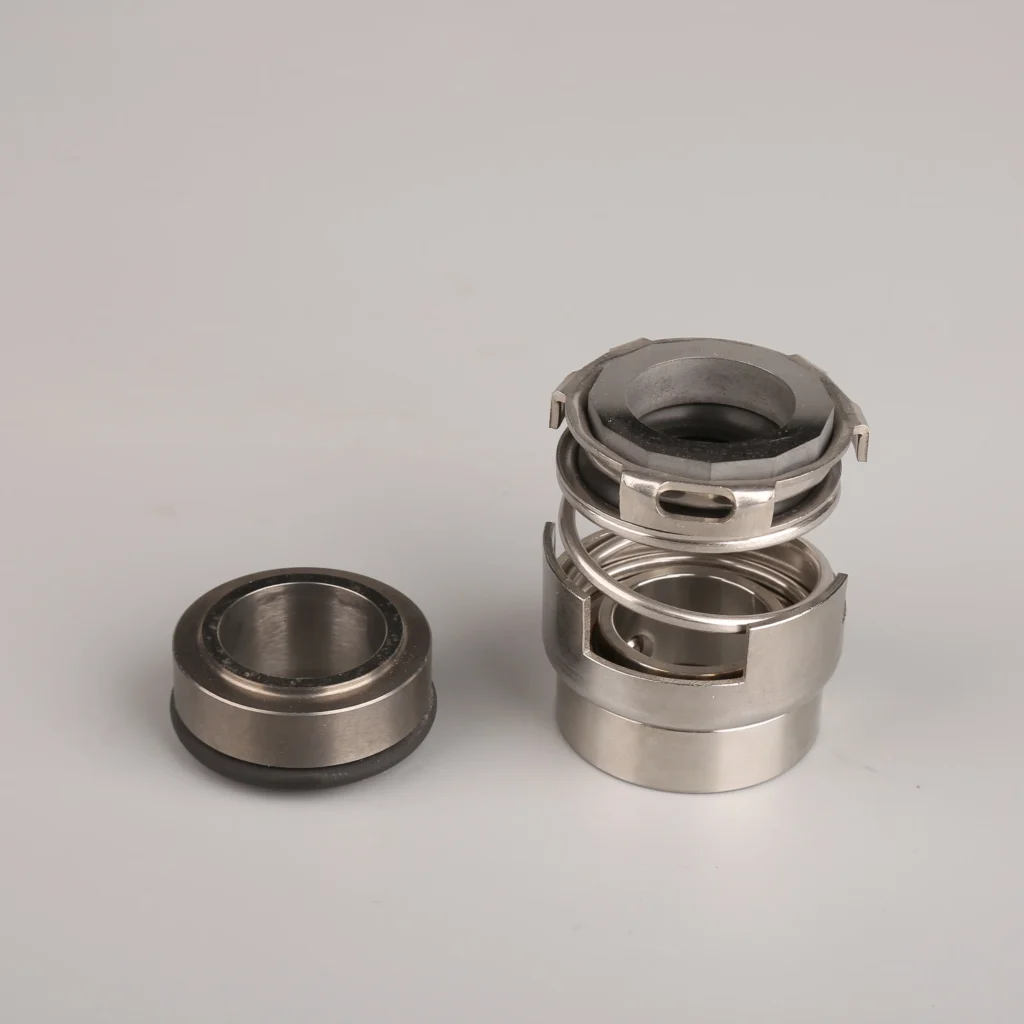
A Type 1 mechanical seal typically consists of a rotating seal face, stationary seal face, spring, secondary sealing element, and supporting hardware. The two seal faces are pressed together to create the primary sealing interface around the rotating shaft.
As the shaft rotates, the seal faces maintain close contact while allowing controlled movement caused by thermal expansion, vibration, and normal equipment operation. The secondary seal helps prevent fluid from passing around the shaft or other internal components.
This design allows the seal to provide continuous leakage control without requiring the shaft itself to make direct contact with the stationary sealing components.
Key Components and Materials
The main components of a Type 1 mechanical seal work together to maintain face contact and prevent leakage.
Common materials include:
- Carbon or resin-impregnated carbon for one seal face
- Silicon carbide or ceramic for applications requiring greater wear resistance
- Stainless steel for springs and metal components
- Elastomers such as NBR, EPDM, or FKM for secondary sealing
Material selection should match the process fluid and operating conditions. For example, abrasive or chemically aggressive fluids may require harder seal-face materials, while temperature and chemical compatibility determine the appropriate elastomer.
A Type 1 mechanical seal is therefore not defined by one material combination. Different material configurations can be selected for different pump and fluid conditions.
Characteristics of a Type 1 Mechanical Seal
Compact and Balanced Design
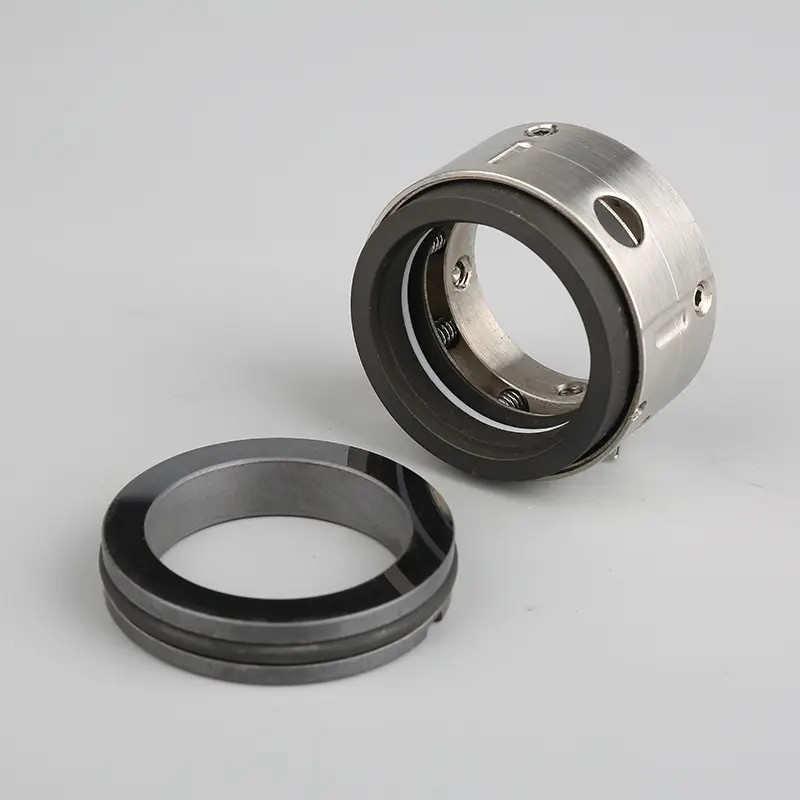
One of the main characteristics of a Type 1 mechanical seal is its relatively compact sealing arrangement. The spring and sealing components are integrated around the shaft, allowing the seal to fit into many standard pump configurations.
The design provides the axial force needed to maintain contact between the two seal faces. This makes Type 1 seals suitable for many standard rotating applications where a straightforward mechanical sealing solution is required.
Flexible Installation Options
Type 1 mechanical seals are available in different sizes and material combinations to accommodate different shaft diameters, pump designs, and operating conditions.
They can be used with a wide range of centrifugal pumps and other rotating equipment. Their standardized construction also makes them relatively straightforward to install or replace when the correct seal dimensions and specifications are known.
Before installation, operators should confirm the shaft size, seal chamber dimensions, operating pressure, temperature, rotational speed, and fluid compatibility.
Benefits of Type 1 Mechanical Seals
Reduced Leakage and Maintenance
A properly functioning Type 1 mechanical seal significantly reduces fluid leakage compared with conventional packing systems.
Less leakage can help maintain a cleaner working environment and reduce the need for frequent packing adjustments. For many general-purpose pumps, this makes mechanical seals a practical choice for routine fluid-handling applications.
Regular inspection is still important. Monitoring leakage, vibration, temperature, and seal-face condition can help identify problems before they lead to equipment downtime.
Good Compatibility With Common Fluids
Type 1 mechanical seals can be configured for many commonly handled fluids, including water, oils, coolants, and other industrial liquids.
The important consideration is material compatibility. The seal face, spring, metal components, and elastomer must all withstand the chemical and thermal conditions of the application.
For more demanding services involving highly corrosive, abrasive, crystallizing, or high-temperature fluids, a different mechanical seal design or specialized material combination may be more appropriate.
Cost-Effective Sealing Solution
Type 1 mechanical seals offer a practical balance between sealing performance, availability, and cost for many standard applications.
Their relatively straightforward construction makes them suitable for routine pump maintenance and replacement. Standardized sizes and material combinations can also make sourcing replacement seals easier.
For equipment operating under moderate and predictable conditions, a properly selected Type 1 seal can provide reliable service without the additional complexity required by specialized sealing designs.
Common Applications for Type 1 Mechanical Seals
Centrifugal Pumps
Centrifugal pumps are one of the most common applications for Type 1 mechanical seals. The seal prevents the pumped fluid from escaping where the rotating shaft passes through the pump housing.
Typical uses include water circulation, cooling systems, general industrial pumping, and fluid-transfer equipment.
Water and Industrial Fluid Systems
Type 1 mechanical seals are commonly used in systems handling relatively clean and compatible fluids.
Examples include:
- Water supply and circulation systems
- Cooling-water pumps
- HVAC equipment
- Industrial process-water systems
- General fluid-transfer applications
The appropriate seal material should always be selected according to the specific fluid and operating conditions.
General-Purpose Rotating Equipment
Beyond centrifugal pumps, Type 1 mechanical seals can be used in various rotating machines where shaft sealing is required.
They may be suitable for mixers, agitators, and other equipment operating under moderate conditions. For specialized equipment, however, the seal must be matched to shaft dimensions, rotation speed, pressure, temperature, and process requirements.
FAQ
Is a Type 1 mechanical seal a balanced seal?
Not necessarily. “Type 1” identifies a particular seal design or construction style, but it does not by itself indicate whether the seal is hydraulically balanced. Balance depends on the specific seal design and dimensions.
How long does a Type 1 mechanical seal last?
Service life varies significantly with the fluid, temperature, pressure, shaft speed, installation quality, and equipment condition. A properly selected seal operating under suitable conditions can provide reliable service, but there is no universal replacement interval.
Can a Type 1 mechanical seal run dry?
Generally, mechanical seals should not be operated dry unless the specific design is rated for dry running. The seal faces normally depend on a thin fluid film for lubrication and heat control.
Can Type 1 mechanical seals be replaced with another seal type?
In some equipment, an alternative seal design may be suitable, but compatibility cannot be assumed. The replacement must match the shaft diameter, seal chamber, operating conditions, and equipment configuration.
How do you identify the correct Type 1 mechanical seal?
Start with the shaft size, seal dimensions, pump model, operating conditions, and fluid characteristics. If the original seal has a part number or specification, it can also help identify a compatible replacement.