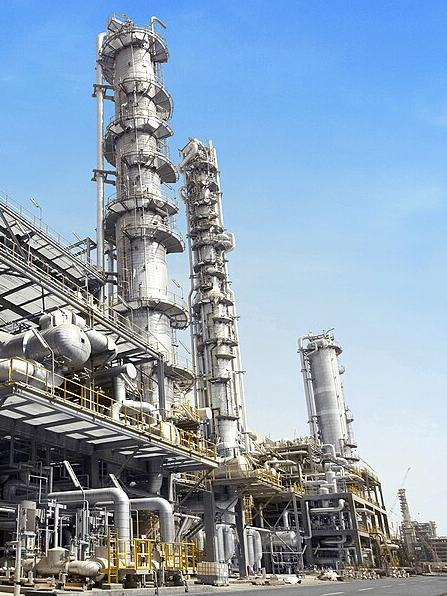
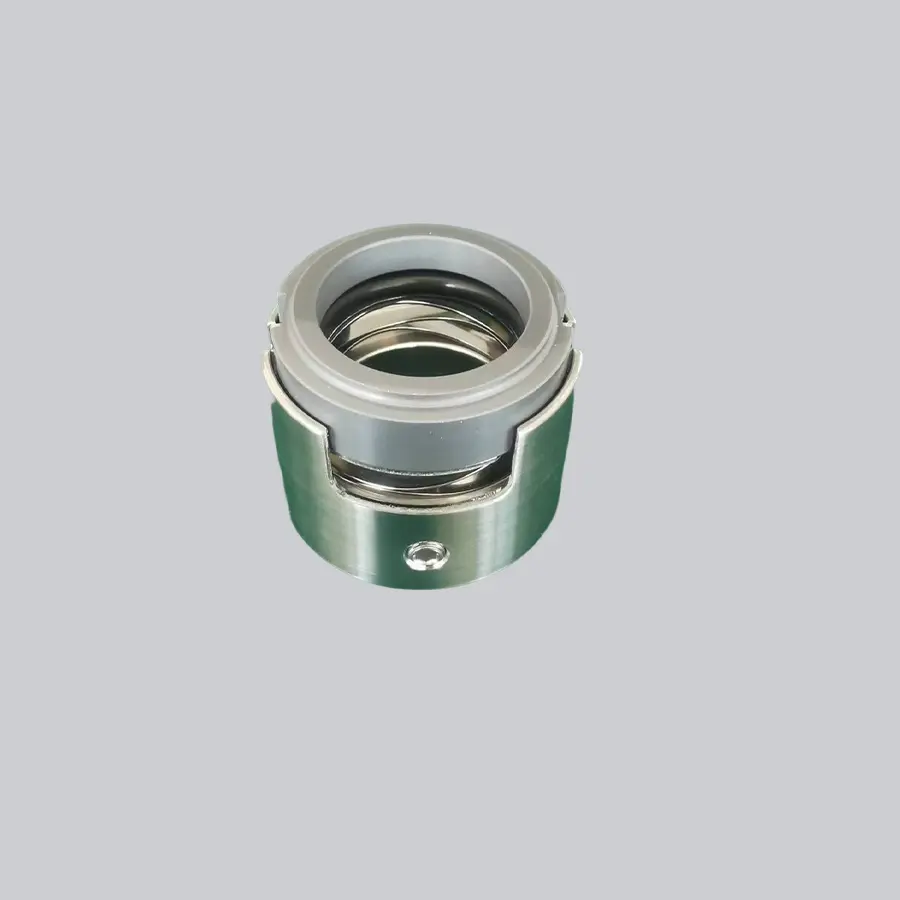
Dry seals and wet seals are two core categories of mechanical seals for rotating industrial equipment, distinguished primarily by the lubrication medium between the sealing faces. Dry seals operate with no liquid lubrication at the seal interface, relying on a gas film or self-lubricating material to create a sealing barrier. Wet seals use a liquid — either process fluid or an external barrier fluid — to lubricate, cool and seal the mating faces. Dry seals are the standard for high-speed gas compressors in oil, gas and petrochemical facilities, while wet seals remain the most widely used solution for liquid-handling pumps across chemical, mining and marine industries.
Key Takeaways
- Dry seals run with no liquid at the seal interface; most industrial dry gas seals form a micron-thin gas film that keeps faces fully separated during operation.
- Wet seals rely on a liquid film to lubricate and cool seal faces, making them versatile and cost-effective for most liquid pump applications.
- Dry seals deliver extremely low fugitive emissions and longer service intervals, making them the preferred choice for strict environmental compliance.
- Wet seals have lower upfront costs and better tolerance for contaminated or particle-laden fluids, with more frequent scheduled maintenance.
- Victor Mechanical Seals provides wet seal solutions, with custom engineering to match specific equipment, process conditions and industry requirements.
What Is a Dry Seal?
A dry seal is a mechanical seal that operates without liquid lubrication between the rotating and stationary seal faces. The most widely used industrial design is the dry gas seal, which uses pressurized process or buffer gas to generate a stable, non-contact sealing gap.
How Dry Seals Work
The rotating seal face is precision-machined with microscopic hydrodynamic grooves. As the shaft spins, gas is drawn inward between the faces, building up a uniform pressure that lifts the rotating face away from the stationary face. This creates a gas film only a few micrometers thick that fully separates the two surfaces during normal operation.
Because there is no physical contact between faces, friction, heat generation and wear are extremely low. No seal oil is required, and there is zero risk of process gas contamination by lubricating fluid.
Core Components
- Rotating primary ring: Mounted to and driven by the shaft; features precision gas grooves to generate the sealing film.
- Stationary mating ring: Fixed in place by an anti-rotation mechanism; forms the stationary sealing surface.
- Spring assembly: Applies consistent closing force for proper alignment during startup, shutdown and low-speed operation.
- Secondary sealing elements: Static seals that prevent leakage between seal components and equipment housing.
- Sleeve and drive mechanism: Secures the seal assembly to the shaft and transmits rotational torque.
Typical Applications
Dry seals — and dry gas seals in particular — are the industry standard for:
- Centrifugal compressors and turbo-expanders in oil & gas production and pipeline transmission
- Petrochemical and chemical processing gas compression systems
- Power generation steam turbines and gas processing equipment
- Applications requiring ultra-low emissions and zero process fluid contamination
What Is a Wet Seal?
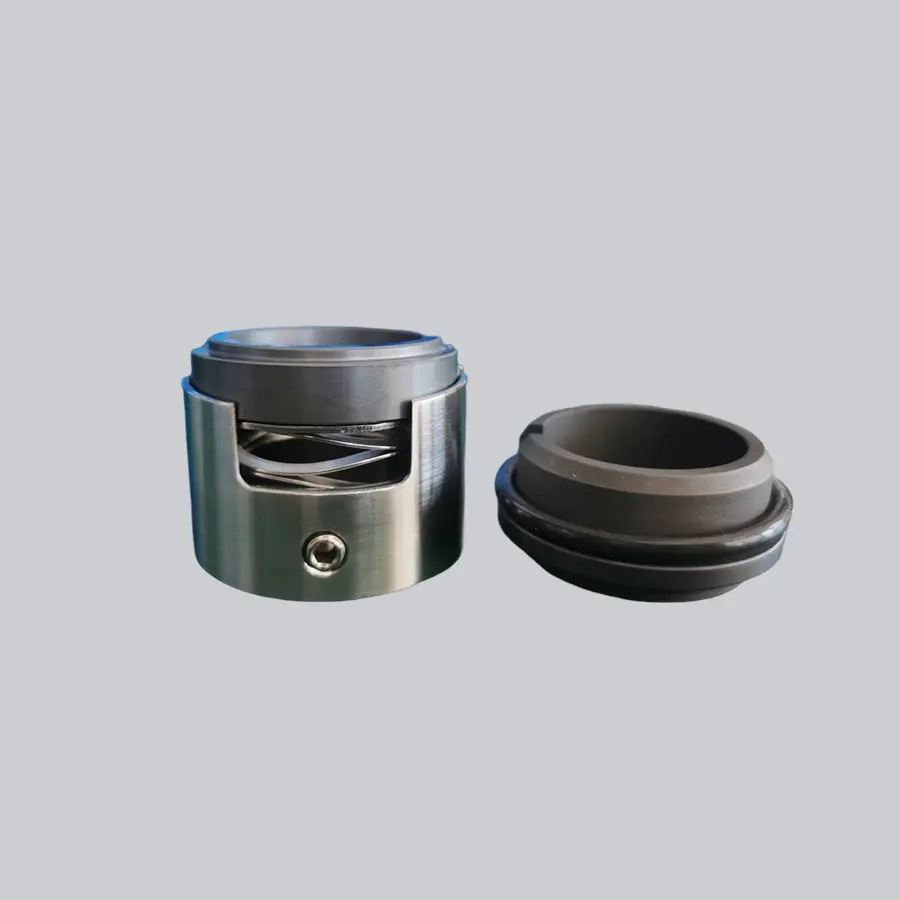
A wet seal is a traditional liquid-lubricated mechanical seal. It operates with a thin film of liquid between the seal faces, which acts as both a lubricant to reduce friction and a coolant to carry away frictional heat. The liquid may be the process fluid itself, or an external clean barrier fluid supplied by a support system.
How Wet Seals Work
Wet seals operate in face-to-face contact, with the liquid film filling microscopic gaps between the mating surfaces to block leakage. The fluid continuously absorbs heat generated by friction and flushes away fine wear particles. This contact-based design is simple, robust and tolerant of minor process fluctuations.
Wet seals are available in balanced and unbalanced configurations, single and double seal arrangements, to match different pressure levels and fluid hazard levels.
Core Characteristics
- Simple, proven design with wide standardization across pump models
- Good tolerance for mildly contaminated or particle-containing process fluids
- Compatible with a very wide range of liquid chemistries when paired with appropriate face materials
- Lower upfront procurement cost and easier on-site servicing
Typical Applications
Wet seals are the most common sealing solution for centrifugal pumps and low-speed rotating equipment in:
- Chemical processing and pharmaceutical manufacturing
- Water treatment and wastewater systems
- Mining and mineral processing
- Marine, shipbuilding and offshore equipment
- General industrial fluid handling systems
Head-to-Head Comparison: Dry Seal vs Wet Seal
| Aspect | Dry Seal (Dry Gas Seal) | Wet Seal (Liquid-Lubricated Seal) |
|---|---|---|
| Lubrication Medium | Gas film; no liquid required | Liquid process fluid or barrier fluid |
| Face Contact | Non-contact during normal operation | Continuous face contact with liquid lubrication |
| Leakage Rate | Extremely low fugitive emissions; near-zero for properly functioning units | Higher measurable leakage; higher emission risk |
| Service Interval | 3–5 years between overhauls; typical service life 7–10 years in clean service | 1–3 years between overhauls, depending on fluid conditions |
| Energy Efficiency | Very low friction; lower power consumption | Higher frictional losses; higher energy use |
| Upfront Cost | Higher initial investment | Lower purchase cost |
| Fluid Contamination Tolerance | Low; requires clean, dry gas | Higher; tolerates moderate particle content |
| Typical Speed Range | Suitable for high-speed equipment (up to 60 m/s surface speed) | Best for low to medium speed equipment |
| Primary Equipment | Centrifugal compressors, turbo-expanders | Centrifugal pumps, mixers, low-speed agitators |
Key Performance Differences in Detail
Leakage & Environmental Compliance
Dry gas seals produce only minimal controlled gas leakage, far below the emission levels of wet seal systems with oil support systems. This makes dry seals the default choice for facilities subject to strict methane and VOC emission regulations. Wet seals carry a higher risk of fluid leakage to atmosphere, especially for hazardous or toxic process liquids.
Maintenance & Reliability
Dry seals have fewer wear points due to non-contact operation, resulting in much longer service intervals and less unplanned downtime. However, they are more sensitive to improper installation, contaminated gas and transient operating conditions.
Wet seals require more frequent inspection and replacement, but they are more forgiving of off-design operation and dirty fluids, and repairs are generally simpler and lower cost.
Total Operating Cost
Dry seals have a significantly higher upfront purchase and installation cost. Over the full lifecycle, however, they deliver savings through lower energy use, reduced maintenance labor, no seal oil consumption and longer service life.
Wet seals have low initial cost but higher ongoing expenses for fluid replacement, regular maintenance and energy consumption from frictional losses and support systems.
Suitable Operating Conditions
Dry seals excel in high-speed, clean gas applications where low emissions and long run times are priorities. They are less suitable for liquid-rich or highly contaminated process streams.
Wet seals are the practical choice for liquid pump services, variable process conditions and applications with solid particle content, where a dry seal would suffer rapid face damage.
How to Choose Between Dry and Wet Seals
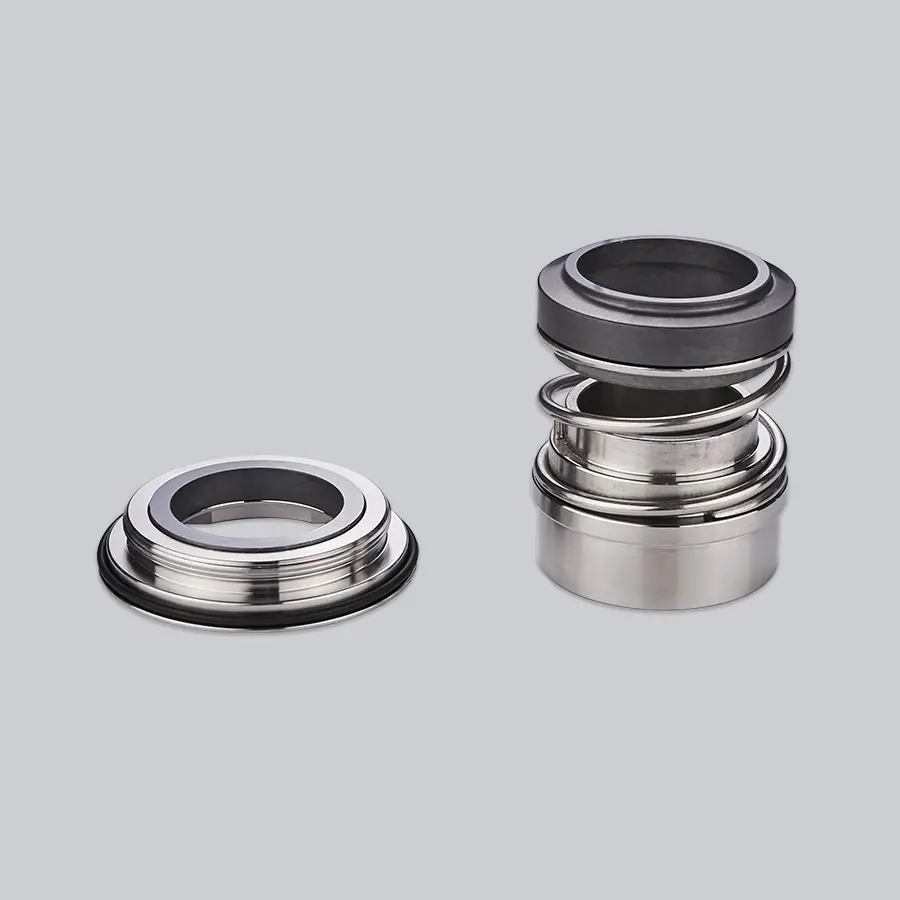
- Choose a dry seal when: You are sealing high-speed gas compression equipment; strict emissions compliance is required; you need long continuous run times between maintenance shutdowns; and process fluid contamination by lubricating oil cannot be tolerated.
- Choose a wet seal when: You are sealing liquid-handling pumps; the process fluid contains moderate levels of solids or contaminants; upfront cost is a primary priority; and on-site maintenance access is readily available.
For most industrial facilities, the choice is driven first by equipment type — compressors almost always use dry gas seals, while general-purpose pumps typically use wet seals. For specialized or severe service applications, custom seal configurations can be engineered to match exact process requirements.
Conclusion
The core difference between dry seals and wet seals lies in the lubrication medium and operating mode at the seal interface. Dry seals operate on a gas film with no physical contact, delivering exceptional longevity and ultra-low emissions for high-speed gas equipment. Wet seals use liquid lubrication in face-to-face contact, offering a simple, robust and cost-effective solution for liquid-handling pumps.
There is no universally better option — the right choice depends on your equipment type, process fluid, operating conditions and compliance requirements. Victor Mechanical Seals provides wet seal solutions engineered for reliable performance in demanding industrial environments, with custom design support to match your exact application needs.
FAQ
What is the main advantage of a dry seal over a wet seal?
The biggest advantages are far lower fugitive emissions, longer service intervals and reduced energy consumption from near-zero frictional losses. Dry seals also eliminate the risk of process contamination by seal oil, which is critical for high-purity gas processing.
Can wet seals handle high-temperature and high-pressure applications?
Yes. With the correct face materials, metallurgy and balanced seal design, wet seals can be engineered for high temperatures and high pressures. They remain the standard solution for most high-pressure liquid pump services.
Are dry seals always better than wet seals?
No. The better choice depends entirely on the application. Dry seals outperform wet seals for high-speed gas service and emissions control, but wet seals are more practical, affordable and robust for most liquid pump applications and contaminated process fluids.
What industries use Victor mechanical seals?
Victor seals are widely used in marine, mining, chemical processing, water treatment, power generation and general industrial sectors, supporting both pump and compressor equipment across a wide range of fluid types.
Why are dry seals more expensive than wet seals?
Dry seals require ultra-high precision machining of seal face grooves, tighter dimensional tolerances and more complex support systems. The non-contact design also requires more advanced engineering to ensure reliable gas film stability across all operating conditions.