
Mechanical seals are critical components that prevent fluid leakage along rotating pump shafts and maintain reliable pump operation. The choice of seal material directly affects leakage control, wear resistance, service life, and maintenance requirements. This guide explains the key factors in mechanical seal material selection, compares common material options, and provides practical recommendations for choosing the right seal materials for different pump applications.
Key Takeaways
- Select mechanical seal materials based on fluid compatibility, temperature, pressure, and wear conditions rather than pump type alone.
- Seal face materials such as carbon, silicon carbide, and tungsten carbide determine wear resistance and sealing reliability in different applications.
- Choose secondary seals and metal components according to chemical resistance and operating environment.
- Advanced materials may have higher upfront costs but can reduce maintenance, downtime, and total operating costs in demanding applications.
- Always verify material compatibility with actual operating conditions before final selection.
Core Factors for Mechanical Seal Material Selection
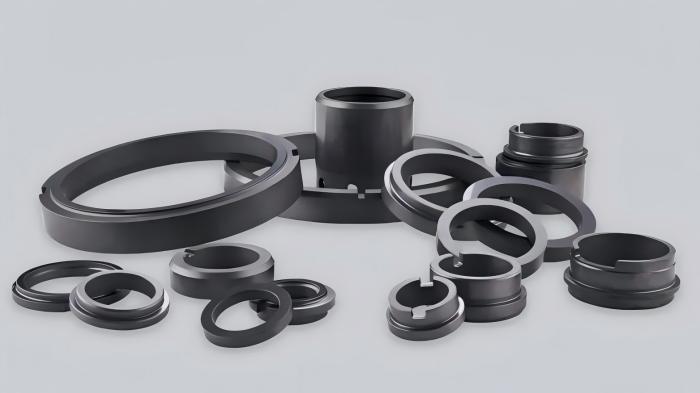
Selecting the right mechanical seal material requires evaluating the operating conditions that affect seal reliability, wear resistance, and service life. The most important factors include chemical compatibility, operating temperature, system pressure, and resistance to abrasive or corrosive media.
Chemical Compatibility
Chemical compatibility is one of the most important considerations in mechanical seal material selection. When seal materials are incompatible with the pumped fluid, they may swell, crack, soften, or degrade, resulting in leakage, reduced sealing performance, and premature failure.
For aggressive chemical applications, silicon carbide and ceramic seal faces are commonly selected due to their excellent corrosion resistance and chemical stability. For general heat transfer fluids such as glycol, carbon seal faces provide reliable performance with good lubrication properties. Stainless steel components are suitable for general-service applications involving mild or non-corrosive fluids.
Operating Temperature and Pressure
Mechanical seal materials must be selected according to the system’s operating temperature and pressure conditions. Excessive temperature can cause material degradation, while high pressure can increase mechanical stress, face loading, and the risk of seal failure.
For high-temperature applications, carbon, silicon carbide, and tungsten carbide seal face combinations provide stable performance under thermal stress. For high-pressure systems, hard face combinations such as tungsten carbide vs. carbon or silicon carbide offer improved strength, wear resistance, and load-bearing capability.
The actual pressure and temperature limits depend not only on the material but also on the seal design, face geometry, operating speed, lubrication conditions, and application requirements.
Abrasive and Corrosive Service Conditions
Mechanical seals operating in slurry, wastewater, mining, and chemical processing environments must withstand both abrasive particles and corrosive fluids. Solids such as sand and mineral particles can accelerate seal face wear, while corrosive media can attack metal components and elastomers.
For these demanding applications, hard seal face materials provide better durability and longer service life. Silicon carbide offers excellent hardness, wear resistance, thermal stability, and corrosion resistance, making it suitable for slurry pumps and aggressive chemical services. Tungsten carbide provides superior impact resistance and abrasion resistance for heavy-duty, high-pressure pumping applications.
| Material | Key Properties | Typical Applications |
|---|---|---|
| Silicon Carbide | Excellent hardness, wear resistance, corrosion resistance, and thermal stability | Slurry pumps, seawater pumps, chemical processing equipment |
| Tungsten Carbide | Extremely high hardness, impact resistance, and abrasion resistance | High-pressure pumps, mining systems, heavy-duty industrial applications |
Common Mechanical Seal Materials and Their Applications
The right mechanical seal material depends on the pump’s operating conditions, including fluid properties, temperature, pressure, and abrasion level. Different seal components require different materials to achieve reliable sealing performance and longer service life.
Seal Face Materials
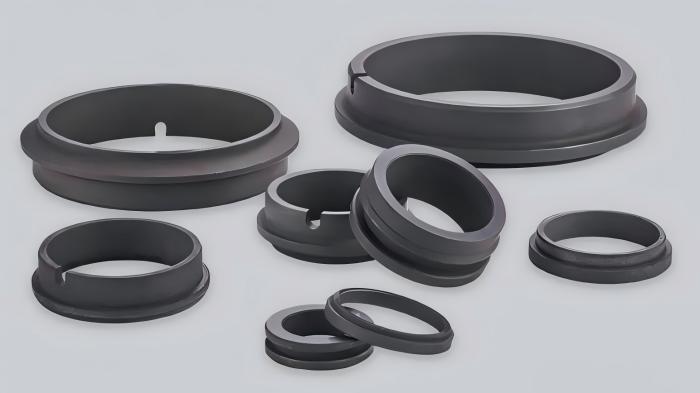
Seal faces are the primary sealing components and have the greatest impact on wear resistance and leakage control. Material selection depends mainly on fluid type, operating conditions, and required durability.
| Material | Key Properties | Typical Applications |
|---|---|---|
| Carbon | Low friction, self-lubricating, good thermal shock resistance | Clean water, lubricated fluids, general industrial pumps |
| Silicon Carbide | Excellent hardness, corrosion resistance, and wear resistance | Abrasive fluids, slurries, chemicals, high-temperature applications |
| Ceramic | Good corrosion resistance and cost efficiency | Water pumps and mild chemical applications |
| Tungsten Carbide | Superior hardness, impact resistance, and wear resistance | High-pressure and high-solid-content applications |
Common seal face combinations:
- Carbon + Ceramic: Suitable for general-purpose water and low-abrasion applications.
- Carbon + Tungsten Carbide: Used for higher-pressure or more abrasive services requiring better wear resistance.
- Silicon Carbide + Silicon Carbide: Recommended for severe applications involving slurries, wastewater, and aggressive chemicals.
Secondary Seal Materials
Secondary seals such as O-rings and elastomer components must be selected according to chemical compatibility and temperature requirements.
| Material | Temperature Range | Typical Applications |
|---|---|---|
| FFKM | Up to 327°C (620°F) | Highly aggressive chemicals and extreme temperature applications |
| FKM (Viton™) | Up to 204°C (400°F) | Oils, fuels, chemical processing |
| EPDM | Up to 121°C (250°F) | Water, steam, and mild chemicals |
| NBR (Buna-N) | Up to 107°C (225°F) | Oils, fuels, and general industrial fluids |
| PTFE | Up to 260°C (500°F) | Strong chemicals and high-temperature applications |
For aggressive chemical media, FFKM or PTFE-based secondary seals are preferred due to their excellent chemical resistance.
Metal Component Materials
Metal components should be selected based on corrosion resistance and mechanical strength.
| Material | Typical Applications |
|---|---|
| 316 Stainless Steel | General-purpose pumps and mild corrosive fluids |
| Hastelloy / Nickel Alloys | Strong acids and highly corrosive chemical applications |
| Titanium | Seawater and chloride-rich environments |
For most standard pump applications, 316 stainless steel provides the best balance of performance and cost, while nickel alloys or titanium are used for more demanding corrosive environments.
Mechanical Seal Material Selection Guide
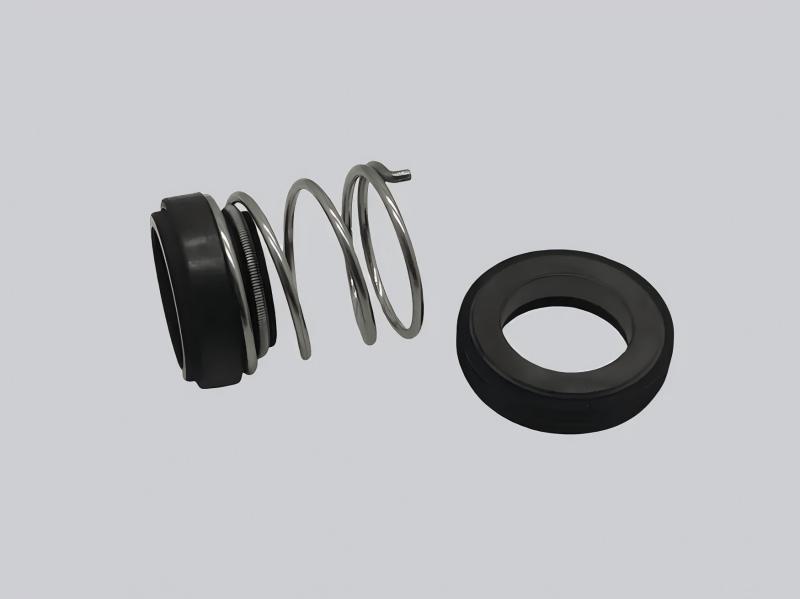
Balance Cost and Performance: Standard vs. Advanced Materials
Standard seal materials, such as carbon-ceramic faces, nitrile or EPDM elastomers, and 316 stainless steel components, provide reliable performance for clean water, glycol, and mild chemical applications at a lower initial cost.
Advanced materials, including silicon carbide, tungsten carbide, FFKM, and high-nickel alloys, are designed for demanding conditions such as abrasive slurries, strong acids, high pressures, and extreme temperatures. Although they require a higher upfront investment, they can extend service life, reduce maintenance frequency, and minimize unexpected downtime.
When evaluating total cost of ownership, advanced materials may provide better long-term value by reducing replacement costs, pump downtime, and maintenance requirements.
Mechanical Seal Material Selection Process
Selecting the correct seal material requires evaluating the actual pump operating conditions:
- Identify the pumped fluid properties
Evaluate fluid chemistry, concentration, pH, and the presence of solids, abrasives, or corrosive components. - Review operating conditions
Check operating temperature, pressure, shaft speed, and whether conditions vary during operation. - Consider application requirements
Account for hygiene standards, environmental conditions, emissions requirements, and industry regulations. - Select suitable seal materials
Match seal face materials, elastomers, and metal components with fluid compatibility and operating conditions. Use hard face materials for abrasive or high-wear applications. - Verify with manufacturer data
Verify material compatibility using technical datasheets, selection charts, and guidance from a reliable mechanical seal manufacturer before finalizing the seal design.
Mechanical Seal Material Recommendations by Application
The following table provides general starting points for common pump applications. Final material selection should always be verified according to actual fluid conditions and operating parameters.
| Application | Recommended Seal Faces | Recommended Elastomer | Recommended Metal Hardware |
|---|---|---|---|
| Strong Acids | Silicon Carbide | PTFE or FFKM | Hastelloy or high-nickel alloy |
| Caustic Chemicals | Tungsten Carbide or Silicon Carbide | EPDM or AFLAS® | 316 Stainless Steel |
| Hydrocarbons & Oils | Carbon / Silicon Carbide | FKM (Viton™) | 316 Stainless Steel |
| Abrasive Slurries | Silicon Carbide or Tungsten Carbide | Fluid-compatible elastomer | Corrosion-resistant alloy |
| Hot Glycol / Heat Transfer Fluids | Carbon or Silicon Carbide | FKM (Viton™) | 316 Stainless Steel |
Conclusion
Choosing the right mechanical seal materials is critical for improving pump reliability, reducing leakage, and extending service life. The optimal material combination depends on the fluid characteristics, operating conditions, and level of chemical or abrasive exposure.
Standard materials are suitable for most general applications, while advanced materials provide better performance in harsh environments such as abrasive slurries, aggressive chemicals, high temperatures, and high-pressure systems. Proper material selection helps minimize maintenance costs and improve long-term pump efficiency.
FAQ
What is the most important factor when choosing a mechanical seal material?
Chemical compatibility is the top priority. The seal material must resist degradation from the pumped fluid to prevent swelling, cracking, blistering, and premature failure.
Is there a single seal material that works for all pump applications?
No single material is suitable for every service environment. The optimal material depends on fluid chemistry, temperature, pressure, and abrasiveness, and must be matched to each unique application.
How do I avoid common material selection mistakes?
The most common errors include using general-purpose materials in aggressive service, ignoring temperature or pressure limits, and mismatching elastomers to fluid chemistry. These can lead to rapid wear, seal failure, and costly downtime. Always reference manufacturer compatibility charts, and consult a seal engineering specialist for complex or unusual applications.
When should I upgrade to advanced seal materials?
Consider advanced materials if your pump handles abrasive slurries, strong acids or caustics, operates at high pressure or high temperature, or processes mixed or chemically complex fluids.