
Yes, cartridge seals are almost always worth the premium for critical pump applications, high-maintenance operations, and facilities with strict compliance requirements. For low-duty, budget-sensitive, or space-constrained pumps, component seals remain a practical, cost-effective choice. The right decision depends on your pump’s duty, downtime costs, and maintenance frequency.
Key Takeaways
- Cartridge seals cost more upfront but reduce total ownership cost by cutting downtime, installation errors, and repair expenses.
- Pre-assembled cartridge seals eliminate most common installation mistakes, which cause over 60% of all seal failures.
- Choose cartridge seals for critical pumps, harsh fluids, and compliance-heavy processes where reliability is a priority.
- Component seals work well for light-duty pumps, tight spaces, and budget-focused operations with skilled maintenance teams.
- Calculate value based on total cost of ownership, not just upfront price: factor in downtime, labor, and failure costs.
What Is a Cartridge Seal?
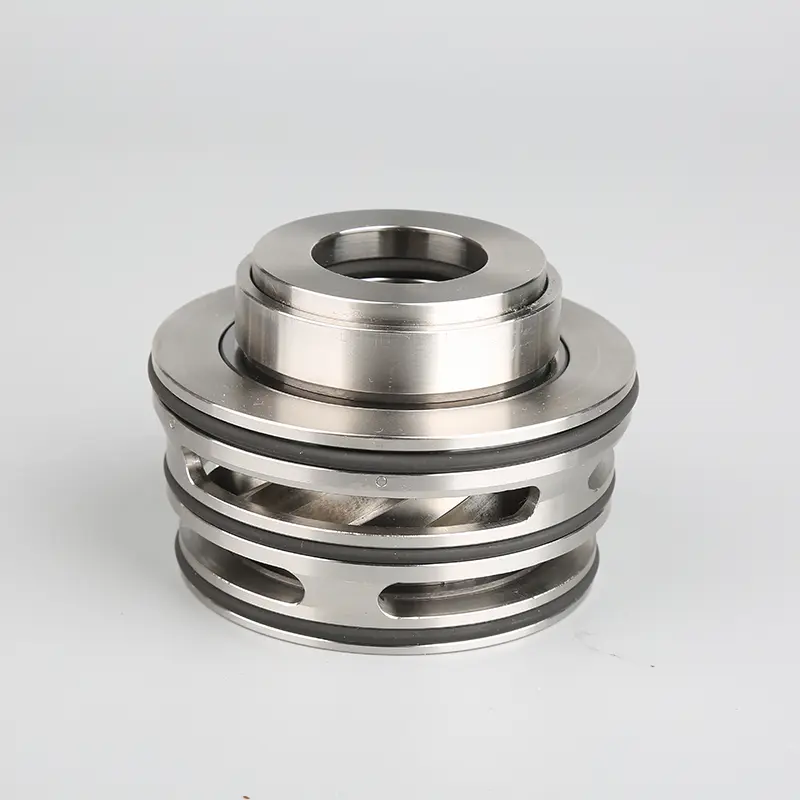
A cartridge seal is a fully pre-assembled mechanical seal module, containing all core sealing components — gland, shaft sleeve, main and secondary sealing rings, springs/bellows, and drive mechanisms — integrated into a single ready-to-install unit. Setting clips hold internal alignment during installation until the unit is fully secured to the pump shaft.
Cartridge vs. Component Seal: Core Differences
A component mechanical seal ships as separate loose parts that must be assembled and calibrated on site by a skilled technician. A cartridge seal comes fully built, aligned, and tested from the factory.
| Aspect | Component Seal | Cartridge Seal |
|---|---|---|
| Assembly | Fully assembled on site by a technician | Factory pre-assembled as a single unit |
| Skill requirement | Skilled technician with precision measurement | Simple installation, no specialized training |
| Spring tension | Adjusted manually on site | Factory preset and calibrated |
| Installation error risk | Higher | Lower |
| Upfront cost | 30–50% lower | Higher premium |
Key Performance Advantages of Cartridge Seals

Reduced Installation Failures
According to the European Sealing Association (ESA-MSD-2025-01), 60.4% of seal failures stem from installation errors across 3,500 recorded cases. Cartridge seals eliminate nearly all assembly-related failure points: factory preset axial position, face alignment, and spring tension remove the most common sources of human error.
Common on-site mistakes — misaligned faces, misplaced O-rings, incorrect axial settings, and uneven gland bolt tightening — are all designed out of the cartridge format. One process plant saw installation-related seal failures drop sharply after standardizing on cartridge seals, with far more consistent seal life across all units.
Less Downtime & Longer Service Life
Cartridge seals cut installation and replacement time by up to 75% compared to component seals, getting pumps back into service faster and reducing lost production time.
Most cartridge seals can also be refurbished instead of fully replaced. The repair process includes cleaning, replacing worn O-rings and faces, and full pressure retesting — extending service life and lowering long-term costs. Every unit is factory pressure-tested before shipping for consistent, predictable performance across service cycles.
Stronger Regulatory Compliance
In petrochemical, pharmaceutical, and sanitary processes, seal leaks cause safety, environmental, and product-purity risks all at once. Cartridge seals deliver consistent, repeatable sealing performance that helps meet API 682, GMP, FDA, USP, and ISO 9001 standards.
Most compliance failures stem from human installation error, not component failure — a risk the cartridge design nearly eliminates. Pre-shipment leakage testing ensures every unit meets performance specifications before it reaches the field.
When to Choose Cartridge Seals vs. Component Seals
When Cartridge Seals Are Worth the Premium
- Critical process pumps: Applications where leaks would cause significant product loss, safety hazards, or environmental damage.
- Harsh or regulated fluids: Corrosive chemicals, sanitary products, oils, and volatile media.
- High-maintenance operations: Frequent seal changes mean faster swaps reduce labor and downtime costs significantly.
- Double cartridge seals: For hazardous, toxic, or volatile fluids, a double design adds a barrier fluid layer between two face pairs for extra protection.
When Component Seals Make Sense
- Space-constrained pumps: Cartridge seals require more axial space; component seals fit in cramped stuffing boxes or equipment with no dedicated seal chamber.
- Low-duty, low-frequency service: Clean water utility pumps, infrequently serviced equipment, and non-critical applications.
- Budget-sensitive operations with skilled maintenance teams: Component seals have 30–50% lower upfront cost, and flexible part replacement reduces ongoing costs for teams with in-house technical expertise.
Total Cost Analysis: Upfront Price vs. Long-Term Value
Upfront invoice price tells only part of the story. Total cost of ownership includes installation labor, downtime revenue loss, failure costs, and replacement frequency. Component seals win on purchase price alone, but often lose over the full lifecycle.
Cost Breakdown
| Cost Factor | Component Seal | Cartridge Seal |
|---|---|---|
| Upfront purchase | 30–50% lower | Higher premium |
| Installation labor | Longer, requires skilled technician | 60–75% faster, minimal training |
| Failure risk | Higher (installation error) | Lower (factory calibrated) |
| Repair flexibility | Individual parts replaceable | Full refurbishment available |
Payback Period
The more frequent the service and the higher the downtime cost, the faster the premium pays for itself.
Real-world example: A multi-site petrochemical operation achieved a 6x improvement in pump MTBF after switching to cartridge seals — from 18 months to over 6 years — saving $24,000 per pump over 8 years, with break-even after just 12 months.
Typical payback periods range from 12–36 months for critical applications, with aggressive implementations seeing payback in 12–24 months. In high-criticality operations, payback is often less than 12 months.
FAQ
Does a cartridge seal cost more than a component seal?
Yes, cartridge seals have a higher upfront purchase price. The premium covers factory engineering, pre-assembly, alignment calibration, and pre-shipment pressure testing. Component seals cost 30–50% less as loose, unassembled parts.
Can a worn cartridge seal be repaired?
Most cartridge seals can be refurbished. The process includes disassembly, cleaning, replacement of worn O-rings and faces, and full retesting. Repair is cost-effective when costs stay below 50% of a new seal. Seals near end-of-life rarely justify repair.
How do you choose between single and double cartridge seals?
Choose based on fluid and risk level. Single seals work for clean, non-hazardous fluids. Double cartridge seals add a barrier fluid layer between two face pairs, recommended for toxic, abrasive, or volatile media where leaks would cause safety or environmental harm.
Do cartridge seals fit specific OEM pump brands?
Yes. Many manufacturers produce engineered equivalents for major OEM pump brands including IMO, Grundfos, Alfa Laval, Flygt, ABS, and others. Large standard stock inventories support fast replacement for unplanned downtime.