Think about what happens when a pump seal fails: the pump stops working unexpectedly, valuable product is lost, and the facility may face environmental or safety hazards. A good mechanical seal does more than simply restrict fluid flow; it manages the microscopic fluid film between its sealing faces, resists chemical attack, and maintains reliable contact under demanding operational stresses.
When a seal is properly designed and matched to its application, it minimizes leakage, reduces maintenance downtime, and provides a long, reliable service life.
Key Takeaways
- A high-quality mechanical seal minimizes leakage and maintains fluid containment, even under high pressure and temperature.
- Proper material selection (e.g., tungsten carbide for abrasives, specific elastomers for chemicals) is critical for maximizing service life.
- Balanced seal designs manage hydraulic closing forces to control friction and heat generation, preventing premature wear.
- Advanced features like bellows or stationary designs protect springs and secondary seals from corrosion, clogging, and vibration.
- Ultimately, a good mechanical seal is one that is perfectly matched to the pump’s specific fluid, pressure, temperature, and operating conditions.
Key Performance Factors of a Good Mechanical Seal
Core Performance: Reliable Leakage Control
A mechanical seal’s primary job is to control fluid leakage where the rotating pump shaft enters the stationary pump casing.
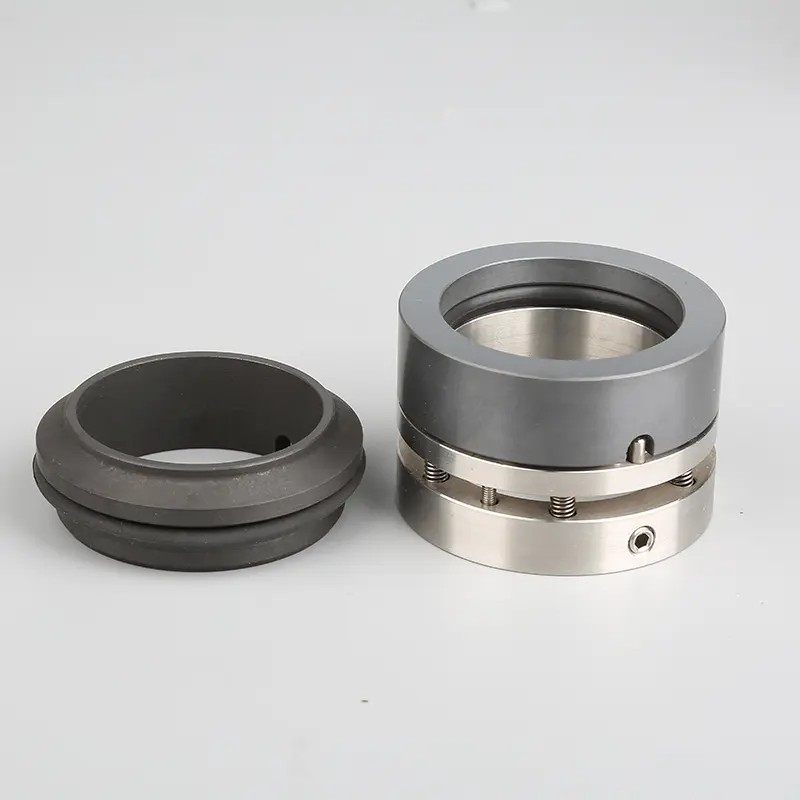
The most critical component is the primary sealing interface. One face rotates with the shaft, while the other remains stationary. During operation, a microscopic hydrodynamic fluid film forms between these highly polished faces. This film acts as a lubricant, keeping the faces cool and minimizing friction.
For steady performance, this fluid layer must remain stable. While some microscopic leakage is necessary to maintain this lubrication, a properly functioning mechanical seal should present very low, often visually undetectable, leakage. In critical environments handling hazardous or volatile fluids, leakage is strictly regulated (often measured in parts per million) by industry standards such as API 682. A good mechanical seal provides a reliable, very low-leakage barrier that meets these strict environmental and operational requirements without sacrificing face lubrication.
Durable Materials and Chemical Compatibility
A mechanical seal is only as good as the materials used to build it. The face materials determine wear resistance, while the secondary sealing elements (elastomers) dictate chemical compatibility.
Primary Sealing Faces
Different fluids require different face materials.
- Tungsten Carbide: Offers superior toughness and wear resistance, making it an excellent choice for abrasive slurries and harsh conditions.
- Silicon Carbide: Extremely hard and offers excellent corrosion resistance and thermal conductivity. However, it is more brittle than tungsten carbide and can be susceptible to damage from physical impact or severe thermal shock.
| Material | Key Strengths | Best Applications |
| Tungsten Carbide | High toughness, excellent wear resistance | Abrasive slurries, rugged physical conditions |
| Silicon Carbide | Extreme hardness, chemical resistance, thermal conductivity | Corrosive chemicals, high-temperature fluids |
| Carbon Graphite | Low friction, self-lubricating | Clean liquids, applications prone to dry-running |
Secondary Sealing Elements (Elastomers)
The O-rings, gaskets, and bellows must be chemically compatible with the pumped fluid. A mismatch here leads to swelling, hardening, or cracking, causing rapid seal failure.
- EPDM: Performs well with water, steam, and mild acids, but deteriorates quickly when exposed to petroleum-based oils or hydrocarbons.
- FKM (Fluoroelastomer): Highly resistant to oils, fuels, and many chemicals, but performs poorly with certain ketones.
- PTFE: Offers nearly universal chemical resistance, though it lacks the elasticity of traditional rubber elastomers.
Selecting the right combination of face and secondary materials prevents premature breakdowns and drastically lowers long-term maintenance costs.
Key Design Features of a High-Quality Seal
Balanced vs. Unbalanced Design
The hydraulic pressure of the pumped fluid pushes the sealing faces together.
- Unbalanced Seals: The full hydraulic area is exposed to system pressure, creating a high closing force. While this keeps the faces tight, high pressure can cause excessive friction, heat, and rapid wear.
- Balanced Seals: The seal geometry is modified to reduce the effective hydraulic area exposed to pressure. This lowers the closing force (face load).
A balanced design allows for a slightly thicker lubricating fluid film, which significantly cuts down on friction and heat generation. This careful management of face loading prevents the faces from pressing too hard (causing heat damage) or pulling apart (causing excessive leakage). Balanced seals are generally preferred for higher-pressure applications.
Protecting Springs and Secondary Seals
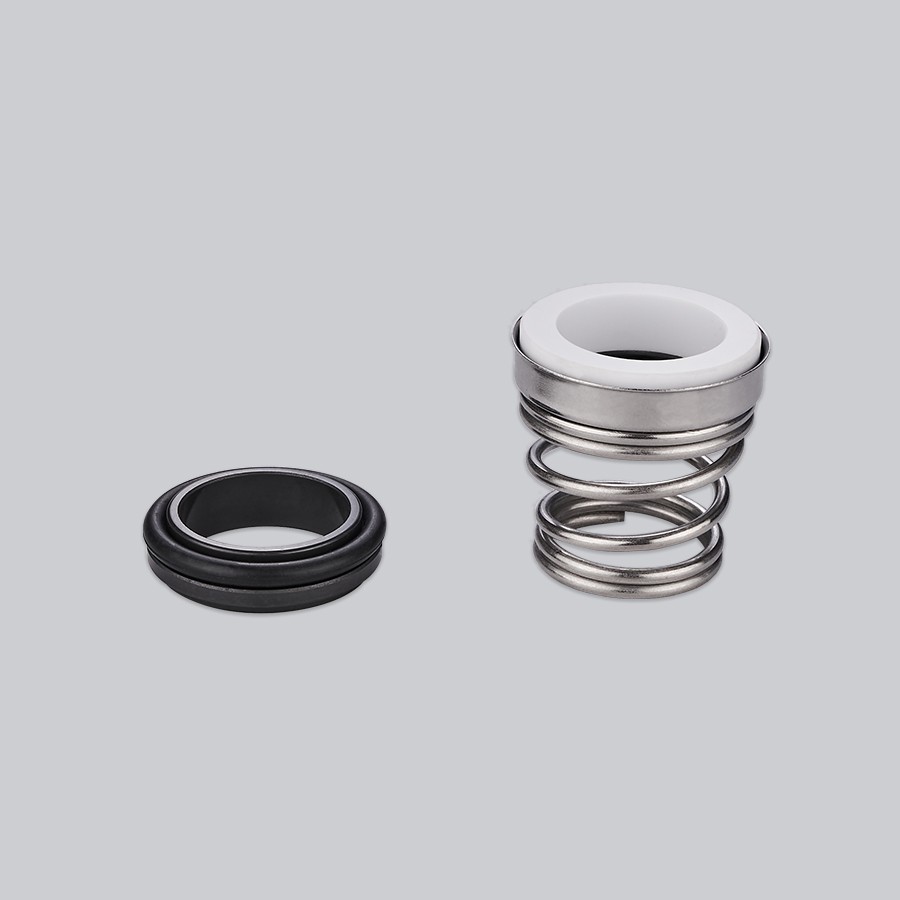
Springs provide the mechanical force needed to keep the sealing faces together when the pump is idle or pressure is low. However, springs and elastomers are vulnerable to corrosive or clogging fluids.
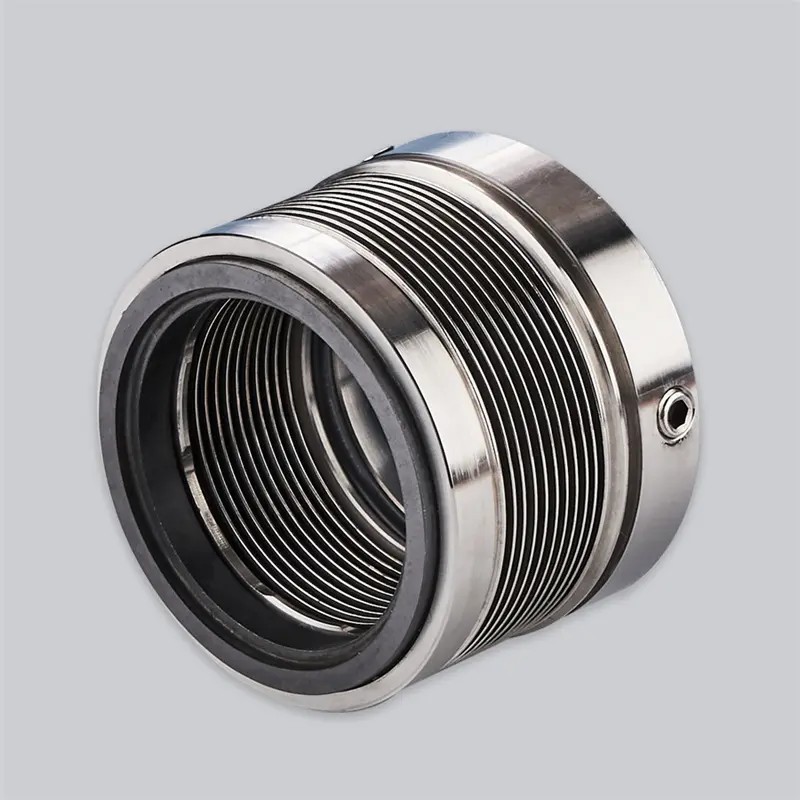
- Bellows Designs: An elastomer or metal bellows acts as a physical shield between the process fluid and the spring assembly. This prevents sticky or solid-laden fluids from clogging the moving parts, ensuring the seal can constantly adjust to shaft movement.
- Stationary Designs: In a stationary seal design, the spring assembly remains fixed in the pump housing rather than spinning with the shaft. This isolates the springs from centrifugal forces and significantly reduces the negative effects of shaft runout, misalignment, and vibration, boosting reliability in heavy-duty applications.
How a Good Mechanical Seal Performs in Demanding Conditions
Different industrial processes demand specific seal configurations. A high-quality seal is engineered to withstand its specific environment.
High-Pressure and High-Temperature Applications
Standard elastomer bellows seals are cost-effective and highly reliable for general water systems and mild industrial applications. However, at extreme temperatures, elastomers degrade.
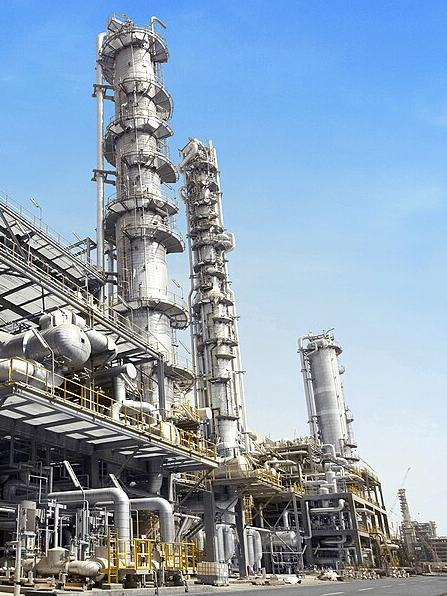
For high-temperature applications (such as refineries or chemical processing), metal bellows seals are often the standard. They eliminate the need for dynamic elastomer O-rings, removing a common point of thermal failure.
Abrasive, Corrosive, and Hazardous Fluids
When dealing with extreme hazards—whether aggressive chemicals or highly toxic fluids—a single mechanical seal may not be enough.
In these scenarios, a double mechanical seal (dual seal) is often utilized. This design incorporates two sets of sealing faces with a barrier or buffer fluid circulated between them. The barrier fluid cools the seal faces, provides clean lubrication, and ensures that even if the inner seal experiences wear, the hazardous process fluid is contained and does not escape into the atmosphere.
Summary
What makes a good mechanical seal? It is not a single “perfect” feature, but rather the precise alignment of tough face materials, chemically compatible elastomers, intelligent force-balancing, and robust spring protection. By matching these engineered features to the specific fluid, pressure, and temperature of the pump, a good mechanical seal ensures reliable operation, minimizes leakage, and protects your bottom line.
FAQ
How Often Should a Mechanical Seal Be Replaced?
There is no fixed replacement interval. Service life depends on the seal design, pumped fluid, pressure, temperature, speed, installation, and operating conditions. Replace the seal when leakage, wear, vibration, or other signs indicate deterioration.
What Causes Mechanical Seal Failure?
Common causes include incorrect installation, shaft misalignment, dry running, excessive vibration, unsuitable materials, and improper operating conditions. Keeping the seal clean and matching its materials to the pumped fluid can help prevent premature failure.
Can One Mechanical Seal Handle All Pump Applications?
No. Mechanical seals must match the pump and process conditions. Fluid type, solids content, pressure, temperature, and shaft speed all influence the appropriate seal design and materials.
How Does a Cartridge Seal Simplify Installation?
A cartridge seal comes pre-assembled with components such as the sealing faces, gland, and sleeve. This simplifies installation, helps maintain the correct setting dimensions, and can reduce common installation errors.
What Maintenance Extends Mechanical Seal Life?
Regularly monitor leakage, vibration, temperature, and flush or barrier-fluid conditions. Proper shaft alignment, avoiding dry running, and keeping the pump within the seal’s specified operating limits can also extend service life.