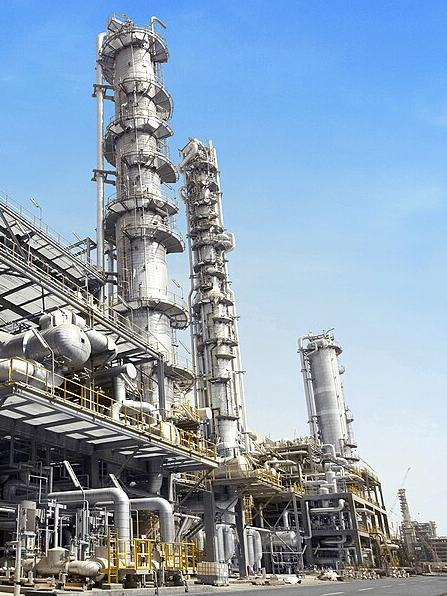
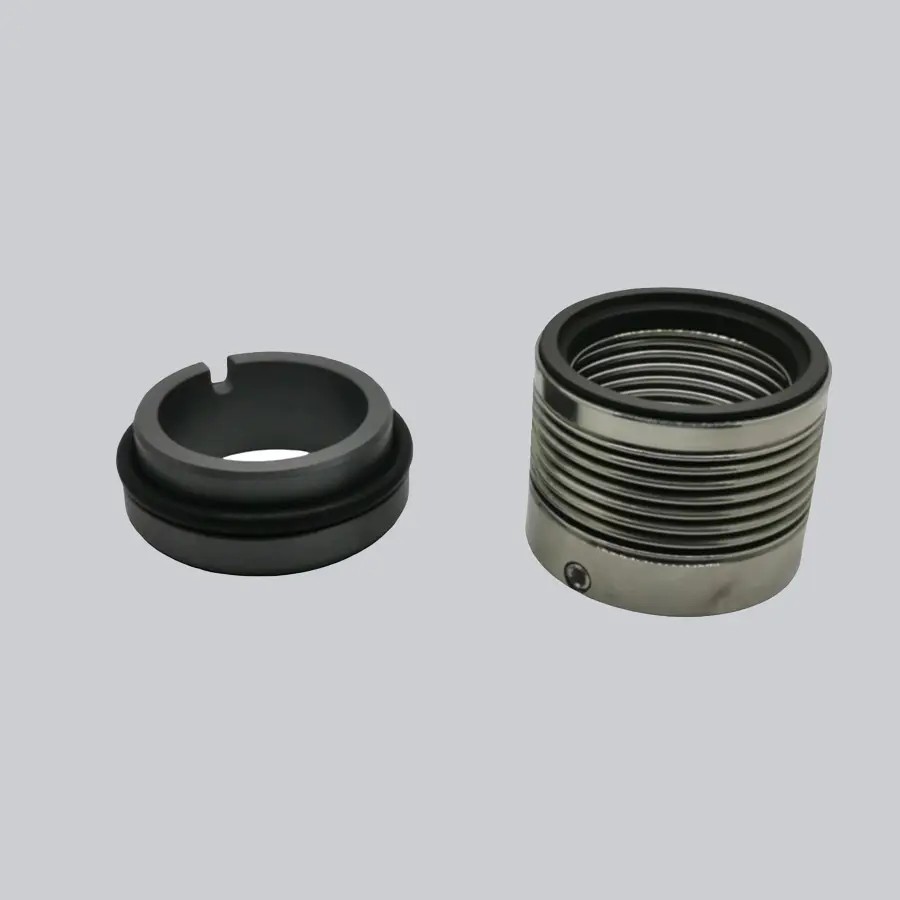
When a pump handles hot oil, corrosive chemicals, slurry, or operates under vacuum, a standard elastomer pusher seal may struggle with heat, chemical attack, or material buildup. In these demanding conditions, a metal bellows mechanical seal offers a more reliable sealing solution.
Its welded metal bellows eliminates sliding dynamic O-ring movement, reducing common issues such as elastomer degradation and shaft wear. This makes it a strong choice for harsh industrial applications where seal reliability and service life matter.
Key Takeaways
- Standard pusher seals have limitations in harsh conditions, including elastomer degradation, shaft fretting, hang-up and vacuum leakage.
- Metal bellows seals eliminate dynamic elastomer movement, reducing common wear and chemical-compatibility issues.
- They are well suited to demanding applications, such as high or cryogenic temperatures, corrosive fluids, vacuum service, slurries and high-viscosity media.
- Proper material selection is critical to match the bellows, secondary seals and face materials with the actual fluid and operating conditions.
- For critical pumps, metal bellows seals can reduce maintenance and downtime, potentially improving total lifecycle value despite a higher initial cost.
The Limitations of Standard Pusher Seals
Conventional pusher seals use a coil spring and a sliding secondary elastomer (usually an O-ring) to maintain face contact. This simple, low-cost design works for mild conditions, but has inherent failure points in harsh service:
- Elastomer degradation: Rubber O-rings harden, crack or swell at extreme temperatures and in aggressive chemical fluids, leading to rapid leakage.
- Shaft fretting: The sliding secondary seal wears grooves into the pump shaft or sleeve over time, causing permanent seal bore damage and increased leakage.
- Hang-up risk: Slurries, coking fluids and viscous media can bind the sliding seal components, causing loss of face loading and sudden failure.
- Vacuum leakage: Dynamic elastomers cannot maintain a reliable seal under deep vacuum conditions, allowing air ingress into the process.
Under typical severe-duty conditions, standard pusher seals have an average MTBF (mean time between failures) of only ~18 months. Metal bellows seals eliminate all these failure modes, with properly specified units regularly exceeding 48 months of service life.
Why Metal Bellows Mechanical Seals Are Preferred for Demanding Applications
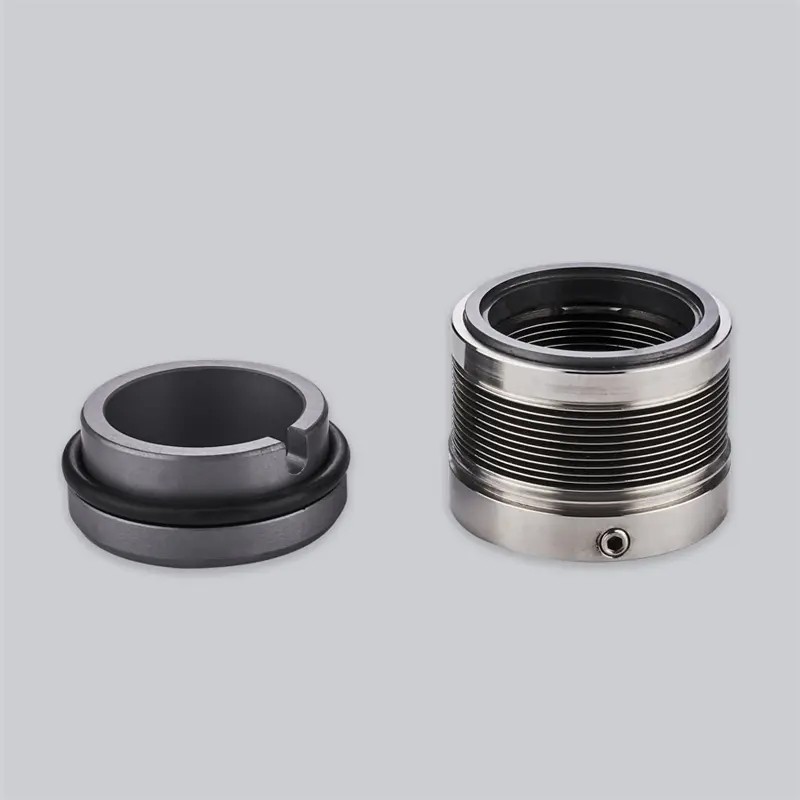
Dynamic Elastomer-Free Design
A welded metal bellows assembly combines the spring and secondary sealing functions in a single flexible metal component. Because there is no dynamic elastomer sliding against the shaft, the design eliminates a common wear point and reduces the risk of elastomer hardening, swelling, cracking, or chemical degradation.
Stable Sealing Under Thermal & Pressure Changes
Metal bellows maintain a consistent closing force as operating conditions change. Unlike elastomer-based secondary seals, the bellows does not rely on rubber elasticity that can change significantly with temperature.
This provides more stable sealing performance in applications subject to temperature fluctuations, pressure changes, and demanding process conditions.
Reduced Shaft Wear & Maintenance
Since the secondary sealing element does not move directly against the shaft, metal bellows seals minimize fretting and wear on shafts and sleeves. This can reduce shaft repairs, simplify maintenance, and extend the service life of related pump components.
Less Material Buildup Around the Seal
The compact bellows structure provides fewer areas where process material can accumulate compared with some conventional pusher-seal designs. This can help reduce fouling around the sealing components and maintain more reliable operation in difficult media.
When to Specify a Metal Bellows Mechanical Seal
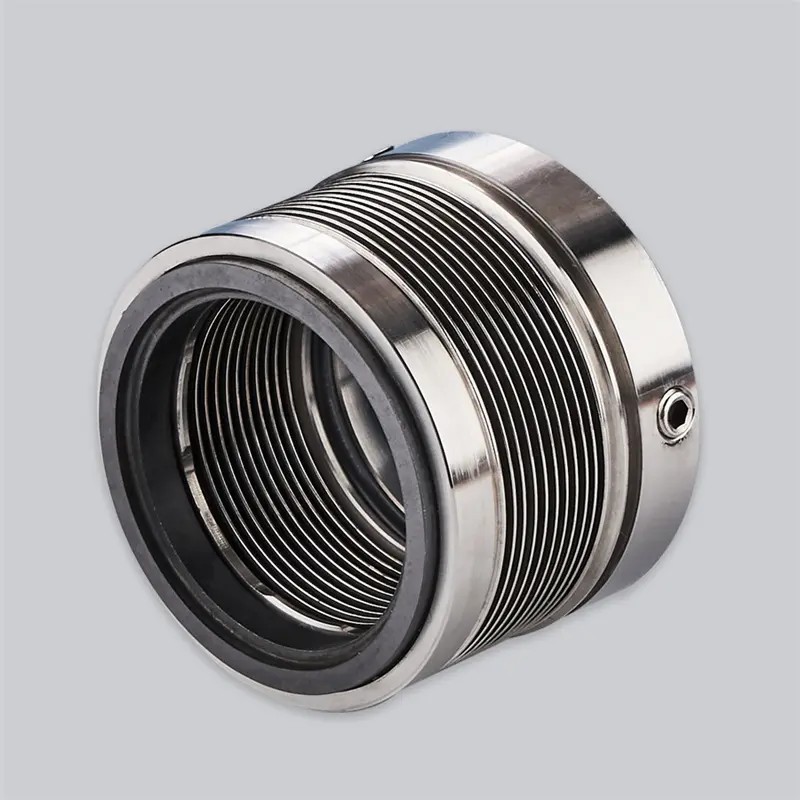
Choose a metal bellows seal when process conditions or equipment requirements exceed the practical capabilities of conventional elastomer-based mechanical seals. An experienced mechanical seal manufacturer can help match the seal design and materials to the specific operating conditions. The following applications are particularly suitable.
High-Temperature or Cryogenic Service
Specify a metal bellows seal when the process temperature approaches the operating limit of conventional elastomers. Typical applications include hot oil systems, refining equipment, thermal-fluid systems, and selected cryogenic processes.
For low-temperature service, the bellows alloy and secondary sealing materials must be matched to the actual operating temperature.
Chemically Aggressive Media
Metal bellows seals are a strong option for acids, solvents, and corrosive process fluids that can attack conventional NBR, EPDM, or FKM elastomers.
The bellows material should be selected according to the specific chemical environment. Nickel-based alloys such as Hastelloy may be considered for highly corrosive services, while the secondary seal material must also be compatible with the fluid and temperature.
Vacuum & Low-Leakage Applications
Metal bellows designs are useful when low leakage and low gas permeability are important. Their metallic construction can offer advantages over elastomeric seals in vacuum equipment and selected process systems.
For high- or ultra-high-vacuum applications, the complete seal assembly should be specified for the required vacuum level, including materials, surface finish, secondary seals, and cleanliness.
Slurries, Coking & High-Viscosity Fluids
Consider a metal bellows seal when solids, deposits, or viscous media may interfere with conventional pusher seals. The design can help limit material accumulation around the sealing components.
Common applications include:
- Pulp and paper processing
- Mining and mineral slurries
- Asphalt and bitumen handling
- Heavy crude oil
- Other fouling or high-viscosity process fluids
Critical Equipment Where Reliability Matters
Metal bellows seals are also appropriate for critical equipment where leakage or frequent seal replacement can cause significant production losses.
Although the initial cost may be higher than a conventional seal, the potential for reduced shaft wear, fewer elastomer-related failures, and longer service intervals can make metal bellows seals attractive from a lifecycle-cost perspective.
Conclusion
Metal bellows seals are not necessary for every pump application, but they are the clear best choice for extreme temperatures, corrosive fluids, vacuum service and heavy slurry conditions. By eliminating dynamic elastomers and the associated failure modes, they deliver dramatically longer service life, lower maintenance costs and higher reliability in harsh industrial environments.
FAQ
What is the difference between a pusher seal and a metal bellows seal?
A pusher seal uses a coil spring and a sliding elastomer O-ring as the secondary seal. A metal bellows seal uses a welded flexible metal assembly that acts as both the spring and the secondary seal, with no dynamic rubber components. This eliminates elastomer degradation and shaft fretting, the two most common causes of pusher seal failure.
At what temperature do you need a metal bellows seal?
As a general rule, specify a metal bellows seal for continuous operating temperatures above 180°C or below -20°C, where standard elastomers would degrade or become brittle. High-alloy bellows designs can handle peak temperatures up to 350°C for high-temperature process service.
Are metal bellows seals good for slurry pumps?
Yes. The rotating bellows creates centrifugal force that flings solid particles away from the seal, preventing clogging and hang-up. They are recommended for slurry service with up to 7–10% solids content, and for coking or high-viscosity fluids that would bind a standard pusher seal.
What API standard applies to metal bellows seals?
API 682 is the primary industry standard for centrifugal pump shaft seals. Under API 682, Type B seals are welded metal bellows designs, specified for severe-duty service across wide temperature and pressure ranges.
How long do metal bellows seals last?
When properly specified and installed, metal bellows seals typically have an MTBF of 48+ months in severe service — roughly 2–3 times longer than a standard pusher seal in the same conditions. Actual service life depends on fluid type, temperature and operating severity.