
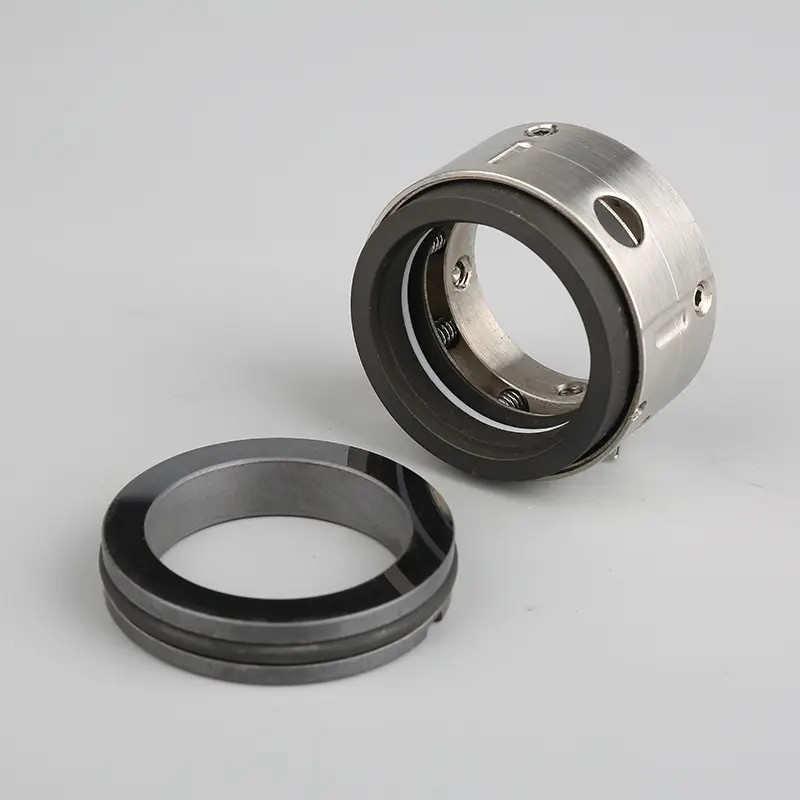
Single-spring mechanical seals can face performance limitations in demanding industrial pump applications due to uneven face loading, limited misalignment compensation and larger axial installation requirements. Multi-spring mechanical seals address these challenges by distributing closing force evenly through multiple small coil springs arranged around the shaft. This design provides more consistent face pressure, improved vibration tolerance and a more compact structure, making multi-spring seals a widely used choice for general-purpose and heavy-duty industrial pumps
Key Takeaways
- Multi-spring mechanical seals use multiple evenly distributed springs to provide consistent face loading, reducing uneven wear, hot spots and leakage risks.
- Compared with single-spring designs, multi-spring seals offer better compensation for shaft movement, vibration and minor misalignment during pump operation.
- The compact axial design of multi-spring seals makes them suitable for pumps with limited installation space and simplifies maintenance.
- Distributed spring placement improves stability at higher speeds by reducing centrifugal distortion and maintaining reliable sealing performance.
- Multi-spring mechanical seals are widely used in water treatment, chemical processing, HVAC, marine and general industrial centrifugal pump applications.
The Limitations of Single-Spring Seals
Traditional single-spring designs rely on one large helical spring to apply closing force to the seal faces. This simple, low-cost design works for basic applications, but has inherent drawbacks:
- Uneven face loading: A single spring cannot apply perfectly uniform force around the seal face, leading to tilted contact, localized hot spots and uneven wear.
- Poor misalignment tolerance: The stiff single spring cannot compensate well for shaft runout, radial play or thermal growth, leading to face separation and leakage.
- Large axial footprint: The long single spring requires significant axial space along the shaft, making it unsuitable for compact pump designs with limited stuffing box depth.
- High-speed instability: At elevated RPM, centrifugal force distorts the large single spring outward, altering face loading and causing premature failure.
For these reasons, multi-spring designs have become the industry standard for most general-purpose and heavy-duty pump applications.
Core Advantages of Multi-Spring Mechanical Seals
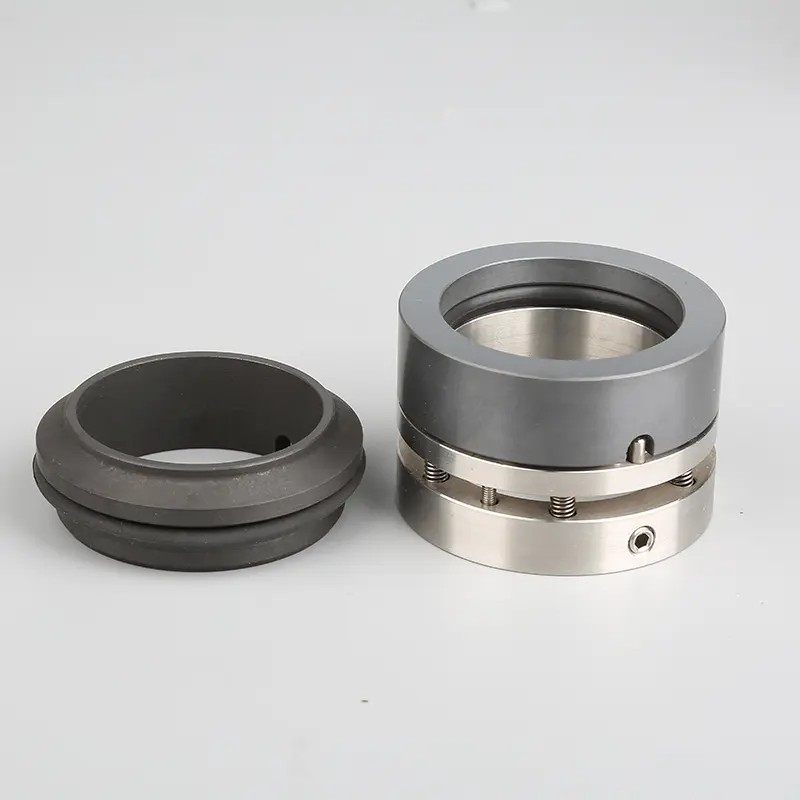
Uniform Face Loading & Even Wear
Multiple small springs arranged in a full 360° circle apply consistent, equal closing force across the entire seal face. This eliminates the tilted contact and localized high-stress spots common with single-spring designs.
Typical target face loading for multi-spring seals falls between 0.15 and 0.25 MPa (15–25 psi). This balanced pressure maintains a thin, stable lubricating fluid film between the rotating and stationary faces, reducing friction, preventing dry running and extending mean time between repair (MTBR).
| Mechanism | Effect on Seal Face | Operational Result |
|---|---|---|
| Circumferential spring distribution | Parallel face alignment | Eliminates localized hot spots from uneven friction |
| Consistent 15–25 psi face pressure | Full flat contact across the face | Prevents uneven wear patterns that cause leakage |
| Balanced force distribution | Equal loading across all contact areas | Avoids accelerated wear on high-stress zones |
Better Compensation for Shaft Movement & Misalignment
Industrial pump shafts routinely experience radial runout, axial end play and thermal growth during operation. Individual coil springs in a multi-spring design compress and extend independently to absorb these movements, maintaining continuous face contact even with minor shaft misalignment.
This flexibility also dampens vibration from the pump shaft, protecting brittle seal face materials (carbon, silicon carbide) from impact and chipping.
Compact Axial Design for Tight Installations
Unlike single-spring designs that require long axial installation length, multi-spring seals place all springs around the outer diameter of the shaft. This drastically reduces the total axial footprint of the seal assembly.
The shorter overall length offers two key practical benefits:
- Fits into compact pump stuffing boxes with limited depth
- Simplifies field replacement, as technicians can install the seal without full pump disassembly in many cases
Improved Stability at High Operating Speeds
At high rotational speeds, centrifugal force can distort large single springs outward, changing face loading and causing premature failure. The small, evenly distributed mass of multi-spring designs minimizes this centrifugal distortion.
Multi-spring seals maintain stable face loading at speeds up to 3000 RPM and surface velocities up to 20 m/s, making them suitable for most standard industrial centrifugal pumps.
Common Applications of Multi-Spring Mechanical Seals
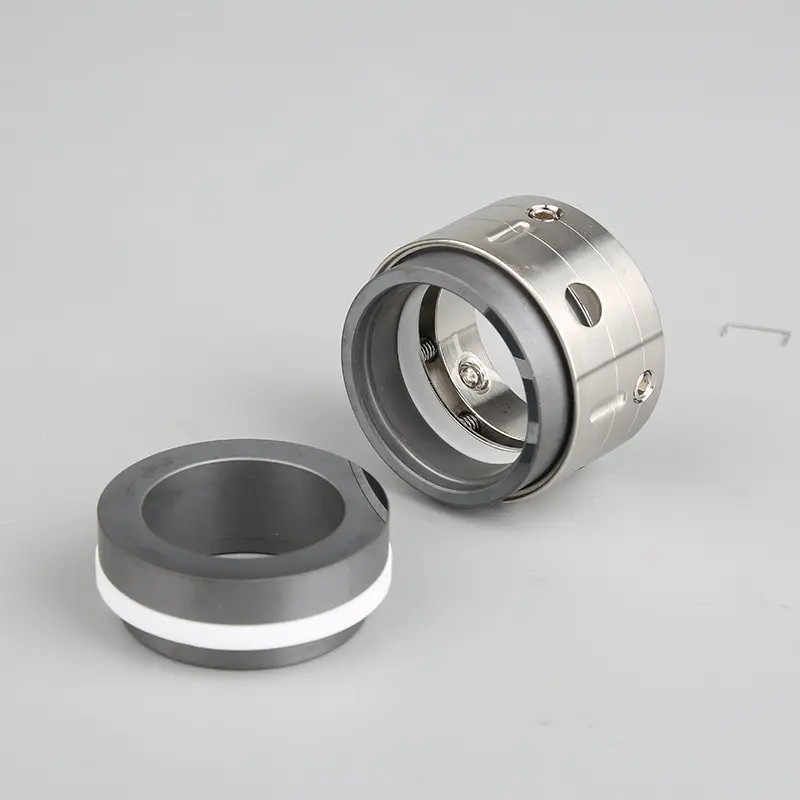
Multi-spring mechanical seals are used across nearly all general-purpose pump applications:
- Water and wastewater treatment pumps
- Chemical processing and petrochemical pumps
- Marine and shipboard seawater pumps
- HVAC and cooling water systems
- General industrial centrifugal pumps
They are the default choice for most medium-pressure (up to 10 bar), medium-temperature service where reliable, low-maintenance sealing is required.
Conclusion
Multi-spring designs have become the industry standard for mechanical seals because they solve the inherent flaws of single-spring configurations: uneven face wear, limited misalignment tolerance, bulky size and high-speed instability. By distributing closing force across multiple circumferential springs, they deliver longer service life, more reliable performance and a more compact footprint.
For most general-purpose pump applications, a standardized DIN 24960 multi-spring seal offers the best balance of performance, interchangeability and total cost of ownership.
FAQ
What is the main advantage of a multi-spring mechanical seal?
The primary benefit is uniform, 360° face loading across the entire sealing surface. Distributing closing force across multiple small springs prevents uneven wear, eliminates localized hot spots, and extends the seal’s service life compared to single-spring designs.
How do multi-spring seals handle shaft misalignment?
Each individual coil spring can compress or extend independently to absorb shaft runout, thermal growth and minor radial misalignment. This independent movement maintains consistent face contact and a stable lubricating film, even when the shaft is not perfectly centered.
Are multi-spring seals interchangeable with major brand seals?
Yes, when manufactured to DIN 24960 / ISO 3069 dimensional standards, multi-spring seals are dimensionally interchangeable with seals from John Crane, Flowserve, EagleBurgmann and other major brands. They can be installed as direct drop-in replacements without pump modification.
What’s the difference between single-spring and multi-spring mechanical seals?
A single-spring seal uses one large helical spring for closing force, is low cost but has uneven face loading and a large axial footprint. A multi-spring seal uses many small circumferential springs for uniform face pressure, better misalignment tolerance, a compact design and better high-speed stability.
What materials are used in multi-spring mechanical seals?
Springs and metal hardware are typically 304 or 316 stainless steel for corrosion resistance. Seal faces are most commonly carbon, silicon carbide or tungsten carbide. Secondary elastomer seals are available in NBR, EPDM, FKM (Viton) or PTFE to match different fluid and temperature requirements.