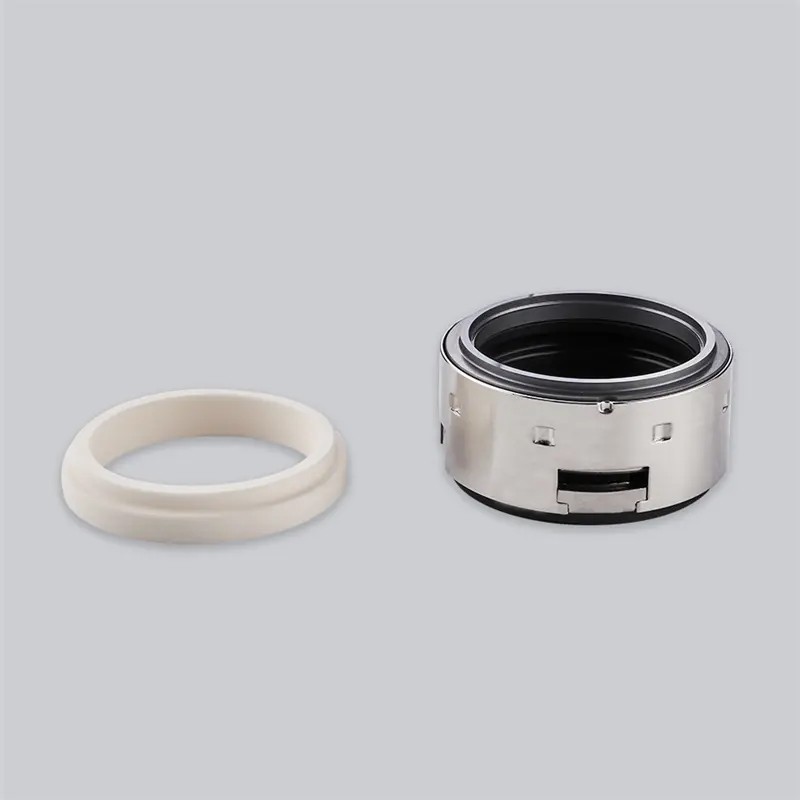
Elastomer bellows mechanical seals are one of the most reliable sealing solutions for low-to-moderate pressure industrial pumps, because their one-piece flexible design eliminates common failure points found in traditional pusher seals — clogging, uneven wear, spring failure and misalignment.
For pump operators, seal failure is a leading cause of unplanned downtime. A European Sealing Association study of 3,500 pump failures found mechanical seal issues caused roughly 60% of cases. For slurry, wastewater and general industrial pumps, elastomer bellows seals directly address the root causes of these failures, delivering longer service life, lower maintenance and fewer process shutdowns.
Key Takeaways
- Elastomer bellows seals combine sealing and spring functions, reducing components and the need for regular adjustment.
- Their flexible bellows accommodates minor shaft misalignment, axial movement, and seal-face wear, helping maintain consistent sealing performance.
- Proper elastomer selection is essential for handling different temperatures, chemicals, and operating fluids.
- The bellows design offers good vibration tolerance and clog resistance, making these seals suitable for demanding fluids such as slurry and wastewater.
- Common applications include water and wastewater, mining, chemical processing, food and beverage, and general industrial pumps.
Design and Working Principle of Elastomer Bellows Mechanical Seals
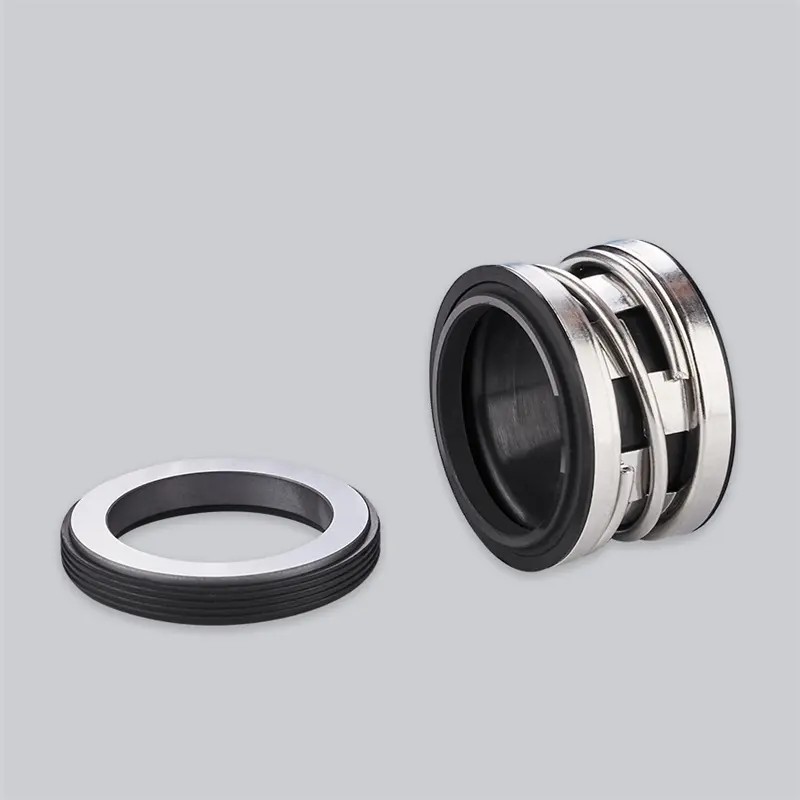
Integrated Seal-and-Spring Design
The defining advantage of an elastomer bellows seal is that it performs two jobs in one component. The molded elastomer bellows acts as both the dynamic sealing element and the spring loading system. This eliminates the need for separate coil springs and sliding O-rings — the two most common failure points in conventional pusher seals.
The bellows maintains consistent, even closing force across the seal faces under all operating conditions. Unlike spring-loaded designs, there is no spring set adjustment or calibration required.
Self-Aligning Misalignment Compensation
Shaft misalignment is responsible for an estimated 54% of operational seal failures. The flexible bellows naturally flexes to accommodate small angular and radial shaft misalignment, keeping the seal faces perfectly parallel and seated. This self-alignment feature eliminates the uneven wear patterns that cause premature leakage in rigid seal designs, and it tolerates minor installation alignment errors that would cripple other seal types.
Axial Movement and Wear Compensation
Pump shafts shift axially during startup, shutdown and load changes. The elastomer bellows compresses and extends to absorb this end play, maintaining full face contact without adjustment. As seal faces wear down over time, the bellows continues to apply steady closing force, automatically compensating for face wear without manual intervention.
Why Elastomer Bellows Mechanical Seals Excel in Demanding Applications
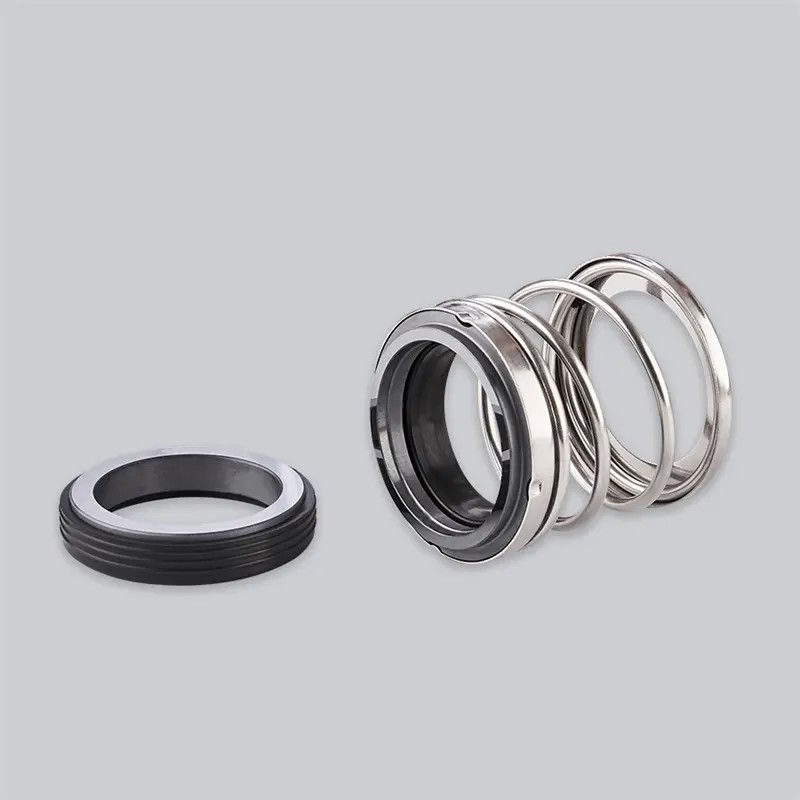
Chemical and Temperature Resistance
Seal material incompatibility causes roughly 40% of industrial bellows seal failures. Elastomer bellows seals are available in four primary compound options, each formulated for specific fluid and temperature conditions:
| Elastomer | Temperature Range | Best For |
|---|---|---|
| NBR (Nitrile) | -30°C to 120°C | Oil, petroleum products, fuels, general hydraulic service |
| EPDM | -50°C to 150°C | Water, steam, dilute acids, wastewater, food & beverage |
| FKM / Viton | -20°C to 200°C | Broad chemical resistance, solvents, acids, industrial process fluids |
| HNBR | -30°C to 150°C (300°F) | High-temperature water systems, oilfield, moderate chemicals |
Correct material selection extends seal service life by 3–5 years in 72% of upgraded systems, according to industry seal failure analyses.
Vibration and Pressure Tolerance
Pumps in slurry, wastewater and heavy industrial service operate under constant vibration and pressure spikes. The elastomer bellows acts as a natural vibration damper, absorbing shock loads and shaft runout instead of transmitting stress to the seal faces.
The bellows also distributes hydraulic pressure evenly across the seal faces, maintaining stable contact during pressure spikes and water hammer events. Drive bands and interlocking tangs prevent torque slippage and bellows twisting under rotational stress, for stable performance even in high-vibration installations.
Clog Resistance in Dirty / Abrasive Fluids
This is the single biggest advantage over pusher seals in tough service.
Pusher seals rely on a sliding O-ring on the shaft. Solids, slurry and sticky fluids build up on this sliding interface, causing the seal to hang up, lose face contact and leak catastrophically. A 2025 Hydraulic Institute study found seal face wear proceeds 4.7x faster in 20% silica slurry compared to clean water, due to solids ingress behind the O-ring.
Elastomer bellows seals have no sliding O-ring. The open bellows structure resists clogging and excludes solids from critical sealing areas. This is why they are the standard choice for slurry pumps, wastewater pumps, dredge pumps and mining service pumps.
Elastomer Bellows Mechanical Seals: Applications and Case Study
Elastomer bellows seals are used across a wide range of pump types and industries:
- Water & wastewater treatment: centrifugal pumps, lift stations, sludge pumps
- Mining & minerals: slurry pumps, tailings pumps, process pumps
- Chemical processing: general process pumps, transfer pumps
- Food & beverage: clean water, CIP systems, utility pumps
- General industrial: cooling systems, HVAC, utility pumps
Case Study: High-Temperature Brine Pump
A Chinese fluid equipment operator experienced repeated seal failures on a high-temperature brine transfer pump. Root cause analysis identified two issues:
- Material incompatibility: 316L stainless steel bellows corroded within 72 hours of exposure to high-chloride brine.
- Installation error: 0.005 inch shaft misalignment exceeded the original seal’s tolerance.
Corrective actions included switching to a Hastelloy C-276 bellows assembly and implementing laser precision shaft alignment. The changes reduced unplanned seal-related downtime by 40% and extended mean time between seal replacements by 3.2x.
Conclusion
Elastomer bellows mechanical seals are the best value choice for most general-purpose industrial pumps, especially in dirty, abrasive or slurry service where pusher seals clog and fail prematurely. Their self-aligning design, simple installation and fewer failure modes deliver lower total cost of ownership through reduced downtime and maintenance.
FAQ
What Maintenance Do Elastomer Bellows Seals Require?
Routine inspection for leakage and proper cleaning are generally sufficient. The flexible bellows maintains closing force without regular spring adjustment. Service life depends on the seal material and operating conditions.
Are Elastomer Bellows Seals Suitable for High-Pressure Applications?
They are generally suited to low- and moderate-pressure applications. The actual pressure limit depends on the seal design and operating conditions. For higher pressures, metal bellows or other high-pressure seal designs may be more suitable.
Can Elastomer Bellows Seals Replace OEM Pump Seals?
Yes, compatible replacement seals are available for many industrial pumps. Before replacing an OEM seal, confirm the shaft size, seal dimensions, pressure, temperature, fluid compatibility, and sealing-face materials.