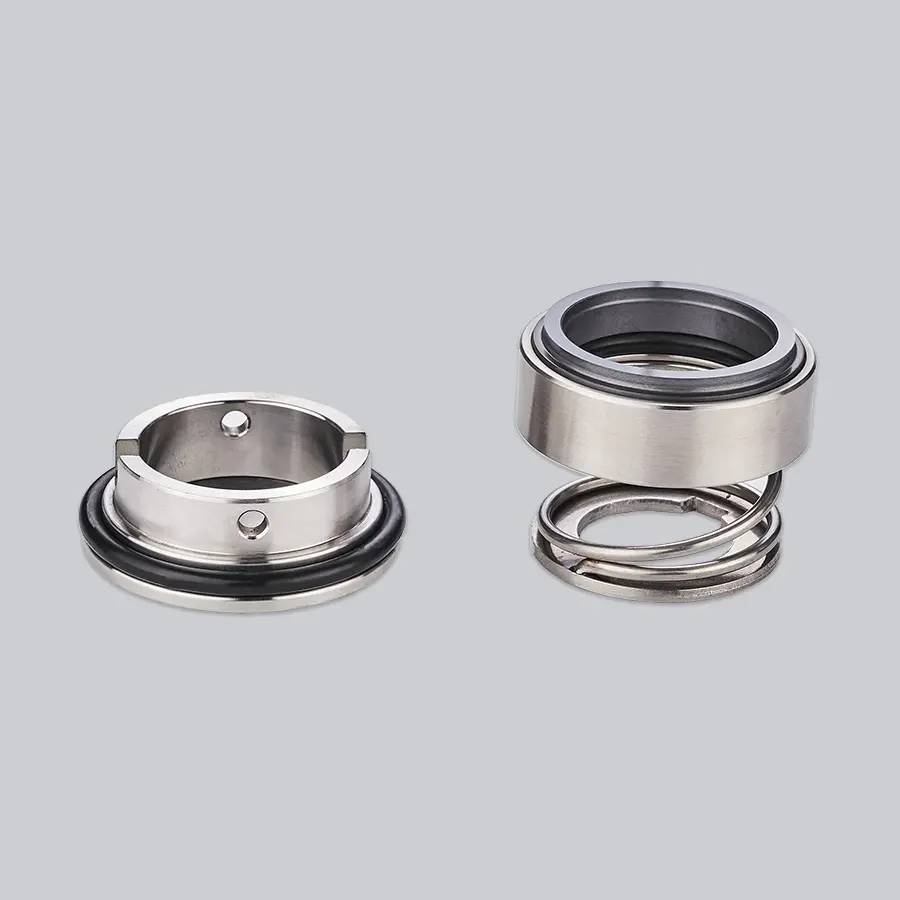
A mechanical seal creates a tight, long-lasting fluid barrier at the point where a rotating pump shaft passes through the stationary pump housing. It prevents process liquids and gases from leaking out, while also stopping outside contaminants from entering the pump. This improves pump reliability, reduces maintenance costs, and minimizes environmental risk — making it the standard sealing solution for industrial pumping systems.
Key Takeaways
- A mechanical seal relies on a precision-lapped rotating face and stationary face pressed together to form the primary leakage barrier
- Spring-loaded loading maintains consistent face contact, compensating for minor shaft movement, vibration and normal wear
- A micro-thin fluid film between the seal faces provides lubrication and cooling, and is the key to long seal service life
- Seal performance depends on matching face materials and elastomers to the process fluid, temperature and pressure
- Regular inspection for leakage and wear prevents unexpected pump failures and lowers long-term maintenance costs
How the Sealing Mechanism Works
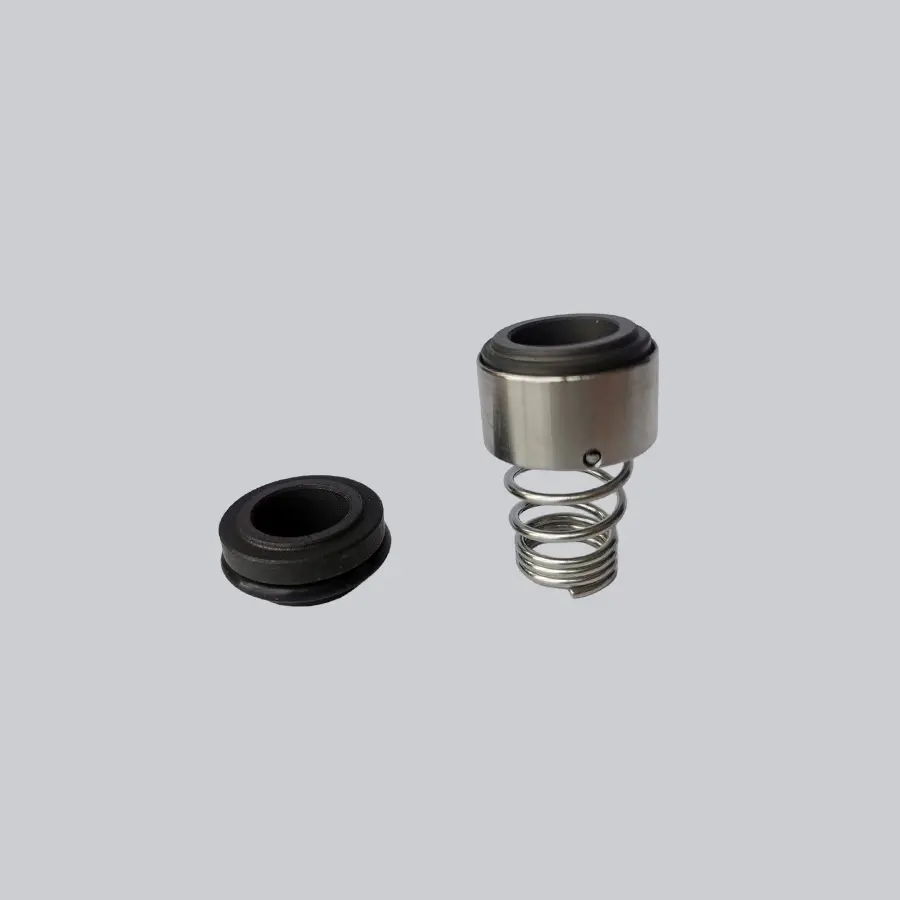
A mechanical seal relies on four core component groups working in unison:
- Primary sealing faces: A rotating face fixed to the shaft and a stationary face mounted to the housing, both lapped to an ultra-flat, mirror-smooth finish.
- Spring loading assembly: One or more springs that apply steady axial force to keep the two faces pressed firmly together.
- Secondary seals: Elastomer O-rings, gaskets or bellows that seal gaps between faces, shaft and housing to eliminate bypass leakage.
- Support hardware: Gland plates, shaft sleeves and retainers that hold the assembly in alignment and protect the pump shaft from wear.
Primary Barrier: Face Contact
When the pump runs, the rotating face spins with the shaft while the stationary face remains fixed in the housing. Spring force pushes the two faces together to form a close, continuous contact gap — this is the primary barrier that stops bulk process fluid from leaking along the shaft.
Unlike static gaskets, a mechanical seal must seal while parts are moving. The faces are engineered to stay aligned even when the shaft experiences minor deflection, vibration or thermal expansion.
Fluid Film Lubrication
The most critical detail of mechanical seal operation is the micro-thin fluid film that forms between the two seal faces. As the shaft rotates, hydrodynamic effect pulls a tiny amount of process fluid into the contact gap, creating a film just a few micrometers thick.
This film serves two essential functions:
- It lubricates the faces to minimize friction and wear.
- It absorbs and carries away frictional heat to prevent overheating and face damage.
Despite being a liquid layer, the film’s surface tension and the extreme flatness of the faces prevent bulk leakage. Well-designed mechanical seals maintain this film at a stable thickness — thick enough for lubrication, thin enough to keep leakage at near-zero levels.
Pressure Adaptation
As pump pressure rises, hydraulic force adds to the spring force to keep faces sealed. For high-pressure applications, balanced seal designs distribute pressure evenly to avoid excessive face loading, which would cause rapid wear.
Why Mechanical Seals Outperform Traditional Packing
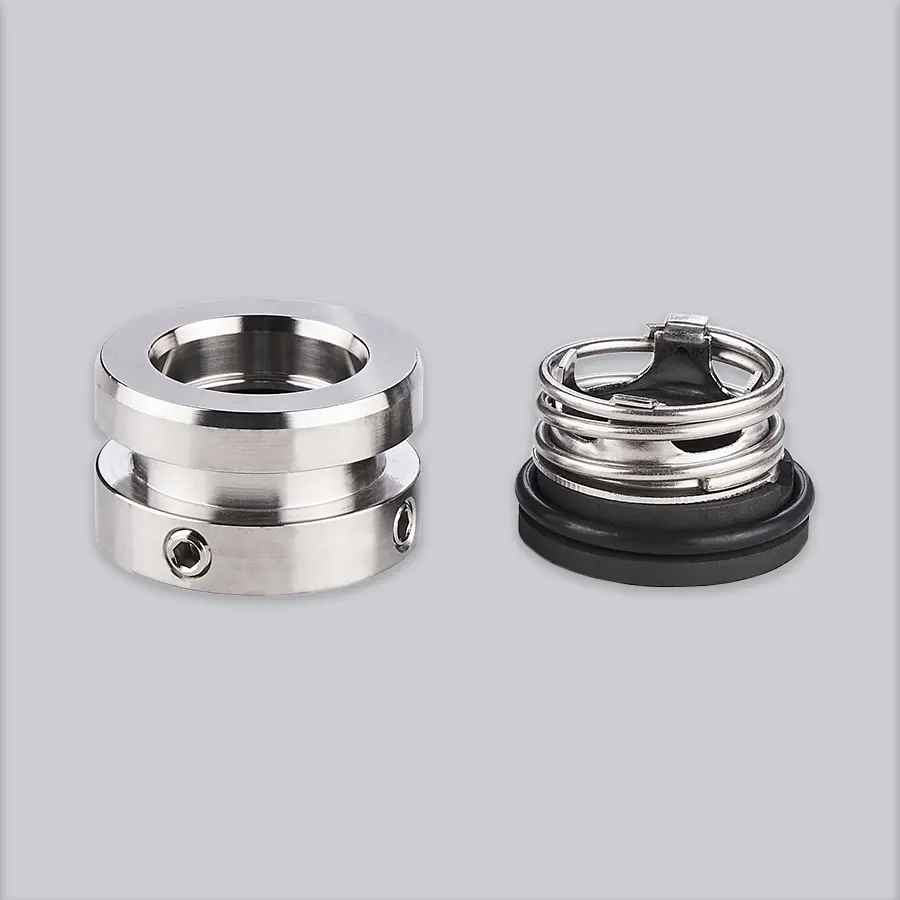
Mechanical seals have largely replaced conventional gland packing in most industrial pumps, thanks to four key advantages:
| Aspect | Mechanical Seals | Conventional Gland Packing |
|---|---|---|
| Sealing Efficiency | Near-zero leakage, compliant with strict environmental standards | Higher constant leakage, requires regular adjustment |
| Reliability | Stable performance under variable pressure and temperature | Prone to wear and leakage in harsh conditions |
| Shaft Wear | Minimal; shaft sleeve protects the shaft from direct friction | High packing friction causes shaft scoring over time |
| Lifetime Cost | Higher upfront cost, lower maintenance and longer service life | Lower upfront cost, frequent replacement and higher downtime |
Mechanical Seal Materials & Design Options for Different Applications
Common Seal Face Materials
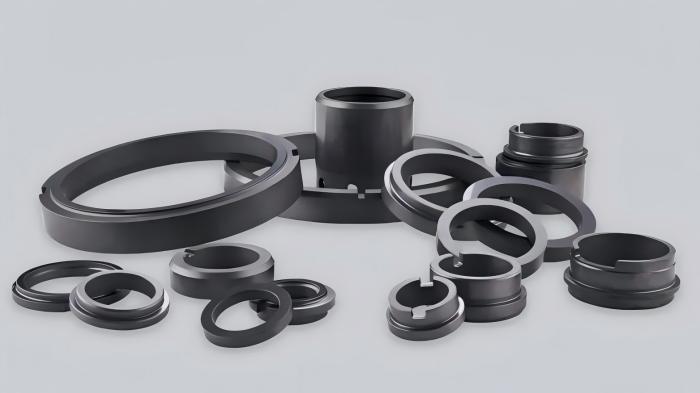
Seal face material is selected based on fluid properties, temperature and abrasiveness:
- Carbon graphite: Self-lubricating, widely used for general water and oil applications
- Silicon carbide: Excellent wear resistance, thermal stability and chemical compatibility, ideal for corrosive and abrasive fluids
- Tungsten carbide: Extremely hard and wear-resistant, best for slurry and high-pressure services
Elastomer Secondary Seal Materials
- Nitrile rubber: Cost-effective for water and general oil services
- Fluoroelastomer (FKM): Broad chemical resistance and high temperature capability for chemical processing
- EPDM: Excellent for steam, hot water and mild acid applications
Popular Seal Designs
- Balanced seals: Engineered to reduce face loading at high pressures for longer service life
- Cartridge seals: Pre-assembled all-in-one units that simplify installation and reduce alignment errors
- Bellows seals: Use an integrated metal or elastomer bellows instead of sliding O-rings, ideal for high-temperature, fouling or sticky fluids
- Dual seals: Use two sealing barriers with a barrier fluid for hazardous or toxic fluids where zero leakage is required
Conclusion
Mechanical seals work by combining precision-lapped contact faces, spring loading and hydrodynamic fluid film lubrication to create a reliable, low-leakage rotating seal. When properly selected and maintained, they drastically improve pump reliability and reduce long-term operating costs.
Whether you need standard off-the-shelf mechanical seals or custom-engineered solutions for challenging applications, Victor has the manufacturing capability and technical expertise to support your project.
FAQ
What is the main function of a mechanical seal in a pump?
A mechanical seal creates a leak-proof barrier where the rotating shaft exits the pump housing, containing process fluid inside the pump and preventing environmental contamination.
What is the average service life of a mechanical seal?
Under normal operating conditions, most mechanical seals last 1–5 years. Service life varies widely based on fluid type, operating temperature, pressure and proper installation and maintenance.
Can a mechanical seal be reused after removal?
No. Once a seal has been removed from service, the face alignment and secondary seal condition are compromised. Reinstalling a used seal carries a high risk of leakage and premature failure.
What are the warning signs of a failing mechanical seal?
Visible fluid leakage from the pump gland, unusual noise from the seal area, and rising operating temperature are the most common signs. Early inspection and replacement can prevent unplanned pump downtime.
Does Victor offer custom mechanical seal solutions?
Yes. We provide custom-sized, custom-material and special-design mechanical seals for unique pump models and challenging process conditions. Our engineering team works directly with customers to develop application-specific solutions.