
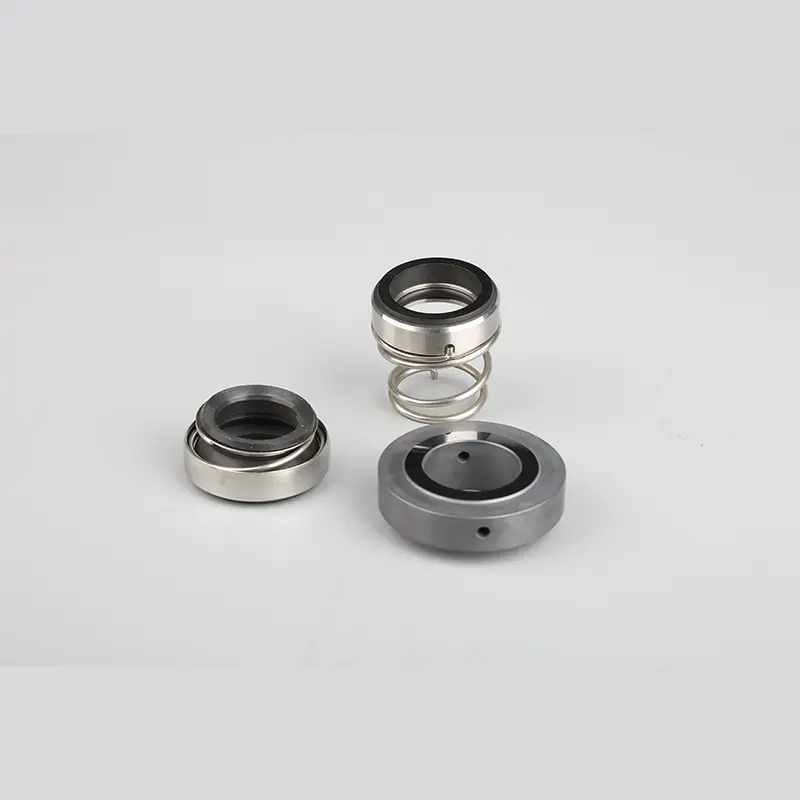
A mechanical seal squeals at low speeds because the seal faces cannot form a full fluid lubricating film, leading to a repeated stick-slip cycle as the surfaces grip, build tension, then break free and slide. Carbon and ceramic face pairs are especially prone to this high-pitched whistling or squealing noise. This sound is an early warning of seal face wear, overheating, and impending leakage — it should be diagnosed promptly, not ignored.
Key Takeaways
- Low-speed squeal is caused by stick-slip contact when the lubricating fluid film between seal faces becomes too thin.
- Always inspect lubrication first: clean clogged flush lines and verify stable flow to restore the protective fluid film.
- Match seal face materials to your service duty: carbon/ceramic for light water service; silicon carbide for high-load abrasive duty.
- Incorrect spring pressure, shaft misalignment, and coupling imbalance can all cause or worsen vibration and noise.
- Address noise early to prevent accelerated face wear, heat damage, and seal failure.
The Mechanism Behind Low-Speed Squeal in Mechanical Seals
The Lubricating Film & Speed
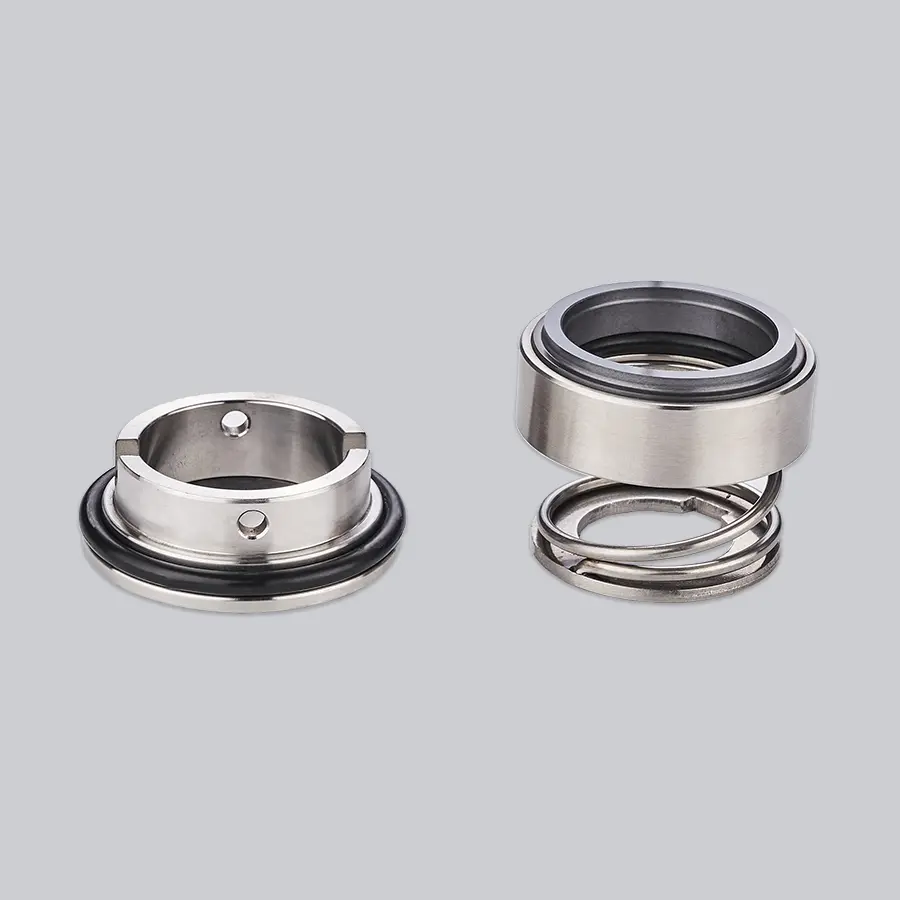
A thin layer of process fluid (the lubricating film) separates the two rotating seal faces during normal operation, reducing friction and carrying away heat. Film thickness directly correlates with sliding speed:
- At start-up/low speeds: Surfaces run with almost no separating liquid, operating in boundary friction.
- As speed increases: More lubricant is drawn between the faces, the film thickens, and contact shifts to semi-fluid friction.
- At shutdown: Speed drops, the gap closes, and surfaces return to boundary contact.
At low operating speeds, the film never thickens enough to fully separate the faces. The surfaces remain in partial contact, creating the conditions for stick-slip.
Stick-Slip & Noise Generation
Stick-slip is a cyclic friction phenomenon: two surfaces adhere as they make contact, build up torsional force as the shaft rotates, then shear free and slide suddenly. Each release sends a small vibration pulse through the hardware, which creates the characteristic squeal or whistle sound.
This behavior is most pronounced with carbon-on-ceramic face pairs: graphite asperities on the carbon face form temporary adhesive bonds with the harder ceramic counterface, which shear under load. Fine graphite debris trapped between the faces further amplifies instability.
Common Causes of Mechanical Seal Squeal
| Cause | How It Creates Noise |
|---|---|
| Poor lubrication | Insufficient fluid flow, clogged flush lines, or dry running thins the lubricating film, increasing face contact and stick-slip. Overheating and face boiling worsen the effect. |
| Incorrect face material pairing | Mismatched materials produce higher friction and more stick-slip. Pairings must be matched to service duty. |
| Improper spring pressure | Springs that are too light allow face chatter; springs that are too heavy increase contact load and friction. Both produce speed-synchronous squeal. |
| Shaft misalignment / coupling imbalance | Misaligned shafts and unbalanced couplings feed vibration into the seal faces, creating noise that can mimic face squeal. |
| System resonance | A natural frequency of the seal assembly matching running speed amplifies vibration and noise across the full pump. |
Step-by-Step Mechanical Seal Squeal Troubleshooting
- Locate the sound source: Use a stethoscope or screwdriver pressed against the housing to distinguish face squeal from bearing or motor noise.
- Sweep operating speed: Slowly ramp speed through the low range and note where noise appears and fades. Face squeal occurs across a low-speed band; system resonance peaks at one specific speed.
- Check temperature and leakage: A hot gland or steady drip confirms excessive face contact and poor lubrication.
- Inspect shaft alignment & coupling balance: Use a dial indicator on the coupling and balance the impeller shaft to rule out misalignment-induced vibration.
- Examine seal face wear patterns:
- Fine radial cracks / blister marks: Overheating from poor lubrication or overload.
- Uniform wear tracks: Good coaxial alignment.
- Excessively wide wear tracks: Poor coaxiality from misalignment, shaft bending, or vibration.
- Deep grooves / ring patterns: Vibration-induced face separation with abrasive particle intrusion.
- Corrosion / swollen elastomers: Chemical compatibility issue.
Fixes to Eliminate Mechanical Seal Squeal
Match the repair to the root cause:
- Restore proper lubrication
- Clean clogged flush lines and strainers; verify stable flow and correct flush pressure.
- Ensure the pump is properly primed and not running dry.
- Add cooling to the seal chamber for high-temperature service.
- Use flush quenches for crystallizing process fluids to prevent deposit buildup.
- Optimize face material pairing
- Switch to a face pair matched to your service duty (see pairing guide above).
- Upgrade to harder face materials for abrasive or heavy-duty service.
- Correct spring pressure & assembly
- Verify spring pressure matches the datasheet specification.
- Reassemble the seal with correct torque, a square gland, and undamaged O-rings to eliminate assembly-induced vibration.
- Correct alignment & balance
- Realign the drive shaft, coupling, and impeller shaft.
- Rebalance couplings and impellers to reduce rotating vibration.
- If system resonance is confirmed, modify baseplate or piping to shift the natural frequency away from operating speed.
FAQ
Is low-speed squeal a sign of seal damage?
It is an early warning sign, not immediate failure. The noise comes from surface stick-slip when the lubricating film is thin. If ignored, it will lead to accelerated wear, overheating, and eventual leakage.
Can a different face material stop the squeal?
Sometimes. Carbon-on-ceramic pairs run quietly in light water service when properly lubricated. Harder materials like silicon carbide work better for heavy or abrasive service. Always match the pairing to your duty.
Does shaft misalignment cause seal noise?
Yes. Misaligned drive shafts, couplings, or impellers feed vibration into the seal faces, creating noise that can mimic face squeal. Realigning shafts and rebalancing couplings often resolves this.
When does system resonance matter?
Resonance peaks at one specific running speed, rather than across a low-speed band. A speed sweep will distinguish the two. If resonance is the cause, modifying baseplate or piping support shifts the natural frequency.
Can extra lubricant quiet a squealing seal?
A clean, steady flush helps most by restoring the full lubricating film. Clear clogged lines and verify flow rate. Poor lubrication is the single most common cause of low-speed seal squeal and vibration.
Why does noise return after a seal rebuild?
Improper assembly is almost always the cause: cocked glands, damaged O-rings, incorrect spring pressure, or poor alignment all cause vibration and noise. Verify torque, spring pressure, and alignment after rebuild.