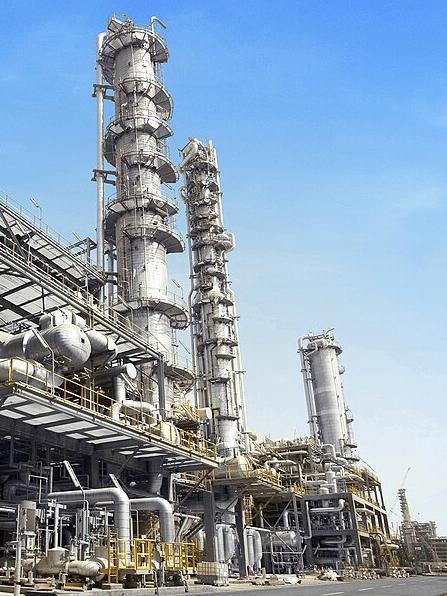
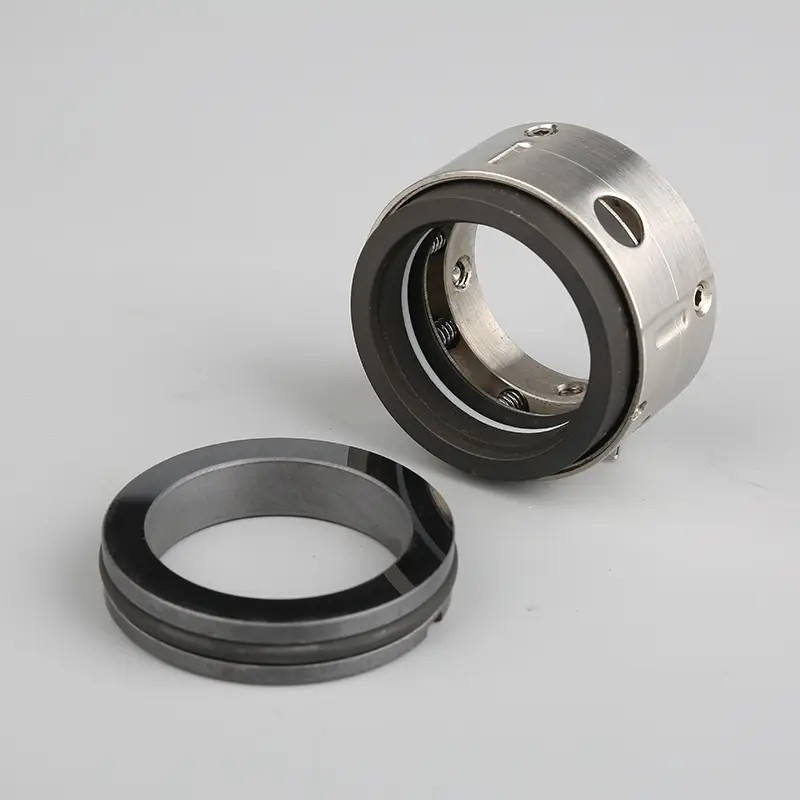
Multi-spring mechanical seals are pusher-style seals that use multiple small coil springs evenly spaced around the shaft to deliver uniform closing force across the seal face. This design delivers more consistent face loading, better tolerance for movement and pressure shifts, and longer service life than single-spring alternatives — making it a critical component for reliable rotating equipment performance.
Key Takeaways
- Multi-spring seals distribute closing force evenly around the seal face, reducing localized wear and extending service life.
- The design handles high pressure, temperature swings, and shaft runout better than single-spring alternatives for reliable continuous duty.
- Material versatility (silicon carbide, tungsten carbide, Hastelloy, etc.) allows tuning for corrosive, abrasive, or high-temperature media.
- Multi-spring seals are preferred for chemical processing, continuous pump duty, and high-pressure lines; single-spring seals work well for light, intermittent service.
- Proper material matching and routine maintenance reduce repair costs and unplanned downtime over the seal’s lifecycle.
What Is a Multi-Spring Mechanical Seal?
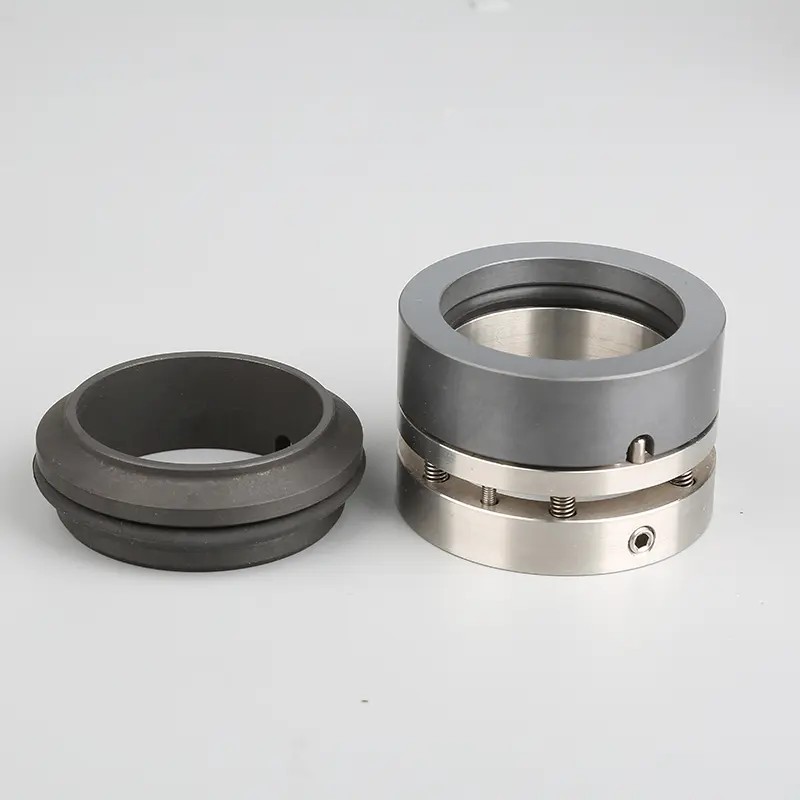
A multi-spring mechanical seal is a pusher-type seal that uses an array of small coil springs evenly distributed around the shaft circumference to press the rotating seal face against the stationary face. Springs can be mounted on either the rotating or stationary component of the assembly.
Core Operating Principle
By spacing springs evenly around the shaft, the design delivers uniform axial force across the entire sealing interface. This even contact improves lubrication between faces, reduces localized wear, and maintains consistent sealing pressure even as system conditions change. The layout also compensates better for shaft runout and thermal distortion than a single large spring, keeping faces aligned and contained under variable operating loads.
Key Components
- Multiple coil springs for face loading
- Primary seal rings (rotating + stationary)
- Secondary elastomer or PTFE seals
- Metal hardware for support and spring force distribution
- Configurable spring preload and geometry to match specific duty requirements
Core Performance Advantages of Multi-Spring Seals
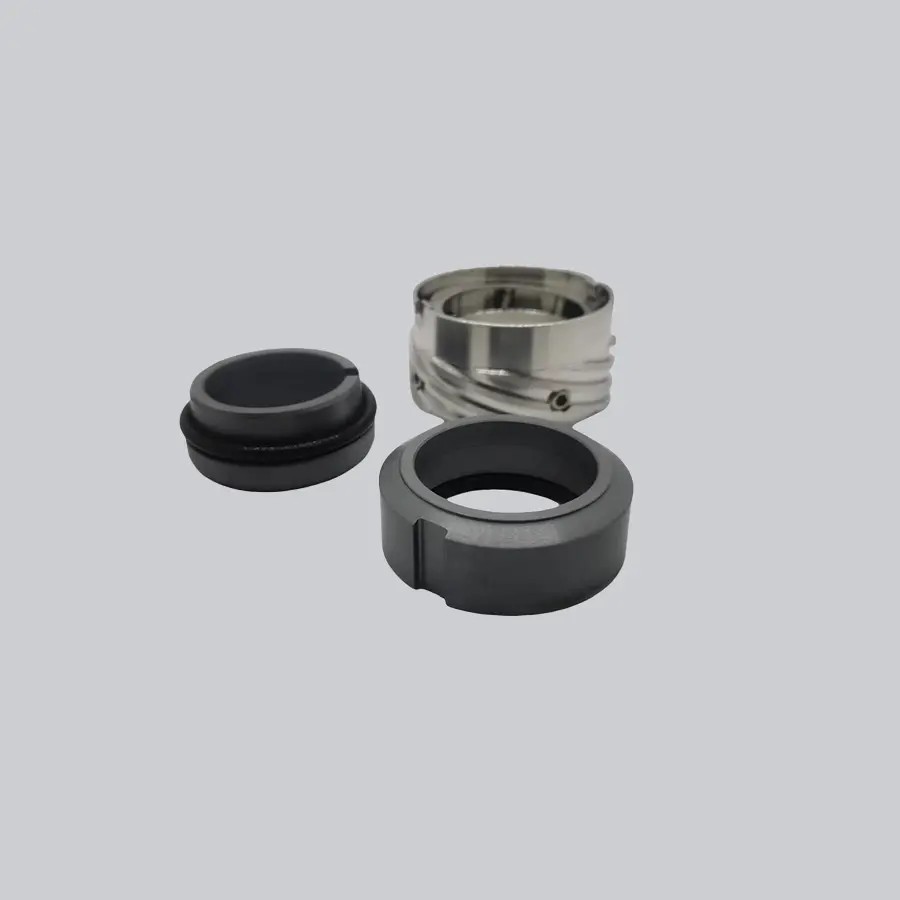
1. Uniform Face Loading & Reduced Wear
Evenly spaced springs apply consistent closing force around the full seal diameter, eliminating the uneven loading common with single-spring designs. This prevents localized hot spots and uneven wear, extends face life, and maintains a stable lubricating film between mating surfaces. For continuous-duty pumps, this translates directly to longer service intervals and fewer leakage events.
2. Better Compensation for Movement & Distortion
The multi-spring layout absorbs shaft runout, vibration, and thermal face distortion far better than single-spring designs. As pressure and temperature shift during operation, the springs maintain even contact instead of tipping or losing force on one side. This compensation is particularly valuable for variable-speed pumps and systems with fluctuating process conditions.
3. Higher Pressure & Temperature Capability
Even face balance gives multi-spring seals higher pressure ratings than equivalent single-spring models. The design remains stable at elevated temperatures, and is the standard choice for high-pressure or high-temperature continuous service where a single spring would become unbalanced and fail prematurely.
4. Material Versatility & Durability
Multi-spring seals support a wide range of material configurations to match application needs:
- Seal faces: Silicon carbide for broad chemical resistance and high-temperature use; tungsten carbide for vibration tolerance and abrasive service.
- Metal components: Stainless steel, Alloy 20, or Hastelloy for corrosion resistance and low thermal expansion.
- Secondary seals: Elastomers or PTFE for aggressive media.
- Hard coatings and surface treatments further improve wear and corrosion resistance.
5. Simplified Field Servicing
The compact rotary assembly can be serviced in place without full pump disassembly. Seal faces and secondary components are quick to replace, cutting downtime and repair costs. Suppliers with ready stock of spare parts reduce production delays even further for marine, chemical, and water treatment operations.
Multi-Spring vs. Single-Spring Seals
| Feature | Multi-Spring Seal | Single-Spring Seal |
|---|---|---|
| Face load distribution | Uniform around the full circumference | Concentrated near the spring coil |
| Pressure rating | Higher, suitable for heavy-duty service | Moderate, for light to medium duty |
| Wear pattern | Even, low localized wear | Prone to uneven wear patterns |
| Shaft runout tolerance | Excellent, absorbs distortion and vibration | Limited, can lose alignment under movement |
| Service life | Longer in continuous operation | Shorter, better for intermittent use |
| Best for | Chemical processing, continuous pumps, high pressure | Light-duty pumps, low pressure, budget-focused installs |
Neither design is universally superior. Multi-spring seals deliver better performance and lower total cost of ownership for round-the-clock operation and harsh conditions. Single-spring seals remain a cost-effective choice for simple, intermittent duty and space-constrained installations.
Common Industrial Applications of Multi Spring Seals
Multi-spring seals are used across all sectors of rotating equipment, with particularly high demand in:
| Industry | Typical Applications |
|---|---|
| Water & wastewater | Desalination booster pumps, RO high-pressure pumps, sewage lift stations |
| Oil & gas | Crude transfer pumps, offshore platform process pumps, pipeline services |
| Chemical processing | Reactor feed pumps, acid/caustic circulation, corrosive fluid handling |
| Marine & shipbuilding | Firefighting pumps, seawater cooling pumps, ballast and bilge systems |
| Food & pharmaceutical | Homogenizers, sterile water injection, high-pressure CIP systems |
| General industrial | Boiler feed pumps, refrigeration compressors, textile machinery |
The chemical and petrochemical sector is the largest end user, driven by demand for leak-tight sealing in corrosive, high-temperature environments. Water treatment demand is also growing with infrastructure upgrades and stricter environmental regulations.
FAQ
Why use multiple small springs instead of one large spring?
Multiple small springs distribute closing force evenly around the full shaft circumference, reducing localized wear and maintaining consistent face lubrication. The design also compensates better for shaft runout and thermal distortion, keeping seal contact steady under variable conditions.
Can multi-spring seals handle higher pressure than single-spring seals?
Yes. Even spring loading creates better face balance, giving multi-spring designs higher pressure capability and more stable performance under fluctuating pressure. Single-spring seals remain a valid choice for lower-pressure, lighter-duty service.
Can multi-spring seals be serviced in the field?
Yes. The compact rotary assembly allows quick on-site servicing without full pump disassembly. Seal faces and secondary components can be replaced directly in place, reducing downtime and labor costs. Keeping common spare parts in stock shortens interruptions further.
What materials work for corrosive or high-temperature service?
Silicon carbide and tungsten carbide are standard for wear and thermal cycling resistance. PTFE secondary seals handle aggressive chemical media. For metal hardware, stainless steel, Alloy 20, and Hastelloy are specified based on corrosion requirements.
When should you choose a multi-spring seal over a single-spring design?
Choose multi-spring for continuous-duty pumps, chemical processing, high-pressure lines, and marine/water treatment service. Single-spring seals work well for simpler, intermittent, or space-constrained installations. Always match the seal design to actual duty cycle and operating conditions.