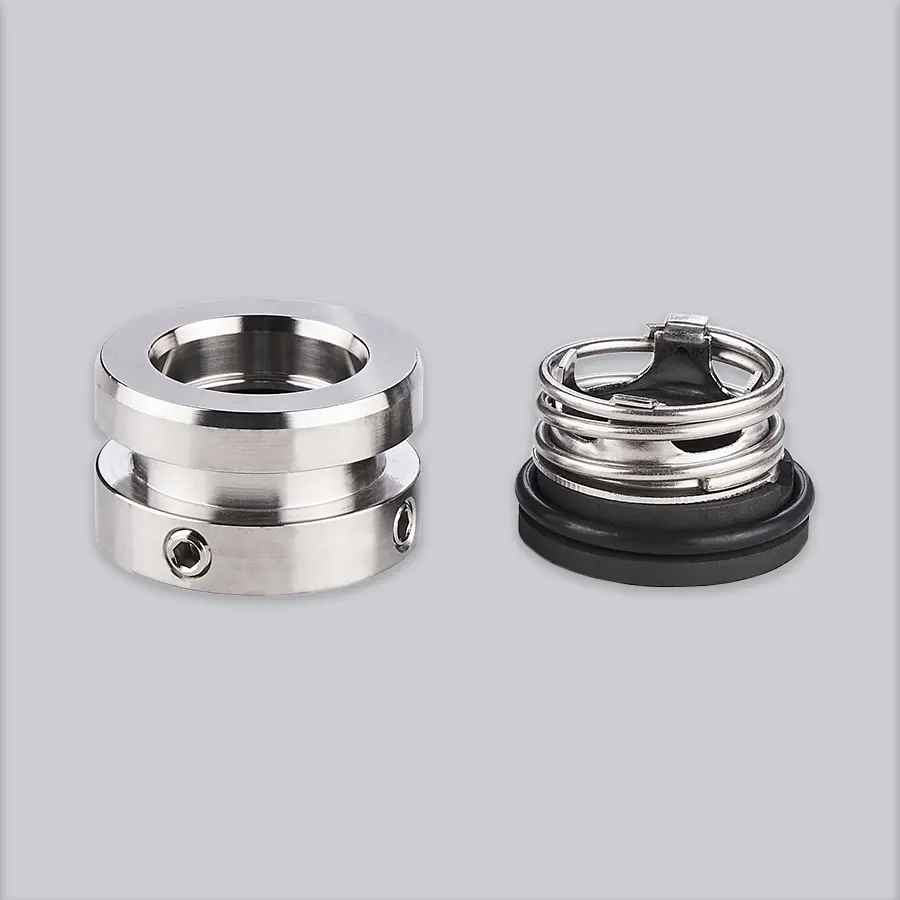
Buyers often confuse OEM and original mechanical seals, but the two terms describe distinct supply channels with meaningful differences in cost, lead time, traceability, and warranty coverage. Choosing the wrong seal can lead to costly unplanned downtime or regulatory non-compliance.
This guide breaks down the core differences, compatibility rules, and tradeoffs to help you select the right seal for your pump application.
Key Takeaways
- OEM and original mechanical seals differ mainly in manufacturer and supply chain, not necessarily in performance.
- OEM seals can be compatible replacements when their dimensions, materials, and operating requirements match the original seal.
- Seal face materials matter because different materials offer different levels of wear, chemical, thermal, and impact resistance.
- OEM and original seals can differ in cost, lead time, documentation, and warranty, so buyers should compare these factors before purchasing.
- The right seal depends on the pump, application, operating conditions, and documentation requirements, especially for critical or regulated equipment.
What Is the Core Difference Between OEM and Original Mechanical Seals?
The defining distinction is supply chain and manufacturer, not necessarily absolute performance.
OEM Mechanical Seals
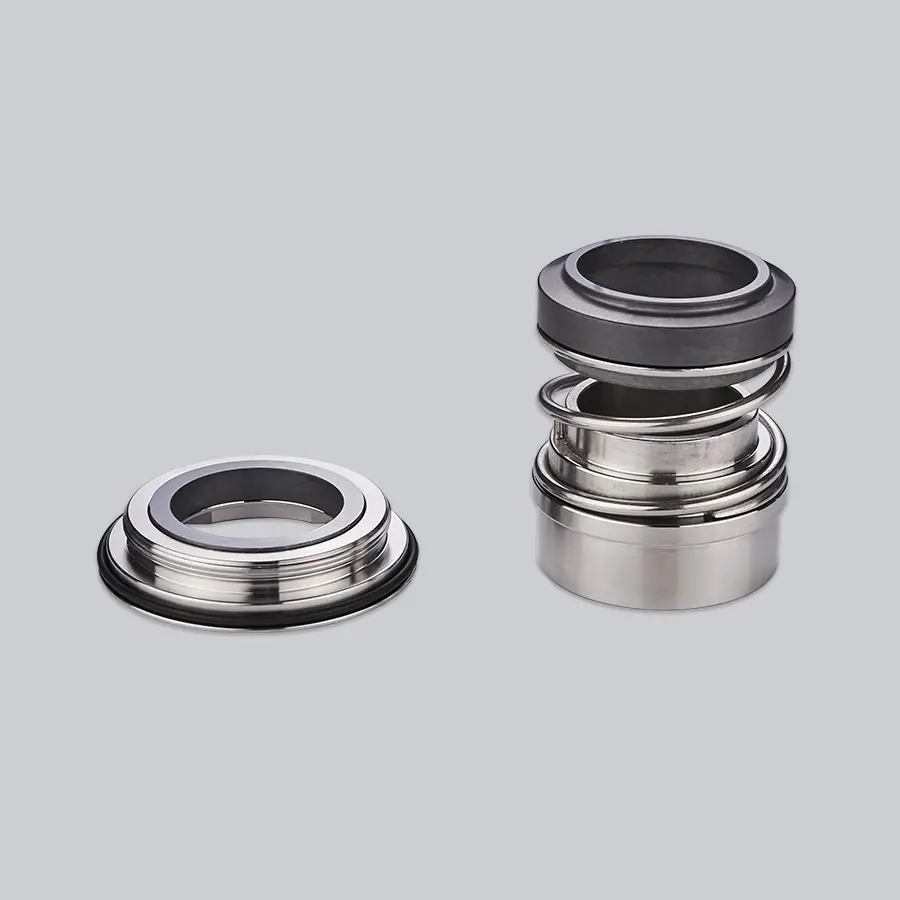
An OEM mechanical seal is manufactured by an independent third-party company, engineered to match the dimensional and performance specifications of the original pump. Brands like Veekter produce these as drop-in replacement parts.
- Built to match shaft size, bore size, and operating parameters of the original equipment
- Supply chain is separate from the pump manufacturer’s official channel
- Quality varies by maker; always verify tolerances, material grades, and production quality before purchase
Original Mechanical Seals
An original mechanical seal is sourced directly from the pump brand’s own supply chain or an authorized distributor.
- Includes official part numbers, full batch traceability, and material certification documentation
- Backed by the pump manufacturer’s warranty and quality assurance
- May have limited customization options; parts for older equipment can become obsolete or hard to source
A high-quality OEM replacement can match original performance when engineered correctly. The original channel delivers guaranteed fit and full documentation for regulated environments.
Are OEM Seals Compatible With Original Units?
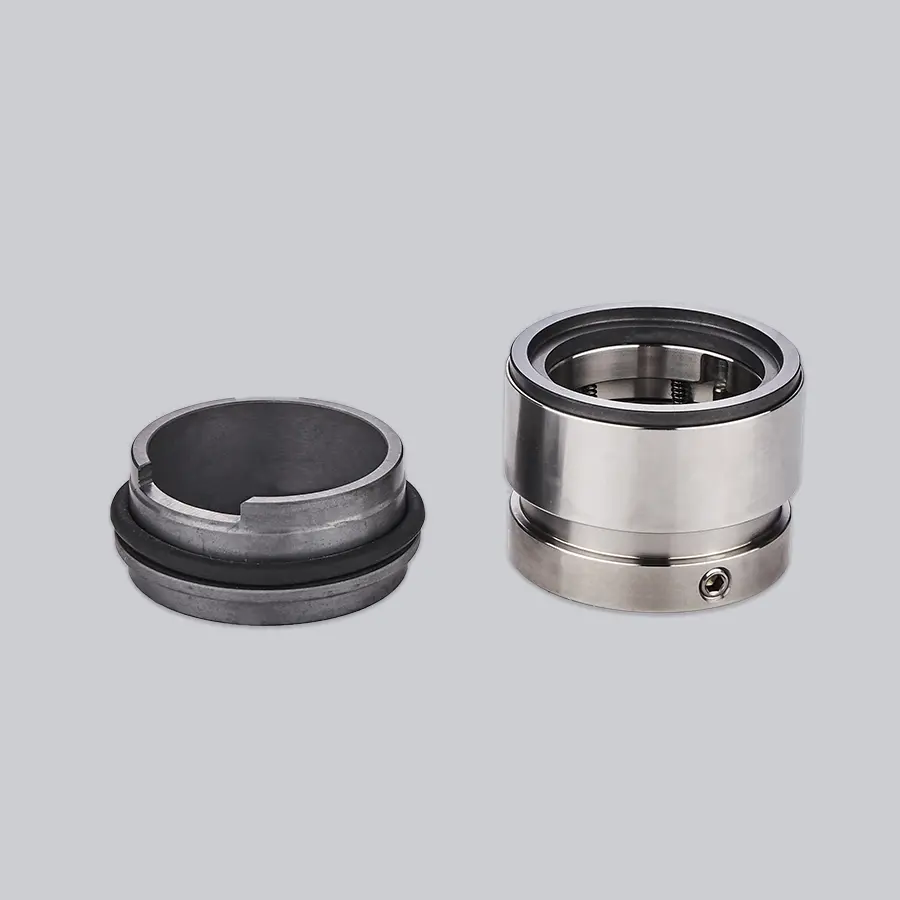
Yes, OEM seals can work as direct drop-in replacements — but only when engineered to match exact dimensions, materials, and performance requirements.
Dimensional & Material Compatibility
Exact dimensional matching is the first requirement for proper fit and leak-free operation. Standards including DIN 24960 and API 610 define tolerance ranges, and precision CNC machining ensures third-party seals meet these specs.
Seal face material is the primary driver of performance and suitability:
- Silicon carbide (SiC): Mohs hardness 9.5; excellent wear resistance, high thermal conductivity (320–348 W/m·K), strong chemical resistance. Best for corrosive and high-temperature service.
- Tungsten carbide (WC): Mohs hardness 8.5–9; superior toughness and impact resistance, lower thermal conductivity (85–100 W/m·K). Best for abrasive and high-pressure applications.
Performance & Testing Validation
Reputable OEM suppliers validate seals through pressure testing and thermal cycling to prove face integrity and material stability. For complex configurations like dual mechanical seals, testing verifies precise alignment and balanced force distribution to prevent leakage.
Testing should replicate real field conditions across speeds and temperatures. Always request test reports and compliance documentation when evaluating OEM seals, especially for critical service.
OEM vs. Original Mechanical Seals: Side-by-Side Comparison
| Factor | Original Mechanical Seals | OEM Mechanical Seals |
|---|---|---|
| Upfront cost | Premium pricing | 30–50% lower than original |
| Typical MTBF | 36–60+ months | 12–24 months |
| Standard lead time | 4–12 weeks | 1–3 weeks (stocked items) |
| Traceability & documentation | Full batch traceability, API/ISO compliance records | Varies by maker; top suppliers provide material certificates and test reports |
| Warranty | Backed by pump manufacturer | Backed by the seal manufacturer |
| Best for | Critical, regulated, hazardous service; long-term asset planning | Standard industrial applications; urgent replacements to minimize downtime |
How to Choose the Right Seal
Selection Guidelines
- Choose original seals for high-pressure, toxic, or highly regulated applications where traceability and warranty are non-negotiable.
- Choose certified OEM seals for standard service, water pumps, and general industrial use to reduce cost and cut lead times, as long as the supplier provides test data and material documentation.
- For older or obsolete equipment, OEM suppliers are often the only viable source of replacement seals.
Pre-Purchase Checklist
- Confirm dimensional match to your pump model (shaft size, bore size, overall height)
- Verify seal face material matches your application (corrosive, abrasive, high-temperature)
- Request pressure test and thermal cycling performance reports
- Confirm available certifications and compliance documentation
- Clarify warranty terms and after-sales technical support
FAQ
Can OEM Mechanical Seals Be Used for Older Pumps?
Yes, provided the replacement seal can be matched to the pump’s original specifications. For older pumps, confirm the original seal dimensions, mounting configuration, operating conditions, and material requirements before ordering.
Are OEM Mechanical Seals Covered by the Original Pump Warranty?
Not necessarily. Warranty coverage depends on the pump manufacturer, seal supplier, purchase channel, and applicable warranty terms. Using an OEM replacement does not automatically provide the same warranty coverage as purchasing through the original pump manufacturer’s channel.
Can OEM Mechanical Seals Be Customized?
Yes. Depending on the supplier, OEM mechanical seals may be customized for specific shaft dimensions, seal materials, operating conditions, or equipment configurations. Customization should be based on the pump and application requirements rather than dimensions alone.
Do OEM Mechanical Seals Require Special Installation?
OEM replacement seals generally follow the installation requirements of the corresponding pump and seal design. Proper handling, alignment, installation procedures, and equipment condition still matter regardless of whether the seal is OEM or original.
Can OEM Mechanical Seals Be Used in Food, Pharmaceutical, or Chemical Applications?
They can be used when the seal materials, design, manufacturing controls, and required certifications meet the requirements of the specific application. Buyers should verify applicable material certificates and compliance documentation before use in regulated service.