Mechanical seals prevent fluid leakage in rotating equipment such as pumps, mixers, and compressors. Two common designs are metal bellows mechanical seals and ordinary spring-actuated mechanical seals.
Both provide reliable shaft sealing, but their structures and operating characteristics are different. Ordinary mechanical seals use springs and a secondary sealing element, while metal bellows seals use a flexible metal bellows to provide the required sealing force. These differences affect temperature capability, shaft wear, sealing stability, and application suitability.
Key Takeaways
- Metal bellows mechanical seals use a flexible metal bellows instead of a sliding dynamic O-ring and conventional spring arrangement.
- Metal bellows designs are well suited to high-temperature, cryogenic, and thermal-cycling conditions.
- The bellows structure reduces the risk of shaft wear and seal hang-up caused by sliding secondary seals.
- Conventional mechanical seals remain a practical choice for many standard-duty pumps and mixers under moderate operating conditions.
- The right seal depends on the fluid, temperature, pressure, equipment, leakage requirements, and operating conditions.
Metal Bellows vs. Ordinary Mechanical Seals: Key Differences
Structure and Sealing Design
Ordinary mechanical seals use coil springs or multiple springs to maintain contact between the rotating and stationary seal faces. They normally rely on an O-ring or other elastomeric element as the secondary seal.
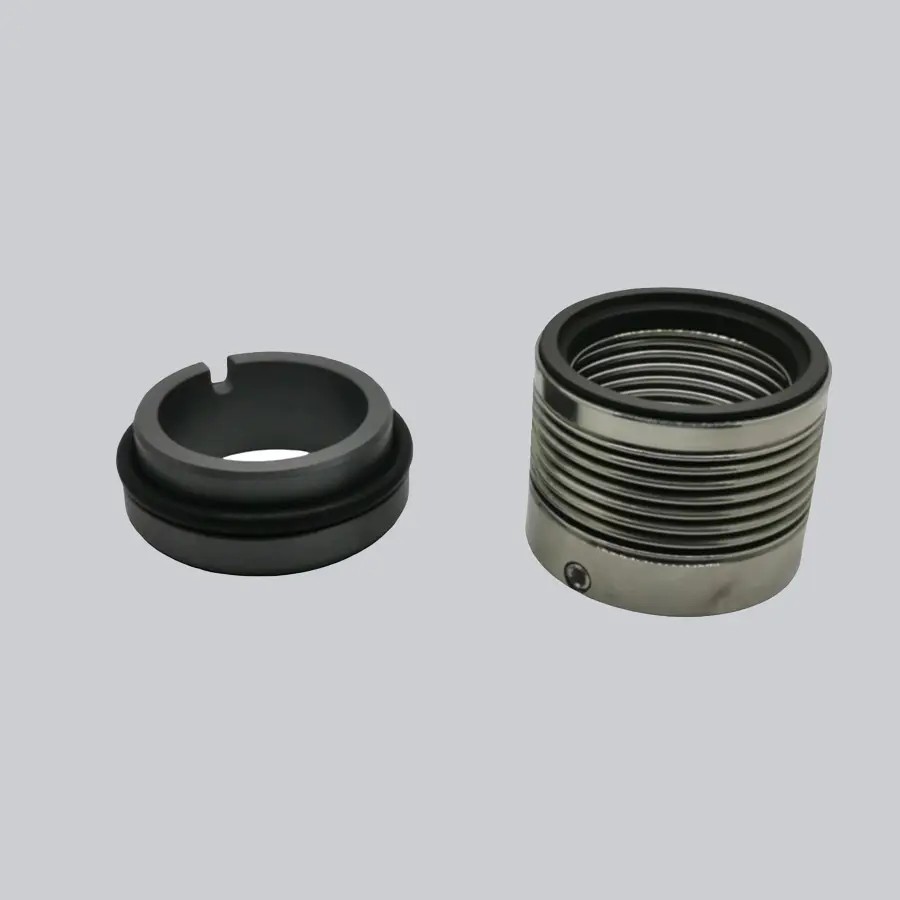
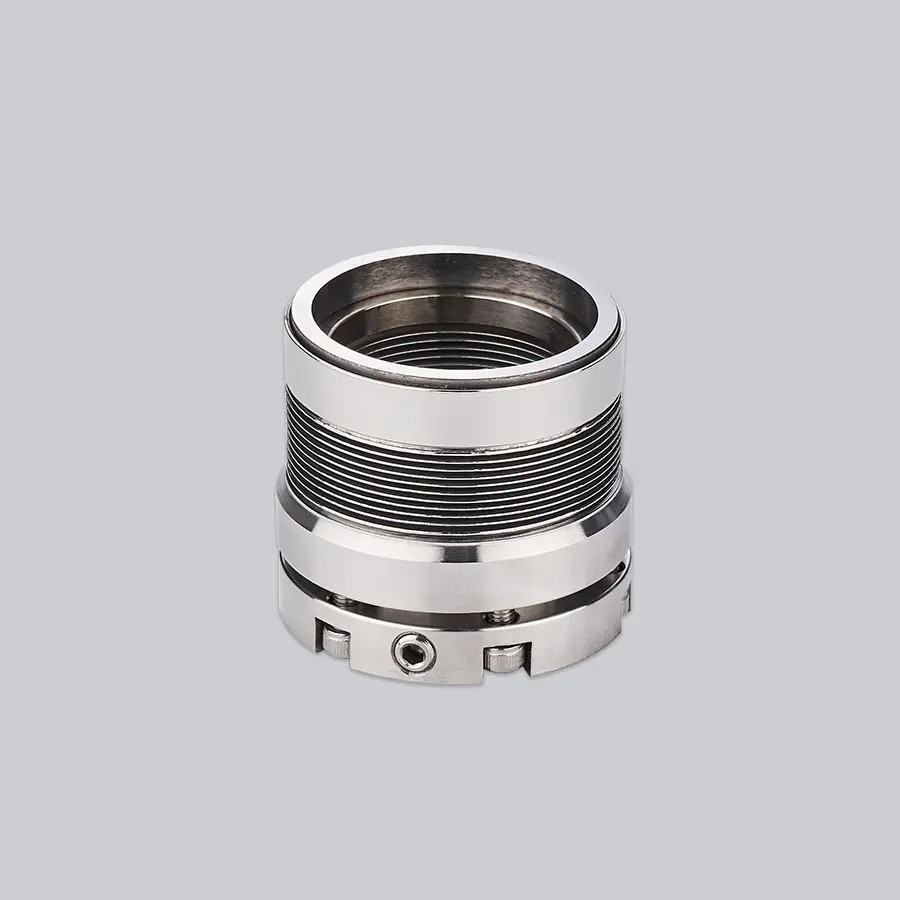
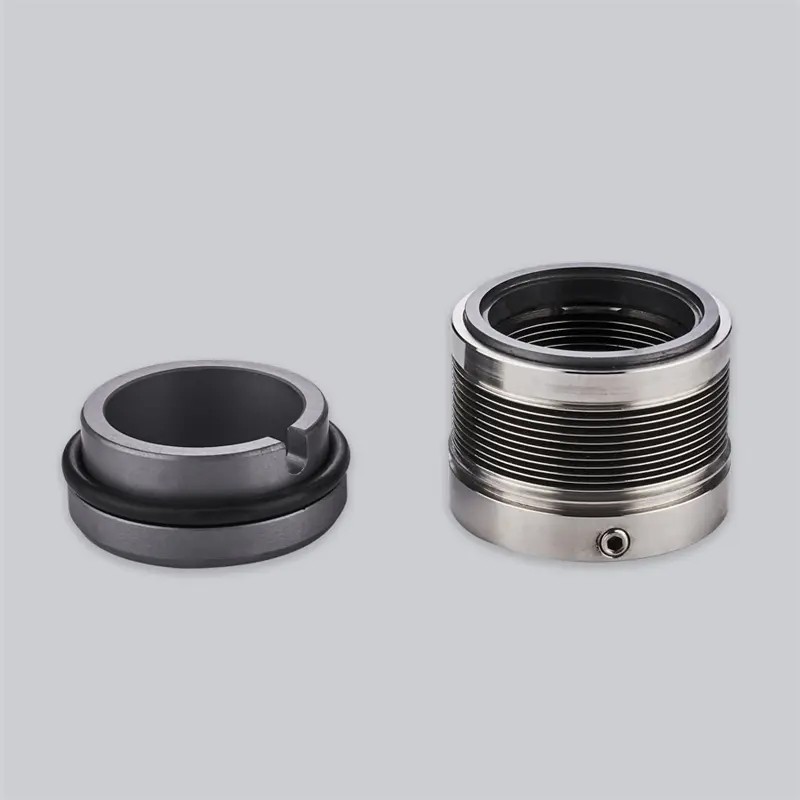
Metal bellows mechanical seals replace the conventional spring and sliding secondary seal with a flexible metal bellows. The bellows provides axial loading while accommodating shaft movement through its own deformation.
The main structural difference is therefore the dynamic sliding secondary seal used in ordinary mechanical seals and the flexing metal bellows used in bellows designs.
Temperature Range
Ordinary mechanical seals are often limited by the temperature resistance of their elastomeric components. High temperatures can cause elastomers to harden, soften, or lose sealing performance.
Metal bellows seals can use metal bellows materials and high-temperature sealing materials that are better suited to demanding thermal conditions. They are therefore commonly selected for high-temperature, cryogenic, and thermal-cycling applications.
The actual temperature limit depends on the complete seal design and material combination.
Shaft Wear and Seal Hang-Up
The sliding secondary seal in an ordinary mechanical seal can move against the shaft or shaft sleeve during operation. Repeated movement may contribute to shaft wear or fretting.
Deposits, crystals, and solids can also interfere with this movement and cause the seal to hang up.
Metal bellows seals accommodate movement by flexing rather than sliding along the shaft. This reduces the risk of shaft wear and hang-up associated with the secondary sealing element.
Face Loading and Sealing Stability
Ordinary mechanical seals generate face loading through individual springs, while metal bellows seals use the continuous bellows structure to provide the closing force.
A bellows design can maintain consistent face loading while accommodating axial movement. However, shaft alignment, vibration, seal-face materials, pressure, and operating conditions still affect overall sealing performance.
Applications of Metal Bellows Mechanical Seals
High-Temperature or Cryogenic Applications
Metal bellows seals are a strong choice when conventional elastomer-based seals approach their temperature limits.
Common applications include:
- Hot oil and heat-transfer systems
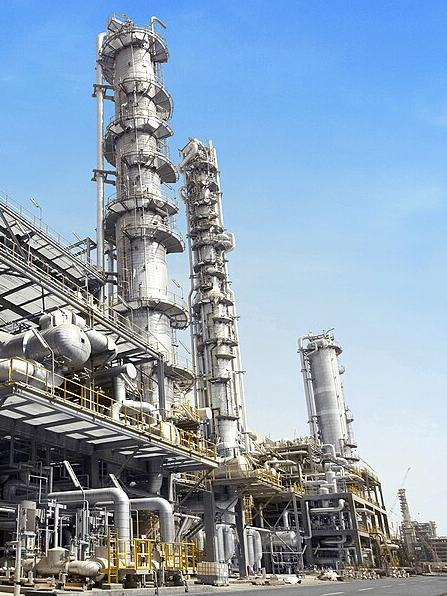
- Chemical and refinery process pumps
- High-temperature equipment
- Cryogenic pumps
- LNG and liquid nitrogen systems
Fouling or Crystallizing Fluids
Metal bellows seals are also well suited to fluids that contain solids or tend to crystallize, polymerize, or form deposits.
Applications include pulp and paper, chemical processing, mining, food processing, and slurry handling. The bellows design avoids the sliding secondary seal that can become restricted by deposits.
How to Choose the Right Mechanical Seal
Consulting a mechanical seal manufacturer such as VEEKTER can help you select the right seal design and materials for your operating conditions.
Consider the Fluid and Media
For clean and relatively mild fluids, ordinary mechanical seals are often a practical option. They are widely available and suitable for many general-purpose pumps and mixers.
For corrosive, abrasive, crystallizing, or fouling fluids, metal bellows seals may provide better long-term reliability.
Always check the chemical compatibility of the bellows, seal faces, secondary seals, and other wetted components.
Check Temperature and Pressure
Compare the actual operating temperature and pressure with the manufacturer’s rated limits.
Moderate and stable conditions can generally be handled by conventional spring seals when suitable materials are selected. Extreme temperatures, thermal cycling, or more demanding process conditions may favor metal bellows designs.
Match the Seal to the Equipment
Consider equipment criticality, maintenance requirements, downtime costs, and leakage risk.
Ordinary mechanical seals are suitable for many standard-duty pumps and mixers. Metal bellows seals are better suited to critical equipment and demanding process conditions where shaft wear, seal hang-up, temperature, or leakage control are major concerns.
FAQ
Are metal bellows mechanical seals better than ordinary mechanical seals?
Not in every application. Metal bellows seals offer advantages in demanding thermal and fouling conditions, while ordinary mechanical seals can be more economical and practical for standard operating conditions.
Do metal bellows seals have O-rings?
Some metal bellows seal designs may still use static O-rings or other secondary sealing elements, but they do not rely on a dynamically sliding O-ring in the same way as conventional pusher seals.
Can metal bellows seals handle abrasive fluids?
They can be used with certain abrasive or solids-containing fluids, but suitability depends on the seal-face materials, bellows design, solids concentration, and operating conditions. A metal bellows design alone does not guarantee suitability for abrasive service.
What materials are used for metal bellows seals?
Common bellows materials include stainless steel and nickel-based alloys, with the specific material selected according to temperature, corrosion resistance, pressure, and the pumped medium.
Do metal bellows mechanical seals require maintenance?
Like other mechanical seals, they require proper installation and operating conditions. Although the bellows eliminates some sliding components, seal faces and other components can still wear and eventually require inspection or replacement.