
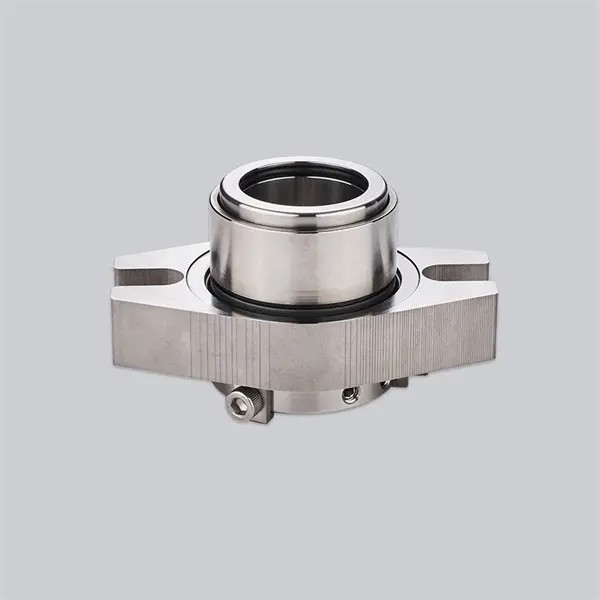
A cartridge mechanical seal is a fully pre-assembled, self-contained sealing unit designed for rotating equipment such as centrifugal pumps. Unlike individual component seals that require full on-site assembly and adjustment, a cartridge seal integrates all sealing components onto a dedicated sleeve and gland plate, with factory-calibrated spring compression and face alignment. This design eliminates most installation-related errors and has become the preferred sealing solution for most industrial pumping applications. Victor, a professional mechanical seal manufacturer with 27 years of industry experience, offers a full range of cartridge seals interchangeable with leading global brand standards, at a more competitive price point.
Key Takeaways
- Cartridge mechanical seals arrive fully pre-assembled and factory-calibrated, eliminating complex on-site setup and reducing human error during installation.
- They deliver more consistent sealing performance and longer mean time between failures compared to component seals, greatly reducing unplanned equipment downtime.
- The design lowers total lifecycle costs by simplifying maintenance, reducing early seal failure risks, and cutting labor time for installation and replacement.
- Cartridge seals are available in balanced/unbalanced and pusher/non-pusher structural configurations to suit a wide range of pressure, temperature and fluid conditions.
- Victor cartridge seals are directly interchangeable with major international brand models, require no pump modifications, and deliver reliable performance across marine, chemical, water and mining industries.
What Is a Cartridge Mechanical Seal?
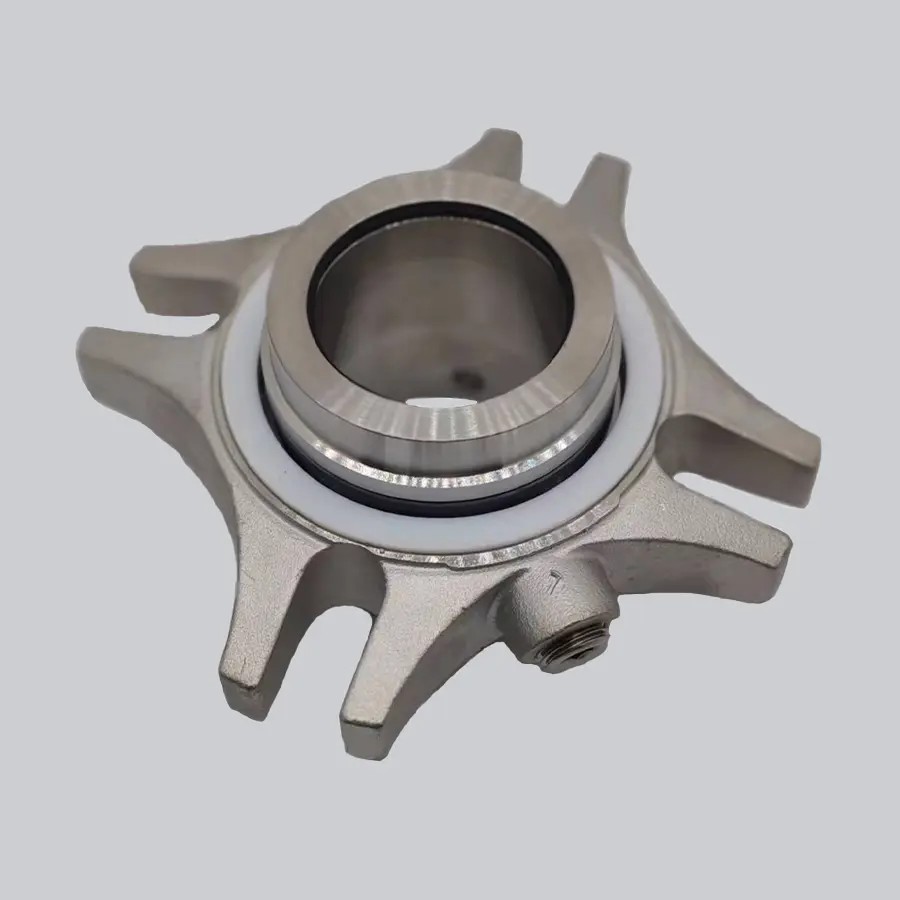
Definition of cylindrical mechanical seal
Mechanical seals are categorized by two separate frameworks: by operating principle (pusher/non-pusher, balanced/unbalanced) and by assembly format (component seals and cartridge seals). A cartridge seal is not an independent structural type — it is a standardized packaging and installation format that can incorporate any of the above structural designs.
A standard cartridge seal comes as one complete drop-in unit. All internal components are pre-aligned, and the spring compression is set and verified at the factory. Field technicians only need to slide the unit onto the pump shaft and bolt the gland plate to the pump housing, with no manual adjustment required.
This design follows universal industry standards including EN 12756, ISO 3069 and DIN 24960. High-end petrochemical-grade cartridge seals are additionally engineered to meet API 610 and API 682 performance requirements.
Key Components of a Cartridge Seal
Every cartridge seal includes a full set of matched sealing components integrated into a single assembly:
- Primary seal faces: One rotating face and one stationary face that form the core sealing interface. Common materials include silicon carbide and tungsten carbide for wear resistance and chemical compatibility.
- Spring loading mechanism: Provides uniform closing force to maintain proper face contact during startup, shutdown and process pressure fluctuations.
- Secondary seals: Typically O-rings or gaskets made from elastomers such as Viton®, EPDM or PTFE, providing static sealing between components and accommodating thermal expansion.
- Mounting sleeve: Supports the rotating seal assembly, transmits rotational torque, and protects the pump shaft surface from scoring and wear.
- Gland plate: The stationary mounting flange that attaches the seal to the pump casing, often with ports for flushing, quenching or barrier fluid systems.
Advantages of Cartridge Mechanical Seals
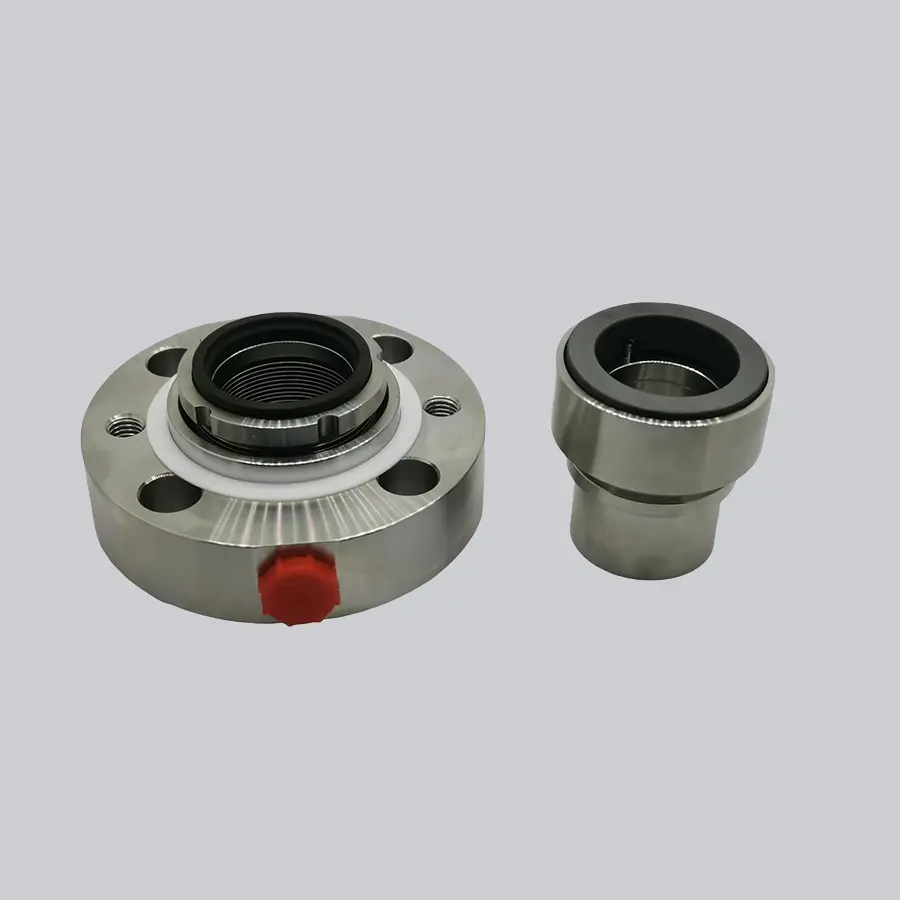
Simplified Installation & Reduced Human Error
The most impactful advantage is the elimination of on-site assembly and manual calibration. With factory-preset spring compression and face alignment, technicians do not need advanced specialized training to install the seal correctly. This drastically cuts installation time, reduces pump downtime, and eliminates the single most common cause of early seal failure: improper assembly and misalignment.
Improved Reliability & Consistent Performance
All components are aligned and quality tested under controlled factory conditions, so cartridge seals deliver predictable, uniform sealing performance across every installed unit. The integrated sleeve design also protects the pump shaft from wear, extending the service life of both the seal and the pump itself.
Lower Total Lifecycle Cost
While cartridge seals have a higher upfront purchase cost than basic component seals, they deliver net savings over the full service cycle. Reduced installation labor, fewer unplanned shutdowns, longer seal service life and lower maintenance labor all contribute to a lower total cost of ownership.
Enhanced Safety & Environmental Compliance
Precision factory assembly results in more stable leakage control, helping facilities meet strict emissions and workplace safety regulations. Reduced risk of process fluid leaks also protects on-site personnel and minimizes environmental contamination risks.
Cartridge Seal vs Component Seal
Component seals are supplied as individual loose parts that must be assembled, positioned and adjusted directly on the pump shaft. They remain a cost-effective option for small, non-critical pumps or highly custom applications. The table below summarizes the core differences:
| Feature | Cartridge Seals | Component Seals |
|---|---|---|
| Assembly Format | Fully pre-assembled single drop-in unit | Separate loose parts for on-site assembly |
| Installation Requirement | Direct mounting; no manual compression adjustment | Full manual assembly, alignment and spring setting required |
| Skill Dependence | Low; minimal training needed for correct installation | High; relies heavily on technician expertise |
| Early Failure Risk | Low; factory calibration eliminates most installation errors | Higher; misalignment and improper setup are common failure causes |
| Upfront Cost | Higher initial unit cost | Lower initial purchase cost |
| Long-Term Cost | Lower total cost from reduced downtime and longer service life | Higher long-term cost from more frequent failures and maintenance |
| Best For | Standard industrial pumps, critical process equipment, high-reliability requirements | Small non-critical pumps, highly custom sizes, tight upfront budgets |
Common Applications of Cartridge Mechanical Seals

Typical Equipment
Cartridge mechanical seals are widely used across all types of rotating fluid-handling equipment, most commonly:
- Centrifugal pumps
- Rotary positive displacement pumps
- Industrial mixers and agitators
- Low-speed compressors and blowers
Industry Use Cases
The versatility and reliability of cartridge seals make them suitable for nearly all industrial fluid handling sectors:
- Water & wastewater: Clean water transfer, filtration systems and sludge handling
- Marine & shipbuilding: Seawater pumps, bilge pumps and auxiliary system pumps
- Chemical processing: Corrosive fluid transfer, solvent handling and process pumps
- Mining & mineral processing: Slurry pumps and abrasive fluid applications
- Power generation: Boiler feed pumps, cooling water systems and condensate pumps
- Oil, gas & petrochemical: Refinery process pumps and high-pressure fluid services
- Pulp & paper: Stock pumps, chemical dosing pumps and coating process pumps
Conclusion
A cartridge mechanical seal is a pre-assembled, ready-to-install sealing unit that prioritizes installation simplicity, operational reliability and long-term cost efficiency. It has become the standard sealing solution for most industrial centrifugal pumps, replacing component seals in all but the most specialized or budget-constrained applications.
For facilities seeking reliable, cost-competitive cartridge sealing solutions, Victor Mechanical Seals provides industry-standard interchangeable seals backed by 27 years of manufacturing expertise. With broad material compatibility, proven performance across harsh industrial environments and direct interchangeability with leading global brands, Victor cartridge seals deliver high-value sealing performance for marine, chemical, water, mining and power generation applications.
FAQ
What is the main benefit of a cartridge mechanical seal?
The primary benefit is elimination of installation-related errors. Factory pre-assembly and calibration ensure correct spring compression and alignment every time, which is the single largest factor in preventing early seal failure and reducing unplanned pump downtime.
Can cartridge seals fit different pump brands?
Yes. Standard cartridge seals follow universal industry dimensional standards. Victor cartridge seals are designed to be fully interchangeable with seals from major global manufacturers, and fit directly onto most mainstream pump brands with no modification to the pump housing or shaft.
How long does a cartridge mechanical seal last?
Service life depends heavily on operating conditions including fluid type, pressure, temperature and solid particle content. When properly selected and installed, cartridge seals typically deliver longer and more consistent service life than component seals, as they avoid the assembly errors that often cause premature component seal failure.
Are cartridge seals safe for handling corrosive chemicals?
Yes, when configured with compatible face materials and elastomers. For corrosive applications, cartridge seals can be specified with silicon carbide faces, PTFE secondary seals and corrosion-resistant metallurgy to handle aggressive fluids safely. Victor offers a full range of chemically resistant cartridge seal configurations for the chemical and petrochemical industries.
Do cartridge mechanical seals reduce maintenance costs?
Yes. While the upfront unit cost is higher, cartridge seals reduce maintenance labor for installation and replacement, cut the frequency of unplanned seal failures, and extend pump shaft life. Over the full service life, they almost always deliver lower total maintenance and operating costs.