Mechanical seals carry a sticker price 3–10 times higher than traditional gland packing for equivalent pump sizes, and the premium stems from three core drivers: premium wear-resistant materials, ultra-precision lapped manufacturing, and complex multi-component sealing design. While gland packing looks far cheaper at first glance, industry lifecycle analysis shows it often costs more over 5–10 years of continuous operation due to constant maintenance, excessive energy waste, shaft wear, and product leakage. This guide breaks down the cost drivers for both technologies, compares real-world performance data, and explains why mechanical seals frequently deliver lower total cost of ownership (TCO) for industrial pumps.
Key Takeaways
- Mechanical seals cost more upfront due to hard-face materials (silicon carbide, tungsten carbide) and tight dimensional tolerances that require specialized manufacturing.
- Gland packing has low initial cost but incurs 6–12 month replacement cycles, weekly adjustments, and higher energy use that drive up long-term expenses.
- Mechanical seals reduce leakage by ~90% (≤0.001 gal/hr vs. 0.01–0.1 gal/hr for packing) and require 80% less routine maintenance.
- Packing friction consumes roughly 10% of a pump motor’s power; mechanical seals cut that friction load by ~70–90%, delivering thousands in annual energy savings per pump.
- For continuous-duty industrial pumps, mechanical seals typically deliver a lower 5-year TCO despite the higher purchase price, with payback periods as short as 6–12 months.
Why Mechanical Seals Cost More Upfront
Premium Wear-Resistant Materials
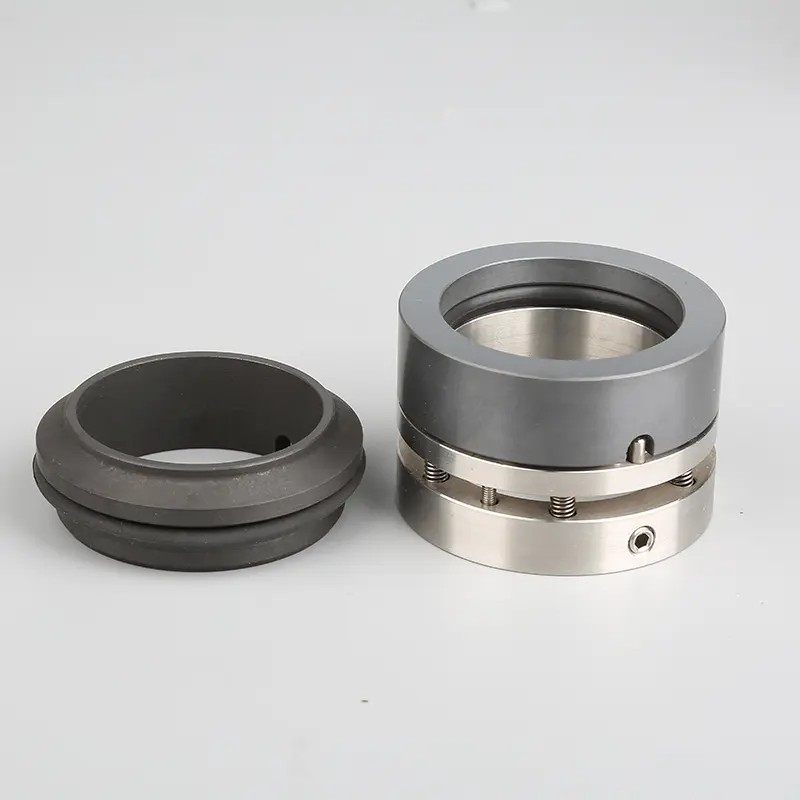
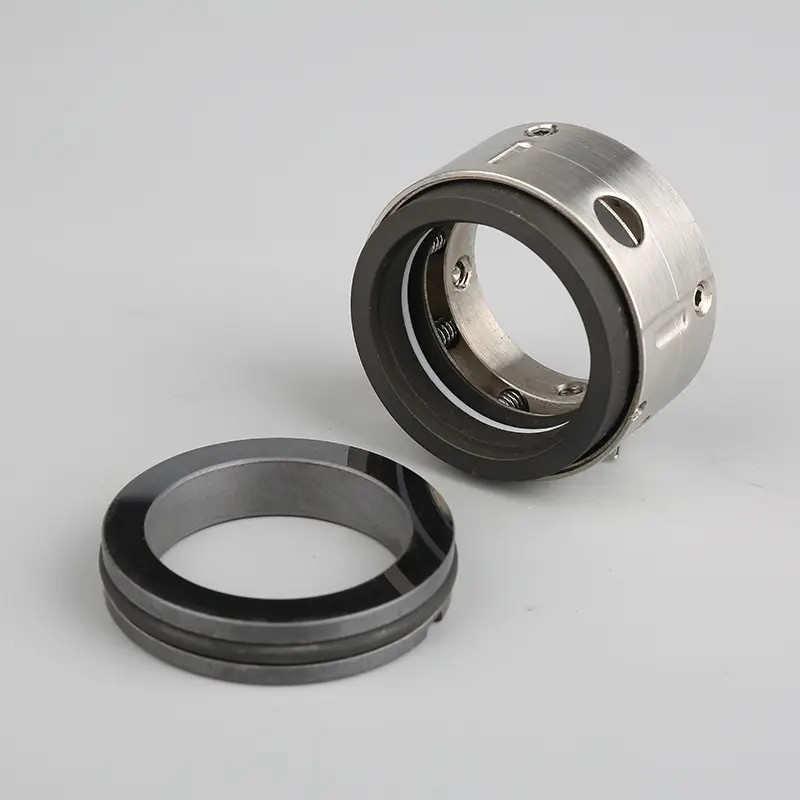
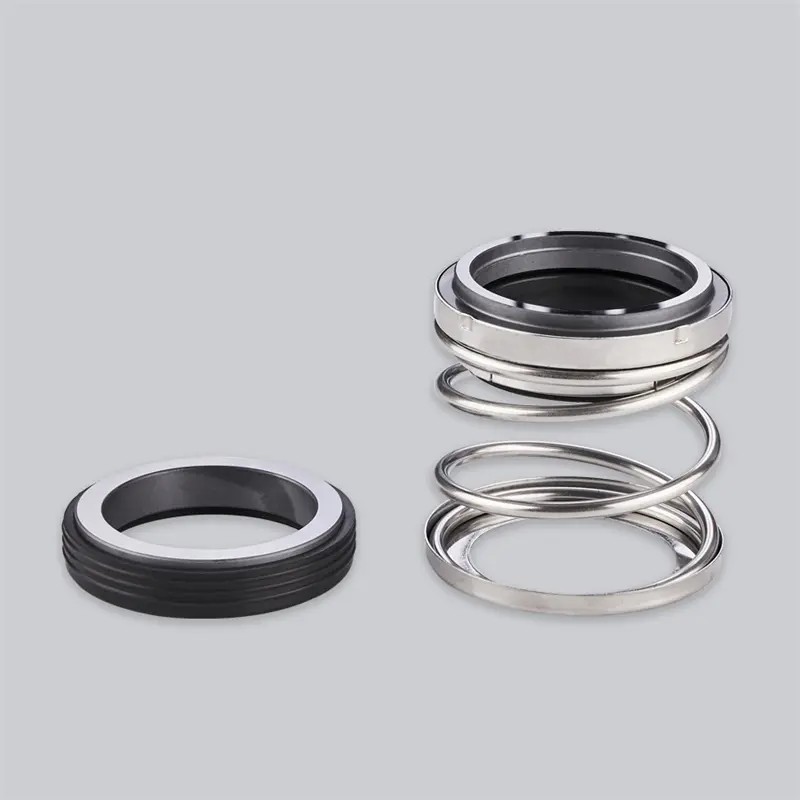
A mechanical seal is a precision assembly of multiple matched components: a rotating seal face, stationary face, precision spring pack, secondary sealing elements, and often a self-contained cartridge housing. Each part adds material and engineering cost that simple braided packing does not require.
The sealing faces themselves demand extremely hard, abrasion-resistant materials to maintain a leak-tight barrier while sliding against each other at high speed. Silicon carbide and tungsten carbide are the industry standard hard-face materials, both far more expensive than the graphite, PTFE, or aramid fiber used in gland packing.
| Seal Face Material | Hardness & Abrasion Resistance | Chemical Resistance |
|---|---|---|
| Silicon carbide | High hardness, excellent abrasion resistance (most widely used hard face) | Broad chemical compatibility; direct-sintered grade resists most process fluids |
| Tungsten carbide | High mechanical strength, better vibration tolerance than silicon carbide | Chemical resistance varies by binder; nickel binder offers broader compatibility |
Carbon graphite is also used for lower-friction, self-lubricating faces in less demanding services, with formulations matched to specific process chemistries.
Precision Manufacturing & Tight Tolerances
Mechanical seals require extremely tight dimensional control to function reliably. Sealing faces must be lapped to an optically flat, mirror-smooth finish, and their squareness relative to the shaft axis must meet micron-level specifications. Achieving this precision requires specialized grinding and lapping equipment, slower production cycles, and rigorous 100% quality inspection — all of which drive up manufacturing cost.
Gland packing operates on a completely different principle: braided fiber material is compressed against the shaft by a simple gland follower. This design is simple to manufacture with far looser tolerances, resulting in much lower production costs.
Mechanical seal installation also often requires shaft reconditioning or sleeve replacement to ensure a perfectly mating surface, adding to the initial project cost.
Performance Differences Between Mechanical Seals and Gland Packing
Leakage Control & Maintenance Labor
The biggest operational difference lies in leakage behavior and required upkeep. Gland packing is designed to drip visibly — roughly 1 drop per minute per inch of shaft diameter — because the drip lubricates and cools the packing material. Zero leakage would cause the packing to burn and score the shaft. Mechanical seals, by contrast, are engineered to minimize leakage to near-zero levels.
| Metric | New Gland Packing | Properly Installed Mechanical Seal |
|---|---|---|
| Operating principle | Requires visible drip to survive | Leaks as little as physically practical |
| Typical leakage rate | 0.01–0.1 gal/hr (0.04–0.38 L/hr) | ≤ 0.001 gal/hr (0.004 L/hr) |
| Routine adjustment | Weekly / monthly tightening required | No routine adjustment needed; drip indicates failure |
| Typical service interval | Full repacking every 3–12 months | Seal replacement every 2–5 years |
This creates a massive maintenance labor gap. Gland packing requires frequent, time-consuming adjustments: technicians tighten the gland incrementally and wait 10–20 minutes to gauge the result, repeating until the drip rate is correct. Full repacking requires staggering ring gaps 90°–120° and carries risk of shaft sleeve damage from over-tightening.
Mechanical seals need no routine gland adjustment. Once installed correctly, they operate reliably with only periodic checks of flush pressure (0.05–0.1 MPa). Industry data shows mechanical seals require ~80% less maintenance labor than packing, freeing maintenance staff for higher-value work.
Energy Efficiency & Service Life
Gland packing creates significant friction drag on the rotating shaft, because compressed braided material presses directly against the shaft surface. It is widely accepted that packing consumes roughly 10% of a pump motor’s rated power just to overcome this friction. Mechanical seals create a controlled, low-friction sliding contact between two rigid faces, resulting in far less energy loss.
| Seal Type | Power Consumption (% of pump motor rating) |
|---|---|
| Mechanical seals | 2–5% |
| Gland packing systems | 5–12% |
On average, gland packing consumes roughly 6 times more power than a properly balanced mechanical seal. For a 100 hp pump running 8,000 hours per year, this translates to roughly $3,500–$7,400 in annual energy savings per pump, depending on local electricity rates. Many mechanical seal retrofits pay for themselves through energy savings alone in 6–12 months.
Service life also favors mechanical seals. Their faces wear slowly and evenly under controlled contact. Gland packing wears constantly against the shaft, and operators typically replace packing 2–4 times per year before a mechanical seal would need service. Packing also wears down the shaft sleeve itself, requiring expensive sleeve replacement every 2–3 years — a cost mechanical seals almost entirely eliminate.
Total Cost of Ownership: Upfront Premium vs. Long-Term Savings
Looking only at sticker price is a costly mistake for industrial pumping equipment. A full TCO analysis that includes energy, labor, replacement parts, and downtime reveals that mechanical seals deliver net savings over the equipment lifecycle.
Industry case data confirms the pattern. A pulp mill that switched from packing to mechanical seals on black liquor transfer pumps saw upfront cost rise 22%, but total 5-year cost drop 37% due to 92% fewer seal replacements, eliminated daily lubrication labor, and avoided wastewater treatment charges from packing lubricants.
A simplified 5-year TCO comparison for a continuous-duty industrial pump:
| Cost Element | Gland Packing | Mechanical Seal |
|---|---|---|
| Initial purchase & install | Low (baseline) | 5–10× higher upfront |
| Annual energy cost | Baseline (higher friction) | $3,000–$8,000 savings per year |
| Annual maintenance labor | 16–24 hours/year (adjustments + repacking) | ~4 hours/year (inspections only) |
| Shaft sleeve replacement | Every 2–3 years (additional cost) | Every 5–8 years (greatly extended life) |
| Product loss from leakage | Ongoing (controlled drip) | Near-zero |
| 5-year total cost | Higher | Lower for most continuous applications |
Brands like Victor demonstrate that mechanical seals don’t have to carry extreme price premiums. With 27+ years of industry experience, Victor prices its mechanical seals roughly 10% below top global brands (EagleBurgmann, John Crane, Vulcan, AES, Flowserve) while matching their quality. Every seal undergoes 100% dimensional inspection and pressure leakage testing before shipping, with large inventory for fast delivery.
FAQ
Can a Mechanical Seal Replace Gland Packing in an Existing Pump?
Yes, in many cases, but compatibility must be checked first. Shaft dimensions, seal chamber design, operating pressure, temperature, and fluid properties all affect whether a mechanical seal retrofit is feasible.
Do Mechanical Seals Require Special Installation Skills?
Yes. Correct alignment, clean sealing faces, proper elastomer selection, and accurate installation are essential. Improper handling or misalignment can cause premature leakage and shorten seal life.
Are Mechanical Seals Suitable for Abrasive or Corrosive Fluids?
They can be, provided the seal-face materials and secondary seals are selected for the fluid and operating conditions. Silicon carbide is often considered for abrasive service, while chemical compatibility must be verified for the complete seal assembly.
When Is Gland Packing Still the Better Option?
Gland packing can be suitable for older pumps, applications with frequent shaft movement, or services where easy adjustment and low initial cost are priorities. It may also be practical when minor leakage is acceptable and maintenance resources are readily available.
What Information Should You Provide When Sourcing a Mechanical Seal?
Provide the pump model, shaft diameter, fluid composition, operating pressure and temperature, shaft speed, and existing seal model if available. These details help a manufacturer recommend a compatible seal and avoid costly fitment errors.